CALL NOW TO GET A FREE ESTIMATE->

How to Clean a Pool Deck Without Chemicals in the Water
Maintaining a pristine swimming area is a source of pride for many homeowners, yet the challenge of how to clean a pool deck without chemicals in the water often leads to unnecessary stress. We understand that your pool is the centerpiece of your outdoor living space, and protecting the delicate chemical balance of the water is paramount. Introducing harsh deck cleaners into your filtration system can lead to cloudiness, foaming, and expensive chemical corrections.
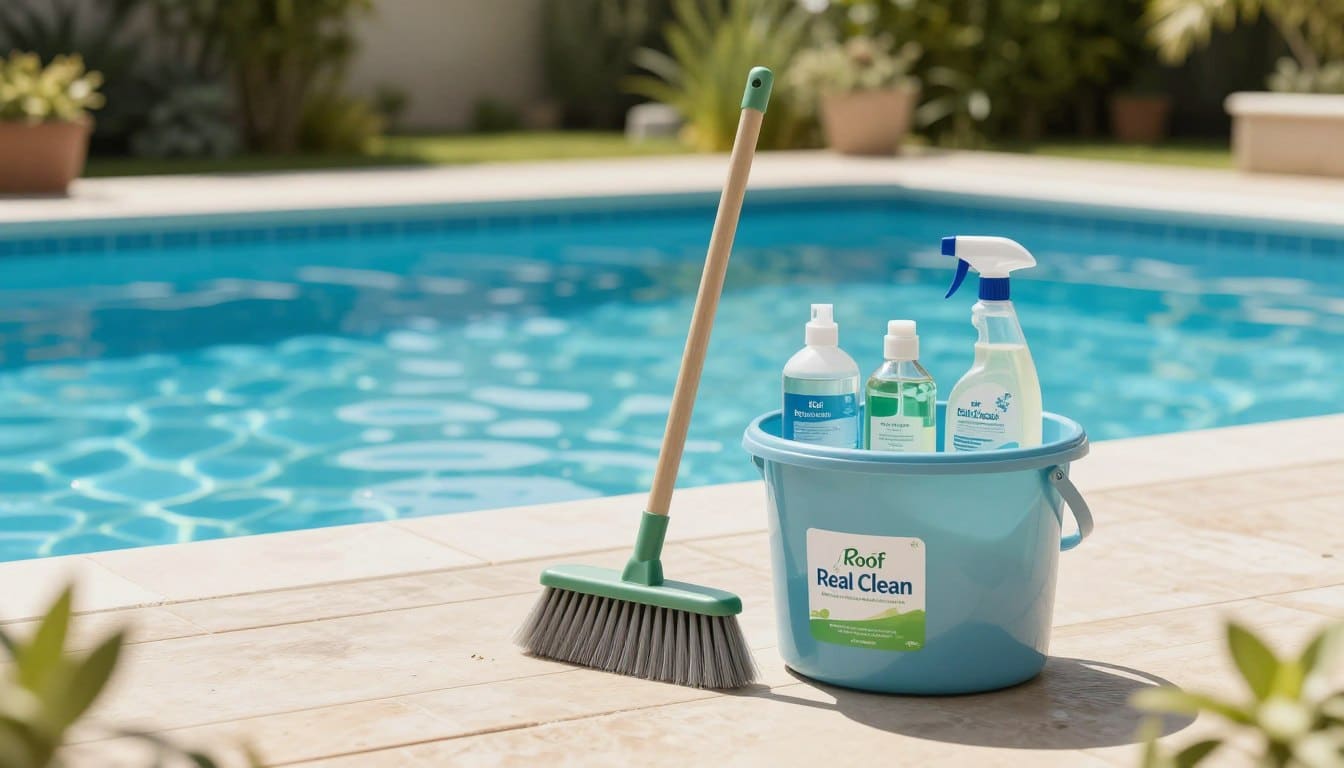
As stewards of your property, we believe in a science-based approach that prioritizes environmental safety and structural preservation. By utilizing physical barriers and specialized runoff management, we can achieve a deep clean that restores your deck's original luster without jeopardizing your swimming environment. For professional assistance that keeps your pool water safe, contact us today at (703) 261-8228.
Key Takeaways
- Physical runoff management is the most effective way to prevent water contamination.
- Pressure settings must be carefully calibrated to avoid surface etching or splintering.
- PH-neutral agents provide a safe alternative for maintaining delicate stone and wood.
- Proper drainage preparation ensures that cleaning agents move away from the pool edge.
- Professional expertise minimizes the risk of expensive filtration system repairs.
Understanding the Risks of Chemical Contamination in Pools
When we discuss cleaning a pool deck safely, we must first address the chemical sensitivity of your swimming water. Most deck cleaners contain high concentrations of sodium or surfactants that, if introduced to the pool, can cause immediate pH imbalances. We often see homeowners struggle with "phosphate spikes" that lead to rapid algae blooms simply because a small amount of runoff entered the water.
The Impact of Cleaning Agents on Filtration Systems
Your pool's filtration system is designed to handle organic debris and standard swimming loads, not industrial cleaning solutions. When soaps or degreasers enter the skimmers, they can coat the filter media—whether it’s sand, DE, or cartridges—reducing its effectiveness and potentially requiring a complete filter replacement. We emphasize that protecting your investment means keeping these foreign substances out of the plumbing entirely.
Biological Hazards of Stagnant Deck Runoff
It isn't just the cleaners themselves that pose a risk; the debris being removed is often biological in nature. Moss, mold, and mildew spores that are washed off the deck can act as a "seed" for growth inside your pool if they aren't properly diverted. We treat every pool area maintenance project as a containment operation to ensure these organisms are washed away to external drains, not into your swimming space.
How to Clean a Pool Deck Without Chemicals in the Water: Preparation
We believe that the secret to how to clean a pool deck without chemicals in the water lies in the quality of the preparation. Before a single drop of water is sprayed, we must establish a "safe zone" that physically separates the cleaning surface from the pool water. This proactive approach is the hallmark of professional property care.
Utilizing Physical Barriers and Squeegees
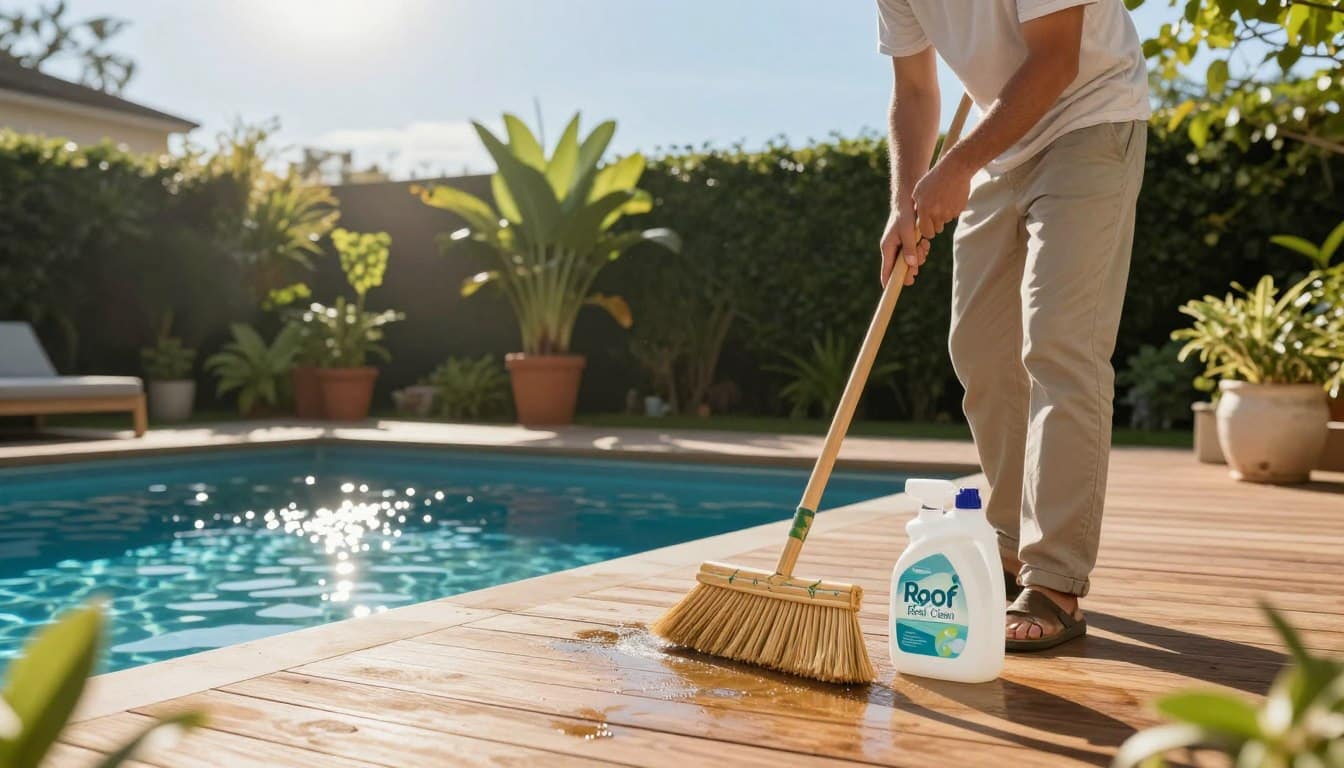
Our primary tool for contamination prevention is the floor squeegee. By working in small sections and consistently pushing water away from the pool coping, we maintain control over the flow of runoff. For decks with a slight pitch toward the water, we utilize temporary berms or absorbent socks to block the path of the cleaning solution, ensuring that 100% of the liquid is diverted to the surrounding lawn or external drainage points.
Calibrating Water Pressure for Surface Preservation
One common mistake in diy pool deck cleaning is using excessive pressure to compensate for a lack of chemicals. High-velocity water can etch concrete, splinter wood, and blast away the grout between stone tiles. We utilize professional-grade surface cleaners that distribute pressure evenly, allowing us to lift dirt and biological growth using the mechanical power of water alone, without the need for aggressive additives.
Managing Drainage and Slope Considerations
Every property has its own unique topography. We carefully analyze the slope of your deck to identify natural drainage paths. Understanding the importance of regular exterior cleaning services involves recognizing how these paths change over time. By working with the natural "tilt" of your deck, we can safely wash away debris while keeping your pool water in perfect balance.
Eco-Friendly Solutions for Stubborn Deck Stains
Even when we aim for a chemical-free pool deck cleaning, we sometimes encounter deep-seated organic stains that water alone cannot fully remove. In these instances, we turn to science-based, pH-neutral alternatives that offer high efficacy without the risks associated with standard industrial bleaches or acids.
The Power of Oxygen-Based Cleaning Agents
Oxygen-based cleaners (sodium percarbonate) are a revolutionary tool for pool area maintenance. When mixed with water, they release active oxygen that physically lifts mold and algae from the pores of the stone or concrete. The beauty of these agents is that they break down into water, oxygen, and soda ash—substances that are significantly easier for a pool's chemistry to manage should a minor amount of mist ever reach the surface.
Manual Agitation vs. Mechanical Force
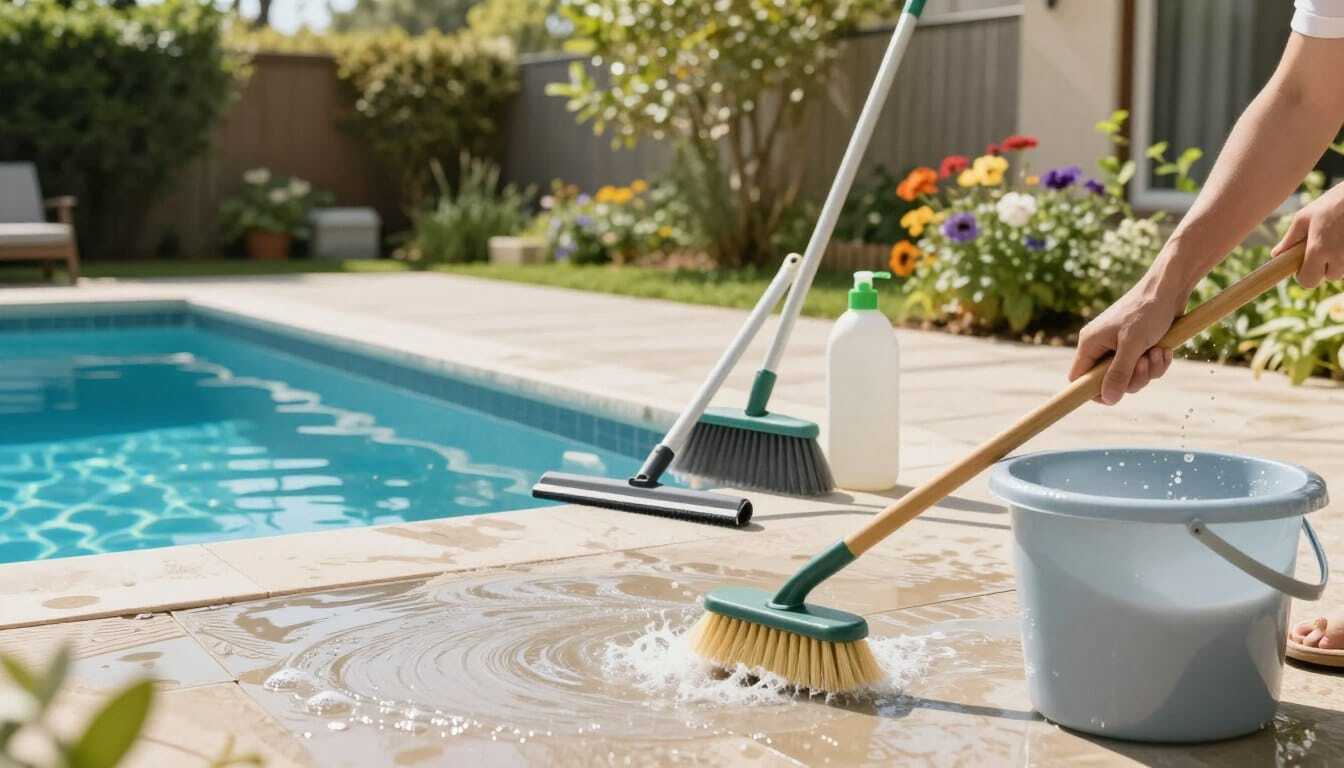
We often find that a bit of "elbow grease" with a stiff-bristled brush can replace the need for harsh chemicals. By manually agitating the surface, we break the bond between the dirt and the deck. This allows us to use much lower water pressure, which is essential for protecting your investment and ensuring that no debris is splashed into the pool water during the final rinse.
| Cleaning Method | Safety for Water | Effectiveness | Surface Impact |
|---|---|---|---|
| Standard Pressure Wash | Moderate Risk (Splash) | High | High (Potential Etching) |
| Soft Wash (Eco-Friendly) | High Safety | Very High | None (Manufacturer Approved) |
| Manual Scrubbing | Highest Safety | Moderate | None |
| Industrial Acid Wash | Extreme Risk | Highest | Severe (Porous Damage) |
Maintenance Tips to Prevent Future Deck Buildup
Once we have achieved a clean surface, the goal shifts to prevention. Consistent pool deck maintenance significantly reduces the frequency of deep cleanings and ensures that your outdoor space remains inviting throughout the swimming season.
Routine Rinsing and Debris Removal
The simplest way to maintain a clean deck is to rinse it with a garden hose once a week. By removing pollen, dust, and organic debris before they have a chance to bond with the surface, you prevent the formation of the "biofilm" that algae thrive on. Always remember to spray away from the pool water and toward your drainage points.
The Role of Sealing in Deck Preservation
For concrete and stone decks, applying a high-quality, breathable sealer can be a game-changer. These sealers fill the microscopic pores of the material, making it much harder for stains and biological growth to take hold. We recommend checking how often should you clean your roof and deck to stay ahead of the weathering cycle and maximize your property's value.
Managing Overhanging Vegetation
Trees and shrubs that overhang the pool area are the primary source of organic staining. Tannins from leaves can leave permanent marks on stone if left to sit in the sun. We suggest keeping vegetation trimmed back to improve airflow and reduce the amount of organic material that falls onto your deck and into your pool.
Why Professional Pool Deck Cleaning is the Safest Choice
While many homeowners attempt to handle cleaning a pool deck safely on their own, the risks of a mistake can be costly. Professional services provide a level of expertise and specialized equipment that household tools simply cannot match, ensuring your home's most expensive features are protected.
Specialized Equipment for Water Diversion
We utilize industrial-grade vacuum recovery systems and specialized berms that are designed specifically for high-stakes environments like pool decks. This equipment allows us to capture nearly 100% of the cleaning water, providing the peace of mind that your pool's chemical balance remains untouched. This level of pool area maintenance is essential for historic or high-end properties.
Avoiding the Hidden Costs of DIY Mistakes
A single mistake—such as splashing concentrated bleach into the pool or etching a stone tile with a pressure washer—can cost thousands of dollars to repair. By seeking pool area maintenance professional advice, you bypass these risks entirely. We carry full liability insurance and follow manufacturer-approved guidelines for every material we clean.
Conclusion
Maintaining a beautiful pool deck does not have to come at the expense of your water quality. By focusing on how to clean a pool deck without chemicals in the water through physical diversion and science-based techniques, you can enjoy a flawless outdoor space that remains safe for your family and your property's infrastructure. Reach out to us at (703) 261-8228 to schedule a professional evaluation and preserve the health of your home.
Frequently Asked Questions (FAQ)
The key is controlling the rinse water. We advise using a floor squeegee to push all cleaning solutions and water toward external drains or the lawn. By ensuring the runoff moves away from the pool "coping" (the edge), you prevent cleaning agents from entering the filtration system and causing issues like foaming or filter clogging.
Yes, though the technique varies. For stone, we emphasize pH-neutral organic cleaners to avoid etching. For wood, we use gentle agitation with the grain. These chemical-free pool deck cleaning methods are actually safer for these sensitive materials than standard industrial cleaners, which often contain salts and acids that can accelerate weathering.
By utilizing a soft wash approach that neutralizes spores on contact and then immediately diverting that runoff to the perimeter of your property. This ensures that the biological "seeds" of the algae are completely removed from the swimming environment.
High pressure is often counterproductive as it can damage the surface. We recommend professional pool area maintenance which combines low-pressure water with physical agitation. This lifts the stains safely without the risk of surface etching or water contamination.
© 2026 All Rights Reserved