CALL NOW TO GET A FREE ESTIMATE->

The Best Way to Clean Paver Patios Without Removing the Sand
We recognize that your outdoor living space represents a significant financial investment. Preserving its structural integrity requires science-based maintenance that protects your property from premature degradation.
Many homeowners worry that routine upkeep might damage their hardscape. Understanding the best way to clean paver patios without removing the sand is essential for maintaining both aesthetic appeal and long-term stability.
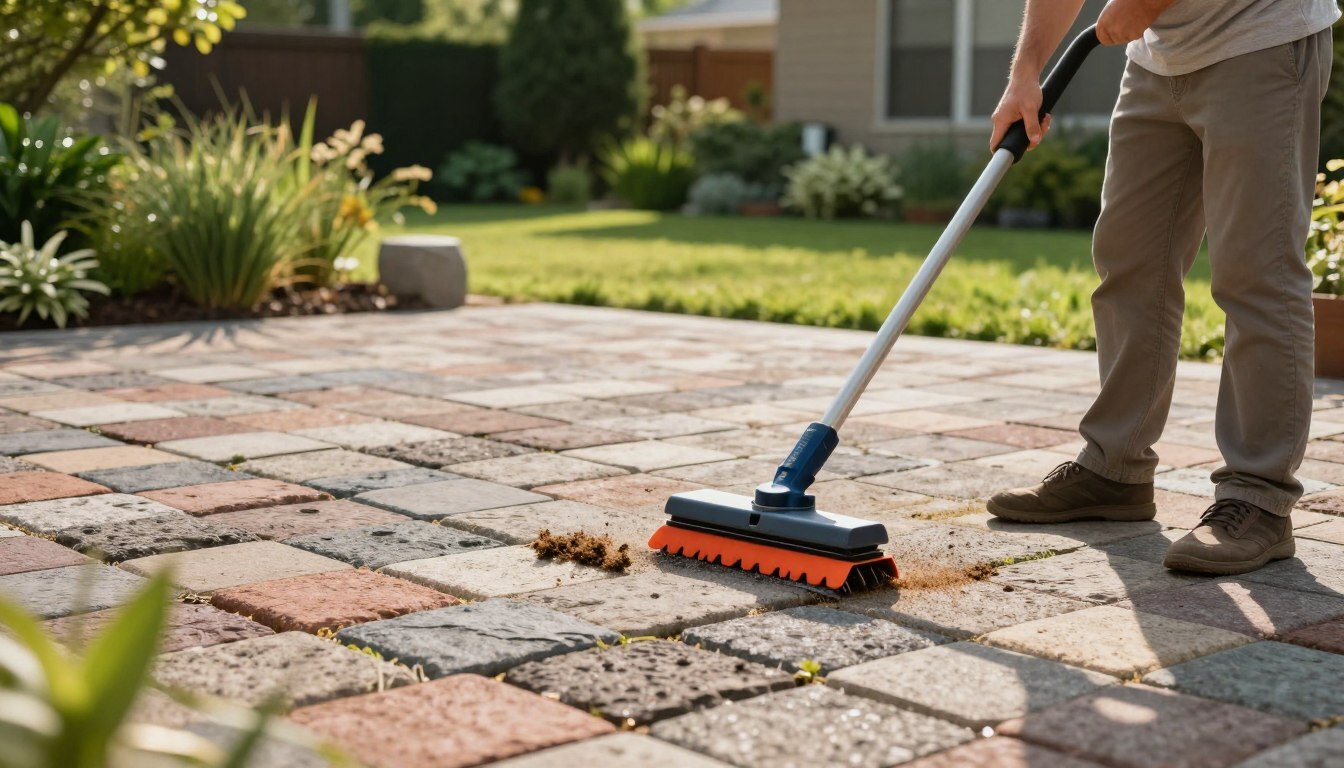
If you notice visible stains or slippery surfaces, it may be time to evaluate your maintenance routine. You can learn more about identifying these signs your patio needs a pressure to prevent deeper issues. Should you find these tasks overwhelming, please reach out to our team at (703) 261-8228 for expert guidance.
Key Takeaways
- Protect your financial investment through proper, science-based maintenance techniques.
- Avoid common pitfalls that lead to structural damage or loss of joint material.
- Recognize early indicators that your hardscape requires professional attention.
- Prioritize safety by removing algae and mildew buildup effectively.
- Contact our team at (703) 261-8228 for professional, reliable assistance.
Understanding the Importance of Joint Sand in Paver Stability
Maintaining the stability of your hardscape begins with understanding the hidden function of joint sand. While the pavers themselves provide the aesthetic appeal, the material between them acts as the critical locking mechanism that keeps your entire patio from shifting under the weight of foot traffic or environmental stress.
Why Sand is Essential for Interlocking Pavers
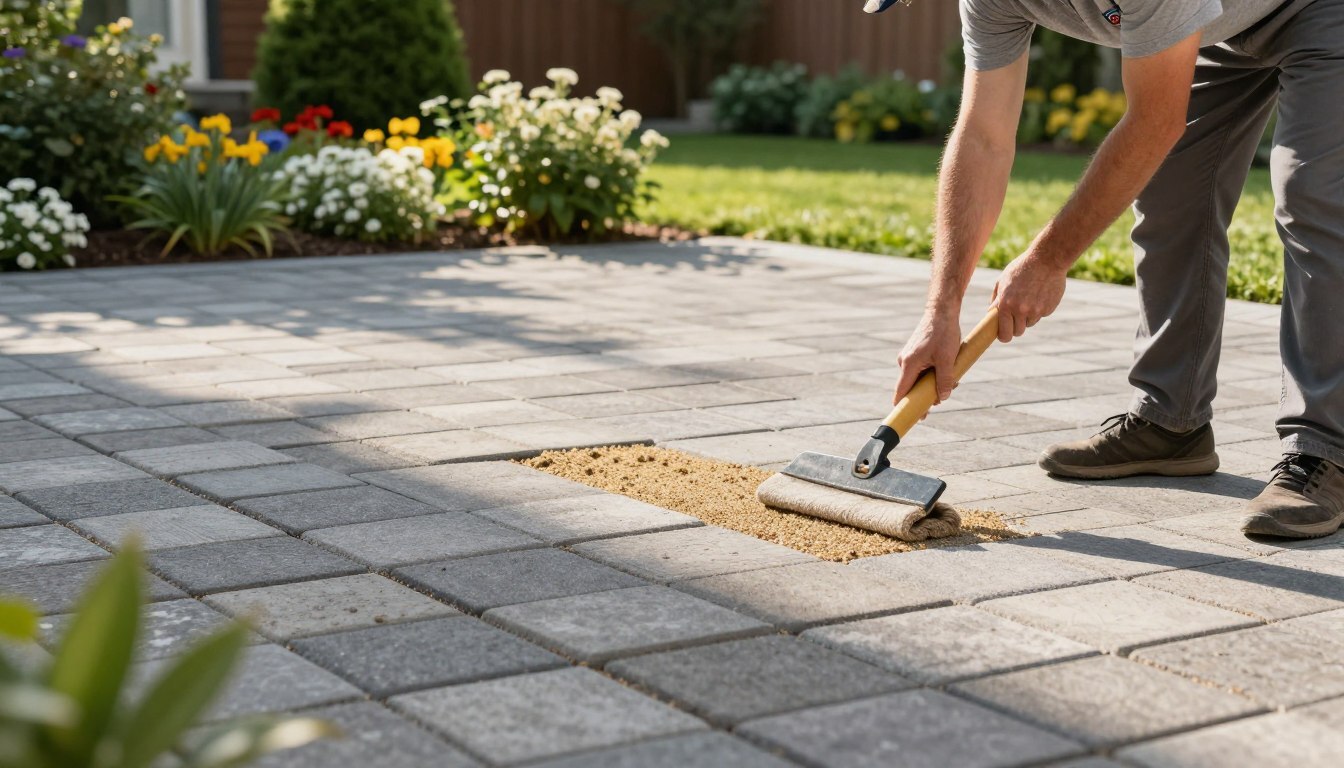
Interlocking pavers rely on friction to stay in place. When we install these systems, we ensure that the sand fills every void, creating a solid bond that distributes weight evenly across the base. This process is a fundamental aspect of proper outdoor surface care, as it prevents individual stones from rocking or sinking over time.
Without this vital support, the structural rigidity of your patio quickly fades. Maintaining sand between pavers is the most effective way to ensure your investment remains level and safe for your family to enjoy throughout the seasons.
The Risks of High-Pressure Washing
Many homeowners mistakenly believe that aggressive cleaning is the best way to refresh their patio. Unfortunately, high-pressure washing often strips this vital material away, which compromises the entire hardscape foundation. Once the joints are empty, the pavers lose their lateral support and begin to shift, creating uneven surfaces that can become tripping hazards.
Furthermore, empty joints provide the perfect environment for weed growth and moss accumulation. By avoiding harsh, high-pressure methods, you protect the integrity of your patio and prevent the need for costly repairs. We recommend a more gentle approach to keep your outdoor space looking pristine.
| Condition | Structural Impact | Maintenance Need |
|---|---|---|
| Full Joint Sand | High Stability | Minimal |
| Partially Eroded | Moderate Shifting | Refill Required |
| Empty Joints | Severe Instability | Full Restoration |
The Best Way to Clean Paver Patios Without Removing the Sand
Achieving a pristine patio surface requires moving away from aggressive mechanical force and toward a more calculated, scientific approach. We have found that the best way to clean paver patios without removing the sand involves prioritizing chemical dwell time over sheer water velocity. By shifting our focus, we can effectively lift contaminants while keeping the structural foundation of your hardscape completely intact.
The Science of Low-Pressure Cleaning
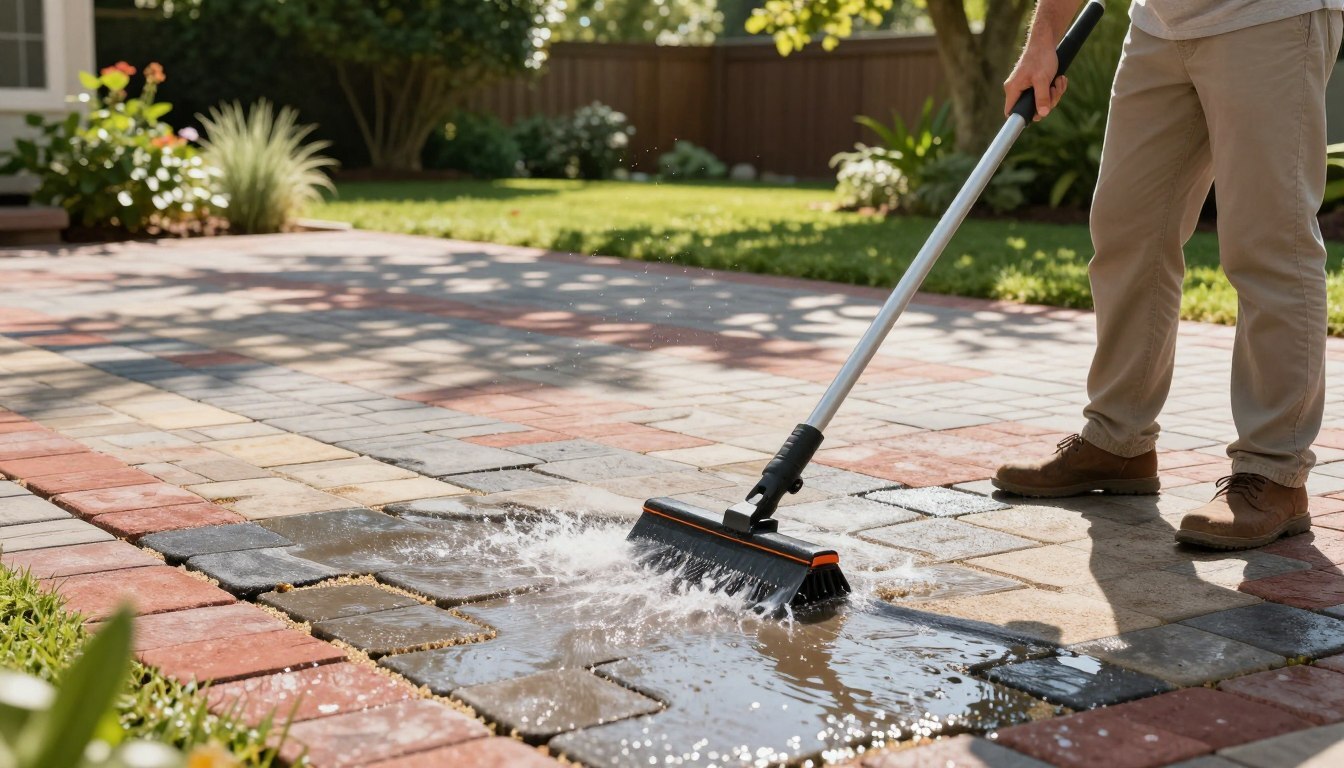
Low-pressure cleaning relies on the principle of chemical suspension rather than physical abrasion. Instead of blasting away dirt, we apply specialized solutions that break down organic growth and grime at a molecular level. This method allows the cleaning agent to do the heavy lifting, ensuring that the delicate joint sand remains undisturbed in the gaps between your pavers.
Selecting the Right Cleaning Agents for Outdoor Surfaces
Choosing the correct detergent is just as vital as the equipment you use. We always recommend pH-neutral or specialized cleaning agents designed to target stubborn invaders like Gloeocapsa magma without etching the stone surface. Using harsh, acidic cleaners can compromise the color and texture of your pavers over time.
By utilizing these professional-grade, biodegradable solutions, you protect your property from unnecessary wear. This methodical approach is truly the best way to clean paver patios without removing the sand while ensuring the long-term health of your investment. We are committed to providing you with results that look beautiful today and remain durable for years to come.
Gathering Necessary Tools and Eco-Friendly Supplies
Effective maintenance starts long before the first drop of water touches your pavers. We emphasize that proper preparation is the foundation of any successful patio cleaning project, ensuring that your hardscape remains both beautiful and structurally sound.
Essential Equipment for Safe Patio Maintenance
To maintain the integrity of your interlocking stones, you must avoid aggressive mechanical force. We recommend using soft-bristled brushes and low-pressure sprayers to gently lift surface grime without disturbing the delicate joint sand.
When you invest in the right gear, you prevent the common pitfalls associated with high-pressure systems. If you are considering professional patio pressure washing, ensure that the equipment used is calibrated for residential hardscapes to avoid unnecessary erosion.
Choosing Biodegradable Detergents for Paver Stain Removal
Selecting the right chemical balance is just as important as the physical tools you employ. We advocate for eco-friendly patio cleaning solutions that effectively break down organic matter while remaining safe for your surrounding garden and local water runoff.
These specialized formulas are designed for superior paver stain removal, targeting deep-seated discoloration without the use of harsh, toxic solvents. By prioritizing these sustainable options, we demonstrate a shared commitment to both your property health and the broader environment.
- Soft-bristled brushes for gentle agitation.
- Low-pressure sprayers to preserve joint sand.
- Biodegradable detergents for safe stain breakdown.
Preparing Your Patio for a Deep Clean
Proper site preparation is the foundation of effective diy patio maintenance and long-term surface health. We understand that your patio represents a significant investment in your home, and taking the time to ready your outdoor space ensures that your cleaning efforts yield the best possible results.
Clearing Debris and Furniture
Before applying any cleaning solutions, we must clear all furniture, planters, and decorative items from the surface. This step allows for an even application of detergents across the entire area without leaving missed spots or trapped moisture under heavy objects.
Once the area is clear, use a stiff-bristled broom to remove loose organic debris like leaves, twigs, and dirt. Removing this surface layer is essential because it prevents organic matter from turning into a muddy slurry when you introduce water.
Inspecting for Damaged Pavers and Joint Gaps
This phase of diy patio maintenance involves a thorough inspection to identify cracked pavers or significant joint gaps that require attention before washing begins. Taking these preliminary steps allows us to address minor issues before they escalate into expensive, large-scale restoration projects.
We recommend checking for loose pavers that may have shifted over time due to freeze-thaw cycles. If you notice deep voids in the joints, mark these areas so you can replenish the sand after the cleaning process is complete.
| Inspection Item | Action Required | Priority Level |
|---|---|---|
| Surface Debris | Sweep and clear area | High |
| Cracked Pavers | Assess for replacement | Medium |
| Joint Voids | Plan for sand refill | High |
| Loose Pavers | Re-level and stabilize | Medium |
By following these diy patio maintenance protocols, you protect the structural integrity of your hardscape. A proactive approach ensures your patio remains a beautiful, functional asset for years to come.
Applying Cleaning Solutions Without Disturbing the Joints
Mastering the art of detergent distribution allows us to tackle tough stains while keeping your paver joints perfectly intact. We believe that precision is the foundation of property care, ensuring that your investment remains stable and beautiful for years to come. By utilizing specialized spray techniques, we achieve effective paver stain removal without the need for aggressive mechanical force.
Techniques for Even Detergent Distribution
We employ low-volume, high-coverage sprayers to apply our cleaning agents uniformly across the surface. This method prevents the pooling of liquids that could otherwise wash away the sand between your pavers. By maintaining a consistent application, we ensure that every square inch receives the exact amount of solution needed to lift grime.
Our team avoids direct, high-pressure streams that threaten the structural integrity of your hardscape. Instead, we focus on a gentle misting approach that allows the solution to settle into the pores of the stone. This controlled delivery system is essential for maintaining the aesthetic and functional value of your patio.
Allowing Dwell Time for Effective Stain Breakdown
Patience is a vital component of our professional process. We allow the cleaning agents sufficient dwell time to penetrate deep into the stone, which is critical for successful paver stain removal. This period enables the chemistry to break down organic matter and stubborn deposits at a molecular level.
By letting the solution do the heavy lifting, we eliminate the need for abrasive scrubbing that could damage the surface finish. This science-based approach ensures that your patio is thoroughly cleaned while the delicate joint sand remains completely undisturbed throughout the entire process.
Gentle Scrubbing Methods for Stubborn Stains
We understand that stubborn stains can be frustrating, but aggressive scrubbing often does more harm than good to your pavers. When chemical treatments have done the heavy lifting, manual intervention is the final step to restore your surface. Our eco-friendly patio cleaning approach prioritizes the preservation of your hardscape while ensuring a spotless finish.
Selecting the Correct Brush Bristle Stiffness
Choosing the right tool is vital to avoid scratching the protective finish of your pavers. We strongly advise against using wire or stiff metal brushes, as these can permanently scar the surface and leave behind metallic residue. Instead, opt for synthetic-bristle brushes that offer enough tension to lift debris without compromising the integrity of the stone.
For most concrete or clay pavers, a medium-stiff nylon brush provides the perfect balance of power and safety. If your pavers have a delicate or polished finish, a soft-bristle brush is the better choice to prevent micro-abrasions. Always test your brush on a small, inconspicuous area before proceeding with a full-scale cleaning.
Targeting Organic Stains and Moss Growth
Organic growth like moss or algae often embeds itself deep within the surface texture of pavers. To remove these contaminants, apply your cleaning solution and allow it to dwell before using a gentle, circular scrubbing motion. This technique lifts the growth away from the pores of the stone while keeping the joint sand firmly in place.
By maintaining a consistent, light pressure, you ensure that the eco-friendly patio cleaning process remains effective and safe. Avoid scrubbing directly against the joints to prevent sand displacement. This methodical approach protects your investment and keeps your patio looking its best for years to come.
| Brush Type | Best Use Case | Surface Compatibility |
|---|---|---|
| Soft Nylon | Delicate/Polished Pavers | High Sensitivity |
| Medium-Stiff Synthetic | General Organic Stains | Standard Concrete/Clay |
| Natural Fiber | Light Surface Dusting | Sealed Surfaces |
Rinsing Techniques to Preserve Joint Integrity
Many homeowners accidentally damage their hardscape during the final cleanup phase. The rinsing stage is where most unintended erosion occurs, as improper water flow can easily wash away the stabilizing sand between your pavers. We emphasize that consistent, careful outdoor surface care during this final step ensures your patio remains stable and free of unsightly residue.
Managing Water Flow and Pressure Settings
To protect your investment, you must control the intensity of your water source. We recommend using a fan-tip nozzle rather than a concentrated jet, as this spreads the water pressure over a wider area. This approach prevents the force from becoming too aggressive for the delicate joint material.
Always start with the lowest effective pressure setting on your equipment. By keeping the flow gentle, you effectively rinse away loosened detergents without disturbing the foundation of your pavers. Proper outdoor surface care relies on this balance of efficiency and caution.
Avoiding Direct Streams into Paver Gaps
The most important rule during the rinsing process is to avoid aiming your hose or pressure washer directly into the joints. Direct streams act like a knife, cutting through the sand and compromising the interlocking system that keeps your patio level. Instead, direct the water at a shallow angle across the surface of the pavers.
By sweeping the water across the surface, you guide the detergent runoff away from the gaps. This meticulous technique keeps the sand firmly in place while ensuring a clean finish. Maintaining this level of outdoor surface care will help you avoid the need for premature joint repairs and keep your patio looking professional for years to come.
Addressing Specific Stains on Outdoor Pavers
Not all blemishes on your patio are created equal, and treating them requires a scientific approach to chemistry. When you focus on removing stains from outdoor pavers, you must first identify the nature of the contaminant to ensure you do not damage the stone or the surrounding landscape.
Removing Oil and Grease Spots
Oil and grease often penetrate porous concrete surfaces, creating dark, unsightly patches that resist simple soap and water. We recommend using a specialized degreaser designed to break down hydrocarbon chains without affecting the integrity of the paver joints.
Apply the solution directly to the affected area and allow it to dwell according to the manufacturer's instructions. This process effectively lifts the oil to the surface, where it can be gently blotted away rather than scrubbed deep into the pores.
Treating Rust and Mineral Deposits
Rust and mineral deposits typically stem from metal furniture, irrigation runoff, or high iron content in groundwater. These stains require a different chemical approach, often involving mild acidic solutions that neutralize the oxidation process.
When removing stains from outdoor pavers caused by rust, precision is vital to avoid etching the surface of the stone. We prioritize products that target the iron oxide specifically, ensuring the rest of your hardscape remains protected and vibrant.
| Stain Type | Primary Cause | Treatment Approach | Risk Level |
|---|---|---|---|
| Oil/Grease | Food or Machinery | Alkaline Degreaser | Low |
| Rust | Metal/Irrigation | Acidic Neutralizer | Moderate |
| Organic/Moss | Vegetation | Biocide/Bleach | Low |
By understanding the chemistry behind these common issues, you can maintain your investment with confidence. Professional techniques for removing stains from outdoor pavers ensure that your patio remains a beautiful, long-lasting feature of your home.
Post-Cleaning Maintenance and Sand Replenishment
We believe that the longevity of your patio depends heavily on how you treat the joints and surface once the grime is gone. Engaging in consistent diy patio maintenance ensures that your hardscape remains a stable and attractive feature of your home. After the cleaning process, we must evaluate the condition of the joints to determine if the structural integrity has been compromised.
When to Consider Polymeric Sand Refills
The sand between your pavers acts as the primary locking mechanism that keeps individual stones from shifting under foot traffic or heavy furniture. Over time, weather and cleaning can erode this material, leaving gaps that invite unwanted weeds and moss. Maintaining sand between pavers is a fundamental task that prevents these issues from recurring.
If you notice significant voids or loose stones, it is time to consider a polymeric sand refill. Unlike traditional sand, this specialized product hardens to create a flexible yet durable bond. This structural reinforcement is essential for keeping your patio surface level and secure throughout the changing seasons.
Protecting Your Patio with Sealants
Once the joints are replenished and the surface is completely dry, we highly recommend the application of a high-quality sealant. A professional-grade sealer acts as a protective barrier against environmental degradation, UV rays, and future staining. This step is a vital part of protecting your investment from the harsh elements common in the United States.
Sealants also enhance the natural color of your pavers, providing a vibrant finish that makes your outdoor space look brand new. By creating a non-porous shield, you make future cleaning much easier and significantly extend the lifespan of your hardscape. We encourage homeowners to view sealing not as an optional luxury, but as a necessary defense for long-term property health.
Common Mistakes to Avoid During Patio Cleaning
We often see well-meaning property owners inadvertently harm their pavers through common maintenance errors. While the goal of patio cleaning is to restore beauty, the wrong approach can lead to expensive structural repairs. Understanding these pitfalls is the first step toward protecting your long-term investment.
The Dangers of Over-Saturation
Many homeowners believe that more water equals a better clean, but this is a dangerous misconception. Excessive water usage during patio cleaning can penetrate deep into the joints and saturate the bedding layer beneath the pavers.
When the base layer becomes waterlogged, it loses its structural integrity. This often leads to the following issues:
- Uneven settling of individual pavers over time.
- Softening of the sub-base, which compromises the entire surface.
- Increased risk of shifting stones that create tripping hazards.
Why Harsh Chemicals Can Damage Your Hardscape
It is tempting to reach for industrial-strength cleaners to remove stubborn stains, but these products often do more harm than good. Harsh chemicals can permanently etch natural stone surfaces and strip away protective finishes.
Furthermore, improper chemical use during patio cleaning poses a significant threat to your local environment. Consider these risks before applying any solution:
- Vegetation damage: Runoff can easily kill surrounding grass, flowers, and shrubs.
- Surface etching: Acidic cleaners may permanently alter the texture and color of your pavers.
- Chemical residue: Toxic buildup can remain in the joints, potentially harming pets or children who use the space.
We always recommend using pH-neutral, biodegradable agents to ensure your hardscape remains safe and vibrant. By avoiding these common mistakes, you preserve the value and aesthetic appeal of your outdoor living space for many years to come.
Professional Assistance for Complex Patio Restoration
Sometimes, the most stubborn outdoor stains require a professional touch to restore your patio's original beauty. While routine care keeps your hardscape looking fresh, certain situations demand a higher level of technical intervention. When you encounter deep-seated discoloration or structural concerns, relying on specialized knowledge ensures the longevity of your investment.
When to Call the Experts at (703) 261-8228
We understand that homeowners take great pride in their outdoor living spaces. However, if you find that removing stains from outdoor pavers has become an overwhelming task, it is time to reach out for help. Our team can be reached at (703) 261-8228 for complex restoration needs that exceed the scope of standard maintenance.
You should consider professional assistance if you notice persistent chemical burns, deep oil penetration, or significant shifting in the paver base. Attempting to fix these issues with improper tools often leads to permanent damage. Calling our experts allows us to assess the situation and provide a tailored solution that protects your property.
Benefits of Professional Maintenance Services
Choosing professional services provides the peace of mind that comes with manufacturer-approved methods. We utilize industry-leading expertise to ensure that every cleaning process is safe for your specific stone type. By avoiding harsh, unverified chemicals, we preserve the structural integrity of your patio while effectively removing stains from outdoor pavers.
Our commitment to excellence means we prioritize the health of your hardscape above all else. We combine scientific understanding with practical experience to deliver results that last. Trusting our team means you are investing in the long-term value and aesthetic appeal of your home.
Conclusion
Maintaining a pristine paver patio requires a delicate balance between effective cleaning and structural preservation. We believe that consistent care protects your property value while keeping your outdoor living space inviting for years to come.
Proper preparation remains the foundation of any successful maintenance project. You can prepare your home for professional pressure by clearing away furniture and securing your perimeter. These simple steps ensure that our team can focus entirely on restoring the beauty of your hardscape without unnecessary obstacles.
We understand that managing exterior surfaces can feel overwhelming at times. Our experts remain dedicated to using science-based methods that respect the integrity of your joint sand and paver materials. You never have to navigate these complex maintenance tasks alone.
If you require professional guidance or complex restoration services, our team is ready to help. Please reach out to us at (703) 261-8228 to discuss your specific needs. We look forward to helping you maintain a beautiful and durable home environment.
FAQ
We have found that the most effective and safest method is the low-pressure soft wash technique. Instead of relying on the mechanical force of a high-pressure Honda or Ryobi power washer—which can easily blast away the stabilizing joints—we utilize specialized cleaning agents like Simple Green or Techniseal cleaners. This approach relies on chemical dwell time to break down contaminants such as Gloeocapsa magma and lichen at the molecular level, allowing us to rinse the surface gently without disturbing the structural integrity of your hardscape.
Joint sand is not merely aesthetic; it is a critical structural component that provides interlocking stability. When you neglect maintaining sand between pavers, the individual units can shift, tilt, or "creep" under the weight of foot traffic or furniture. This displacement often leads to uneven surfaces, tripping hazards, and the rapid encroachment of weeds and moss. By prioritizing proper outdoor surface care, we ensure the sand remains a solid barrier against environmental stressors.
We strongly advise against using high concentrations of standard household bleach, as it can be detrimental to the surrounding ecosystem and may potentially etch more sensitive stone types. For true eco-friendly patio cleaning, we recommend biodegradable detergents specifically formulated for masonry. These professional-grade solutions effectively target organic growth while ensuring that runoff does not damage your lawn, ornamental plants, or the local water table.
Success in removing stains from outdoor pavers depends entirely on matching the right chemistry to the specific contaminant. For instance, an oil leak from a grill requires a degreaser to lift hydrocarbons, whereas rust stains from metal furniture require an acidic cleaner to neutralize iron oxide. We emphasize using soft-bristled brushes and targeted applications to ensure the stain is lifted from the pores of the stone without the need for aggressive scrubbing that might displace the polymeric sand.
The most significant risk in diy patio maintenance is the unintentional removal of joint material through over-saturation or improper nozzle angles. Many homeowners also struggle with efflorescence—a white, powdery salt deposit—and attempt to scrub it away with harsh acids, which can permanently alter the color and texture of the paver. If you are unsure of the stone type or the proper chemical balance, we encourage you to contact us at (703) 261-8228 to avoid these costly mistakes.
We generally recommend a deep patio cleaning every two to three years, depending on the amount of shade and moisture your property receives. Following a thorough cleaning, applying a high-quality sealant from brands like SRW Products can provide a protective barrier against UV rays and moisture. This preventative measure simplifies future paver stain removal and helps maintain the vibrant color of your investment for the long term.
If you notice widespread sinking, significant weed infiltration, or stains that refuse to budge with standard detergents, it is time for a professional assessment. Complex restoration, such as a full polymeric sand replacement or specialized steam cleaning, requires industrial equipment and technical expertise. Our team is available at (703) 261-8228 to provide a comprehensive evaluation and restore the beauty and safety of your outdoor living space.
© 2026 All Rights Reserved