CALL NOW TO GET A FREE ESTIMATE->

How to Clean Outdoor Furniture During a Patio Wash Guide
Maintaining your backyard oasis requires more than just scrubbing the stone. We believe that integrating outdoor furniture cleaning into your routine saves time and preserves your investment. Our comprehensive patio wash guide ensures your deck and seating areas look pristine year-round.
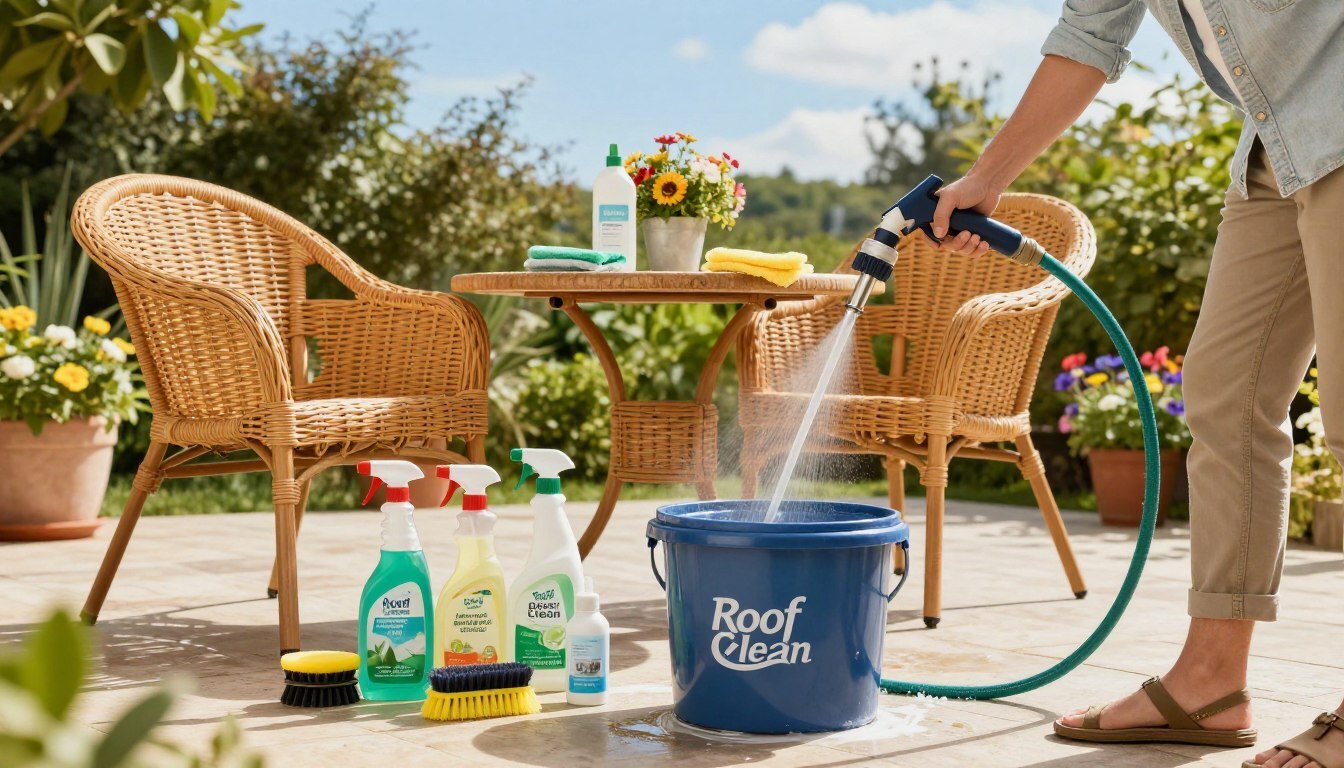
Success begins with identifying your materials, whether you own plastic, metal, wicker, wood, or upholstered pieces. Using mild soaps prevents damage, while controlled rinsing protects delicate finishes. We always emphasize the importance of complete drying to prevent mold growth.
If you encounter stubborn stains or structural damage, our team is ready to assist. Reach out to us at (703) 261-8228 for professional support. We are here to help you master the process of keeping your space inviting and clean.
Key Takeaways
- Identify material types before applying any chemical solutions.
- Use mild detergents to avoid surface degradation.
- Implement controlled rinsing to protect surrounding landscaping.
- Ensure all items are thoroughly dried to prevent mildew.
- Contact professionals for deep stains or complex repairs.
How to Clean Outdoor Furniture During a Patio Wash
We believe that a truly clean patio requires a holistic approach that includes your tables, chairs, and decorative pieces. Treating your furniture as an afterthought often leads to missed spots or accidental damage during the cleaning process. By learning how to clean outdoor furniture during a patio wash, you ensure that your entire outdoor living space looks cohesive and well-maintained.
Why Furniture Care Belongs in Every Patio Wash
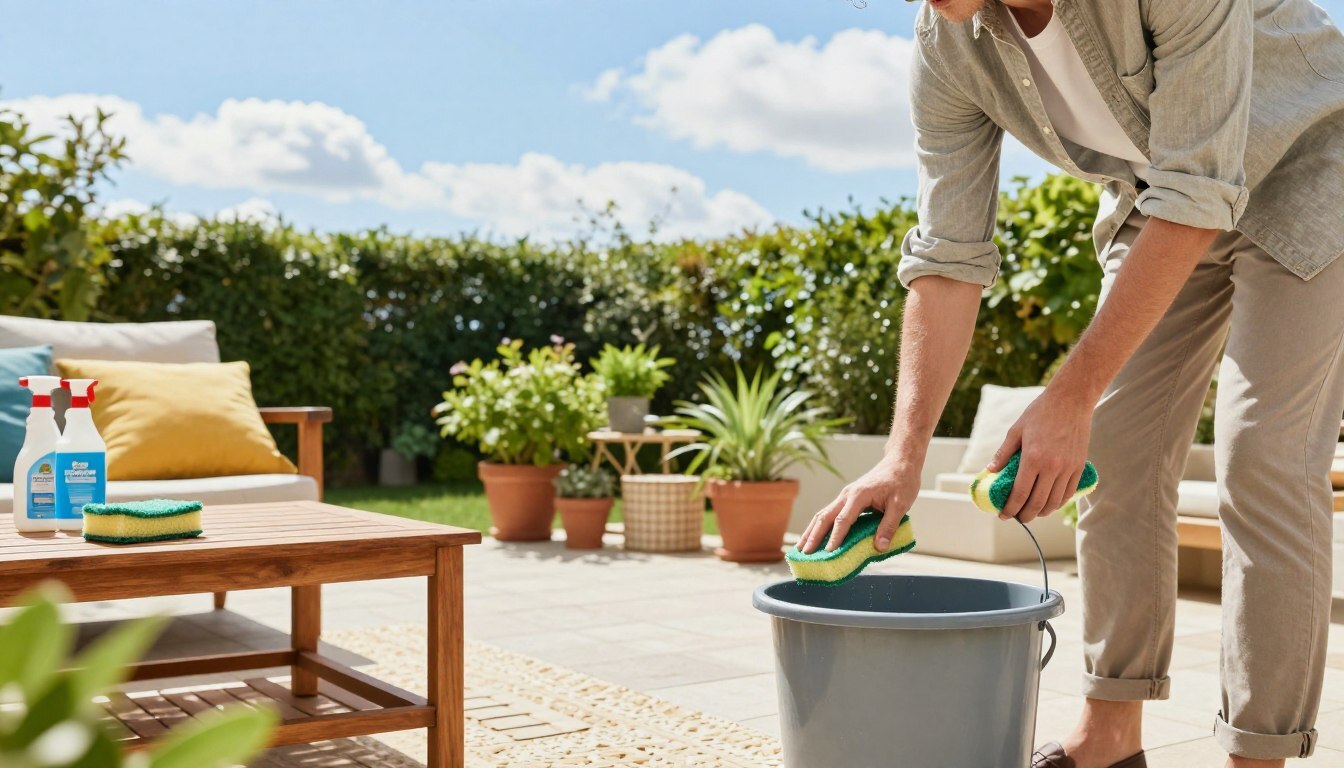
Your patio is the foundation of your outdoor experience, but the furniture sitting upon it defines the comfort of the space. Integrating outdoor furniture care into your cleaning schedule prevents the buildup of grime that accumulates on both surfaces simultaneously. When you clean everything at once, you avoid the frustration of placing dirty chairs back onto a freshly scrubbed patio.
How Patio Washing Can Affect Nearby Outdoor Pieces
Pressure washing involves high-pressure water and specialized detergents that can be harsh on delicate materials. If you are not careful, overspray can soak cushions, while muddy runoff may stain fabric or settle into the joints of wooden frames. Protecting your furniture from these elements is a critical step in the overall cleaning workflow.
Harsh chemicals used to strip algae or grease from stone can also strip the finish off metal or wood furniture. We recommend taking proactive steps to shield your items or cleaning them in a sequence that minimizes exposure to runoff. If you have questions about protecting specific materials, feel free to call us at (703) 261-8228 for expert guidance.
Cleaning Goals for a Safer, Better-Maintained Patio
The primary goal of our process is to remove dirt safely without compromising the integrity of your belongings. Proper outdoor furniture care extends the lifespan of your investment by preventing rust, mold, and wood rot. Ultimately, knowing how to clean outdoor furniture during a patio wash allows you to enjoy a safer, more inviting environment for your family and guests.
Prepare the Patio, Furniture, and Cleaning Area
We believe that a well-prepared cleaning area is the secret to professional-grade results. Proper outdoor furniture preparation ensures that your items remain safe while you restore their original beauty. By organizing your space before you start, you prevent accidental damage to your home and landscaping.
Move Furniture Away From Walls, Plants, and Work Zones
Start by clearing a dedicated space for your project. Move all chairs, tables, and benches away from exterior walls, delicate garden beds, and active drainage zones. This creates a buffer that allows you to work freely without worrying about splashing cleaning agents onto your siding or flowers.
Identify Wood, Metal, Plastic, Wicker, and Upholstered Materials
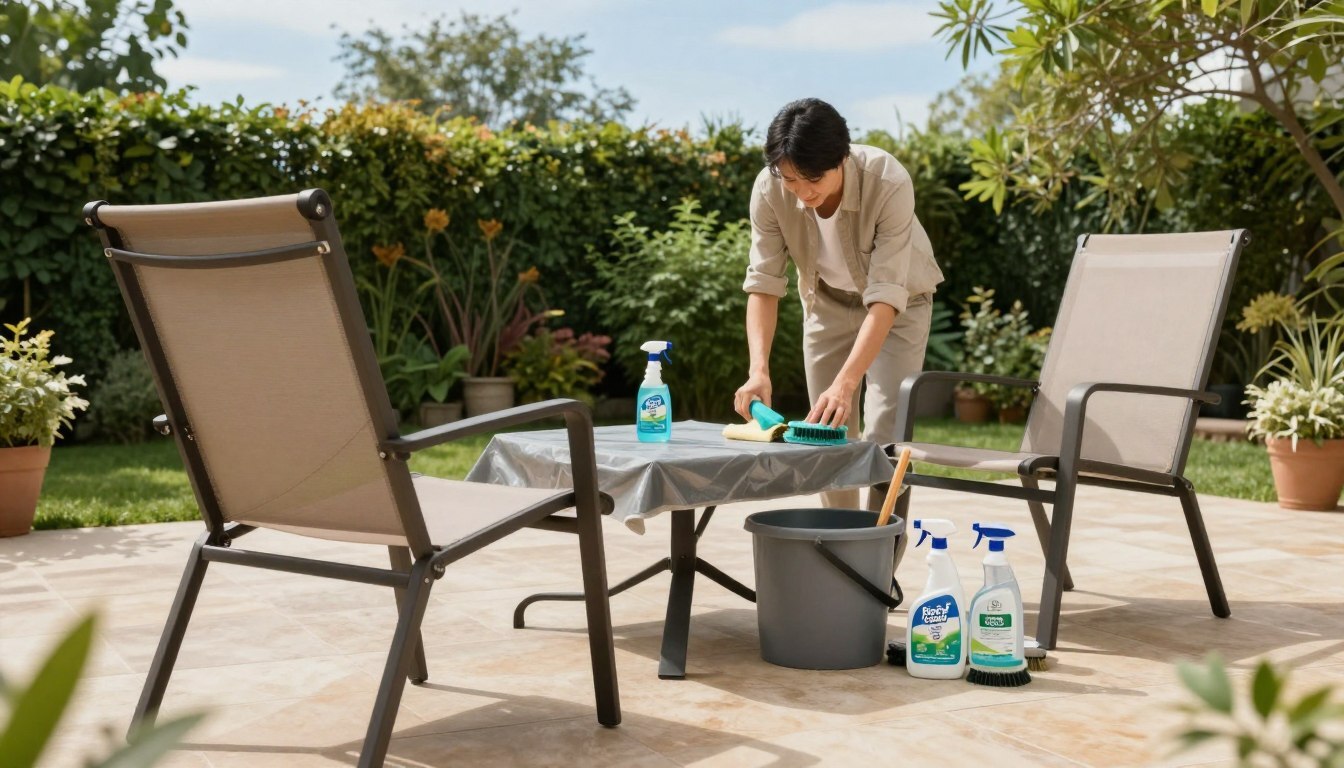
Different materials require unique care to avoid long-term damage. You must identify the composition of each piece to select the right tools and solutions. Using the wrong brush or chemical can strip finishes or cause unwanted discoloration.
| Material Type | Recommended Tool | Cleaning Intensity |
|---|---|---|
| Plastic/Resin | Soft Sponge | Low |
| Teak/Cedar | Soft-Bristle Brush | Medium |
| Wicker/Rattan | Microfiber Cloth | Gentle |
| Powder-Coated Metal | Soft Sponge | Low |
Gather Soft Brushes, Microfiber Cloths, Mild Soap, and Rinse Water
Efficiency during patio furniture cleaning depends on having your supplies ready. We recommend gathering soft-bristle brushes, high-quality microfiber cloths, and a bucket of mild dish soap. Having a steady supply of clean rinse water nearby will help you manage runoff effectively.
Protect Cushions, Electronics, Outdoor Rugs, and Decorative Items
Do not forget to remove or cover items that should not get wet. Cushions, outdoor rugs, and electronic devices like speakers or lighting should be moved to a dry, safe location. If you need assistance with complex setups, feel free to call us at (703) 261-8228 for expert guidance.
Wear Gloves and Eye Protection When Handling Cleaning Solutions
Safety is our top priority when working with chemical agents. Always wear durable gloves and protective eyewear to prevent skin irritation or accidental splashes. This simple step keeps you protected throughout the entire process.
Test Every Cleaner on a Hidden Surface First
Before applying any product to the entire piece, perform a spot test. Choose a small, hidden area to ensure the cleaner does not cause fading or damage. This precaution is essential for maintaining the integrity of your investment.
Remove Loose Dirt Before Washing Outdoor Furniture
Effective outdoor furniture maintenance begins long before any water touches your patio set. If you apply water directly to dry leaves, sand, or grit, you risk turning that debris into an abrasive mud. This mixture can scratch delicate finishes or grind dirt deeper into porous materials.
Taking the time for proper pre-cleaning outdoor furniture ensures that your washing process remains safe and efficient. By removing dry particles first, you protect the longevity of your investment. If you have questions about specific materials, feel free to call us at (703) 261-8228 for expert guidance.
Brush Away Leaves, Cobwebs, Sand, and Surface Debris
Start your process by using a soft-bristled brush or a dry cloth to wipe down all surfaces. Focus on removing loose items that have accumulated over the season. This simple step prevents surface debris from becoming trapped during the wet cleaning phase.
Vacuum Cushions and Wicker Without Damaging Fibers
When dealing with upholstered cushions or woven wicker, a vacuum is your best tool. Use a low-suction setting to lift dust and pollen from the fabric without pulling on delicate threads. Always move the vacuum nozzle gently to maintain the integrity of the weave.
Clear Dirt From Seams, Slats, Joints, and Drainage Openings
Dirt often hides in the small gaps where water can pool and cause damage. Use a thin brush or a compressed air canister to dislodge debris from these tight areas:
- Seams: Carefully clear out dust trapped in cushion piping.
- Slats: Sweep between the gaps of wooden or metal tabletops.
- Joints: Ensure hardware connections are free of grit.
- Drainage Openings: Clear blocked holes to prevent future water buildup.
Inspect Furniture for Cracks, Rust, Loose Fasteners, and Mold
Once the furniture is clear of debris, perform a thorough visual inspection. Look for signs of structural wear that might worsen if exposed to water. Identifying these issues early allows you to make repairs before they become costly problems.
Check for the following warning signs:
- Rust: Small spots on metal frames that need immediate treatment.
- Mold: Dark patches on fabric or wood that require specialized cleaning.
- Loose Fasteners: Tighten any wobbly bolts or screws to ensure stability.
- Cracks: Inspect resin or wood for fissures that could expand when wet.
Choose Safe Cleaners for Different Outdoor Furniture Materials
Protecting your investment starts with choosing material-specific outdoor furniture cleaners that won't cause damage. We understand that cleaning outdoor pieces requires a nuanced approach, as different surfaces react uniquely to various chemical compositions. Using the wrong product can strip protective finishes or lead to permanent discoloration.
Use Mild Dish Soap for Plastic, Resin, and Most Painted Surfaces
For most plastic and resin furniture, a simple mixture of mild dish soap and warm water works wonders. This gentle solution effectively lifts surface grime without harming the integrity of the material. Always rinse thoroughly to ensure no soapy film remains to attract future dust.
Clean Aluminum and Steel Without Encouraging Corrosion
Metal frames require extra caution to prevent oxidation and rust. We recommend using a non-abrasive soap and a soft cloth to wipe down aluminum or steel surfaces. Avoid steel wool or harsh scrubbers, as these can scratch the protective coating and expose the metal to moisture.
Wash Teak, Cedar, and Other Outdoor Woods With Material-Appropriate Solutions
Natural woods like teak and cedar often require specialized care to maintain their beauty. We suggest using cleaners specifically formulated for wood to prevent drying or cracking. If you are unsure about a product, testing it on a small, hidden area is always a smart safety measure.
Preserve Wicker, Rattan, and Synthetic Weave During Patio Furniture Cleaning
Wicker and rattan are delicate materials that can easily fray if handled aggressively. Use a soft-bristled brush to gently remove debris from the weave before applying a mild soap solution. Ensure the furniture dries completely to prevent mold growth within the tight crevices.
Handle Outdoor Fabrics and Cushions Without Setting Stains
Outdoor fabrics need careful attention to avoid damaging water-repellent coatings. Blot spills immediately rather than rubbing them, which can push dirt deeper into the fibers. If you need professional advice on cleaning outdoor pieces, feel free to call us at (703) 261-8228.
Why Bleach, Ammonia, and Harsh Solvents Can Cause Damage
Bleach and ammonia are often too aggressive for standard patio furniture. These chemicals can weaken fabric fibers, cause metal to corrode, and strip the protective sealants from wood. We strongly advise against using these harsh solvents to maintain the longevity of your items.
When a Specialized Cleaner Is More Appropriate Than Household Soap
Sometimes, household soap is simply not enough to tackle stubborn mildew or deep-set oxidation. In these cases, material-specific outdoor furniture cleaners designed by manufacturers provide a safer, more effective alternative. These products are engineered to clean deeply while preserving the specific finish of your high-end furniture.
Wash Outdoor Furniture by Hand During the Patio Cleaning Process
We recommend a controlled hand-washing process to keep your outdoor pieces looking their best. By choosing to clean your items manually, you ensure that delicate finishes remain intact while removing stubborn grime. Proper patio furniture cleaning requires patience and the right tools to achieve professional results.
Wet the Furniture With Low-Pressure Clean Water
Start by lightly misting your furniture with clean water using a low-pressure setting. This initial step softens dried dirt and prepares the surface for soap application. Avoid using high-pressure sprayers, as they can force water into joints or damage protective coatings.
Apply Soap From the Top Down to Control Runoff
When washing outdoor furniture, always work from the highest point downward. This technique prevents dirty water from streaking over areas you have already cleaned. Using a mild soap solution ensures that you lift debris without harming the material.
Scrub Flat Surfaces With a Soft-Bristle Brush
For larger, flat areas, use a soft-bristle brush to gently agitate the surface. This method is highly effective for removing surface dust and pollen. Consistent, light pressure is the key to maintaining the integrity of your furniture's finish.
Clean Tight Areas With Detail Brushes and Microfiber Cloths
Intricate designs and woven materials often trap dirt in hard-to-reach spots. We suggest using detail brushes to dislodge debris from crevices. Follow up with a soft microfiber cloth to wipe away moisture and remaining grime.
Rinse Thoroughly So Soap Residue Does Not Attract Dirt
A complete rinse is essential for effective hand-washing outdoor furniture. Any leftover soap film can act as a magnet for future dust and pollutants. Ensure that all suds are removed from every corner of the piece.
Use Extra Care Around Hardware, Hinges, Plugs, and Moving Parts
Pay special attention to mechanical components to prevent long-term damage. You should follow these best practices for hardware maintenance:
- Wipe hinges and fasteners dry immediately to prevent rust.
- Check that no water remains trapped inside hollow frames or plugs.
- Use a dry cloth to buff metal parts after rinsing.
If you encounter stubborn issues or need expert advice, feel free to call us at (703) 261-8228. Our team is always ready to assist with your maintenance needs.
Treat Stains, Mildew, Grease, and Oxidation Without Overcleaning
We believe that effective patio cleaning tips involve treating specific blemishes without damaging the underlying material. Rather than relying on harsh chemicals or excessive pressure, we recommend a targeted approach that preserves the integrity of your investment.
Lift Food and Drink Stains From Plastic and Painted Furniture
When performing stain removal for outdoor furniture, start with a mild solution of dish soap and warm water. Gently scrub the affected area with a soft-bristle brush to lift residues without scratching the finish. If the stain persists, a paste made of baking soda and water can provide the extra grit needed for stubborn spots.
Remove Green Algae and Mildew From Outdoor Fabrics and Hard Surfaces
Effective mildew removal requires a mixture of water and a small amount of oxygen bleach or white vinegar. Apply this solution to the surface and let it sit for several minutes to break down the organic growth. Always rinse thoroughly to ensure no residue remains to attract future spores.
Address Grease Near Grills and Outdoor Kitchens
Grease splatters near cooking areas often require a degreasing agent designed for outdoor use. Apply the cleaner directly to the spot and allow it to emulsify the oil before wiping it away with a microfiber cloth. Avoid using abrasive pads that might strip the protective coating off your furniture frames.
Reduce White Oxidation on Vinyl and Resin Furniture
White, chalky oxidation often appears on older resin pieces due to prolonged sun exposure. You can restore the original luster by using a specialized vinyl restorer or a light application of car wax. This process seals the surface and prevents further degradation from the elements.
Clean Rust Spots on Metal Without Spreading Corrosion
Rust requires immediate attention to prevent it from compromising the structural integrity of metal frames. Use a fine-grit sanding sponge to gently remove the surface rust, then apply a rust-inhibiting primer and touch-up paint. Taking these steps early stops the spread of corrosion before it becomes a major issue.
Know When Staining or Severe Material Damage Requires Professional Help
Sometimes, DIY methods are not enough to restore your furniture to its former glory. If you notice deep structural cracks, extensive peeling finishes, or corrosion that has eaten through the metal, it is time to seek expert assistance. Please call us at (703) 261-8228 for professional guidance on restoring your outdoor pieces.
| Stain Type | Recommended Method | Avoid |
|---|---|---|
| Food/Drink | Mild soap and water | Steel wool |
| Mildew/Algae | Vinegar or oxygen bleach | High-pressure spray |
| Grease | Degreaser | Abrasive scrubbers |
| Rust | Fine-grit sanding | Harsh acids |
Coordinate Furniture Cleaning With Pressure Washing the Patio
We believe that coordinating your furniture care with a deep patio wash is essential for a pristine outdoor space. By planning your workflow, you ensure that washing outdoor furniture does not become a source of frustration during your home maintenance projects.
Complete Delicate Furniture Cleaning Before High-Pressure Patio Work
We always recommend finishing your manual furniture cleaning before starting any high-pressure tasks. This sequence allows you to move items to a safe, dry zone where they will not be affected by the cleaning agents or water runoff from the patio surface.
Keep Pressure-Washing Spray Away From Cushions and Woven Materials
Cushions and woven materials are highly susceptible to water damage and staining. When you perform patio cleaning tips, keep the spray wand pointed away from these delicate items at all times to prevent saturation and potential mold growth.
Use the Correct Nozzle Distance Around Furniture Legs and Frames
When you are pressure washing around furniture, maintaining a safe distance is critical. We suggest keeping the nozzle at least 18 inches away from metal or wood frames to avoid marring the finish or removing protective coatings.
Prevent Muddy Runoff From Recontaminating Clean Outdoor Pieces
Gravity plays a major role in how debris moves across your patio. Always wash from the highest point of your patio toward the lowest, ensuring that dirty water flows away from your already cleaned furniture.
Rinse Patio Surfaces Without Splashing Harsh Debris Onto Furniture
A final rinse should be performed with a wide-angle nozzle to minimize splash-back. If you need specific guidance, feel free to call us at (703) 261-8228 for professional assistance.
Why High Pressure Can Strip Finishes, Bend Screens, and Drive Water Into Joints
High-pressure water is a powerful tool, but it can be destructive if misused. It can easily strip paint, bend delicate screens, and force moisture into hollow joints, which leads to internal rust or wood rot.
| Cleaning Method | Pressure Level | Best For |
|---|---|---|
| Hand Scrubbing | Low | Wicker and Cushions |
| Soft Washing | Medium | Painted Metal Frames |
| Pressure Washing | High | Concrete Patio Surface |
Dry, Reassemble, and Protect Clean Outdoor Furniture
Proper outdoor furniture care does not end with a clean surface; it requires careful drying and protective sealing to maintain your investment. We find that many homeowners overlook the final stages of maintenance, which can lead to hidden damage over time.
Drain Water From Frames, Slats, Cushions, and Umbrella Bases
Water often hides in hollow metal frames, tight joints, and umbrella bases. You must tilt these items to ensure all trapped liquid escapes completely. Neglecting this step can lead to internal corrosion or structural weakening of your favorite pieces.
Air-Dry Furniture Completely in a Shaded, Well-Ventilated Location
Effective drying outdoor furniture requires a balance of airflow and shade. Avoid placing wet items in direct, harsh sunlight, as this can cause uneven drying or warping. Instead, choose a breezy, covered area to allow moisture to evaporate naturally.
Prevent Water Rings, Mildew Growth, and Trapped Moisture
Moisture left in seams or fabric folds is a primary cause of mildew. By ensuring every surface is bone-dry, you protect the integrity of your cushions and frames.
- Wipe down flat surfaces with a clean microfiber cloth.
- Stand cushions on their sides to encourage drainage.
- Check hidden crevices for lingering droplets.
Reassemble Furniture Only After Fasteners and Connections Are Dry
It is tempting to put everything back together immediately, but patience is key. We recommend waiting until all hardware and connection points are fully dry to prevent rust. If you encounter any issues or need professional advice, please call us at (703) 261-8228.
Apply Appropriate Sealers, Protectants, or Fabric Treatments
Once the furniture is clean and dry, applying a protective layer can significantly extend its lifespan. Use high-quality sealers for wood or water-repellent sprays for fabrics to guard against future stains. Always follow the manufacturer's instructions to ensure the best results for your specific materials.
Keep Wood Out of Direct Sunlight During the Initial Drying Period
Wood is particularly sensitive to rapid moisture loss. Protecting your wooden pieces from intense sun while they dry prevents unsightly cracks and splits. Keeping them in the shade ensures the wood fibers stabilize properly after the cleaning process.
Build an Outdoor Furniture Maintenance Routine
Establishing a reliable maintenance schedule ensures your outdoor furniture remains a comfortable retreat throughout the seasons. We recommend a proactive approach to outdoor furniture maintenance to prevent long-term damage from environmental exposure. By dedicating a small amount of time to regular care, you can significantly extend the life of your investment.
Wipe High-Use Surfaces Weekly During the Outdoor Season
During the peak of the outdoor season, dust, pollen, and bird droppings can accumulate quickly on tables and chairs. We suggest a quick weekly wipe-down using a soft, damp cloth to remove these surface contaminants. This simple habit is one of the best practices for patio furniture upkeep that prevents grime from bonding to your furniture finishes.
Schedule Deeper Patio Furniture Cleaning After Storms and Heavy Use
Severe weather events often deposit debris, mud, and organic matter into the crevices of your furniture. We advise performing a thorough cleaning session immediately following heavy storms or large social gatherings. This prevents moisture from becoming trapped in joints or fabric seams, which often leads to mold growth.
Inspect Frames, Fabrics, Finishes, and Hardware Each Month
Monthly inspections allow you to catch minor issues before they become costly repairs. Check for loose bolts, signs of rust on metal frames, or fraying on fabric cushions. If you notice any hardware issues, tighten them immediately to maintain the structural integrity of your pieces.
Store or Cover Furniture Before Winter Weather in the United States
As temperatures drop across the United States, preparing your furniture for the off-season is essential. We recommend moving pieces into a garage or shed if space permits. If you must leave items outdoors, ensure they are cleaned and dried thoroughly before applying protective measures.
Match Maintenance Frequency to Local Weather, Shade, and Humidity
Your specific environment dictates how often you should perform deep cleaning. Coastal areas with high salt content or humid, shaded regions require more frequent attention to prevent corrosion and mildew. Adjust your schedule to ensure outdoor furniture protection remains a priority regardless of your local climate.
Use Breathable Covers Instead of Sealing Damp Furniture
Always choose high-quality, breathable covers to protect your furniture from the elements. Never cover furniture while it is damp, as this traps moisture and promotes rapid mildew growth. If you need assistance with professional cleaning or maintenance advice, please call us at (703) 261-8228.
| Task | Frequency | Primary Benefit |
|---|---|---|
| Surface Wiping | Weekly | Prevents grime buildup |
| Deep Cleaning | Post-Storm | Removes trapped debris |
| Hardware Check | Monthly | Ensures structural safety |
| Winter Storage | Annually | Prevents weather damage |
Get Professional Help for a Thorough Patio Wash
When your outdoor living area needs a refresh, professional assistance ensures every detail is handled with care. Following the best practices for patio furniture upkeep can be time-consuming, especially when dealing with stubborn grime or delicate materials. We provide the expertise needed to restore your space without causing accidental damage.
When Professional Patio Cleaning Is Safer and More Efficient
Attempting to remove deep-set stains or heavy oxidation on your own often leads to frustration. High-pressure equipment can easily damage wood grains or strip paint if not handled by a trained technician. Choosing a professional patio cleaning service saves you from the risks associated with improper chemical use or surface abrasion.
How We Help Protect Furniture While Washing Patios and Outdoor Areas
Our team prioritizes the safety of your belongings during every patio wash service. We carefully coordinate the cleaning process to ensure that runoff does not recontaminate your freshly scrubbed chairs or tables. By using controlled pressure and eco-friendly solutions, we maintain the integrity of your outdoor decor while cleaning the surrounding stone or concrete.
What to Share With a Patio Cleaning Professional Before Service
To provide the best results, please inform us about specific furniture materials like teak, wicker, or upholstered cushions. It is also helpful to point out any fragile finishes, nearby electronics, or areas with poor drainage. Sharing these details allows us to customize our approach and apply the right level of care to every corner of your yard.
Call Us at (703) 261-8228 for Patio Cleaning Assistance
If you are ready to revitalize your outdoor space, we are here to help. You can reach our team at (703) 261-8228 to schedule your next patio wash service. Let us handle the heavy lifting so you can enjoy a clean, beautiful patio all season long.
Conclusion
Maintaining a beautiful patio requires a commitment to consistent care and attention to detail. Successful results rely on using material-appropriate products, gentle tools, and thorough drying techniques to preserve your investment.
We encourage you to adopt these best practices for patio furniture upkeep to extend the lifespan of your favorite pieces. A regular cleaning routine prevents long-term damage from moisture, oxidation, and stubborn stains.
Keep our outdoor furniture cleaning checklist handy to ensure you cover every step during your seasonal maintenance. This simple guide helps you track your progress and maintain a pristine environment for your family and guests.
We understand that some projects require specialized expertise to avoid accidental damage to delicate finishes or fabrics. If you encounter tough grime or need assistance with a deep patio wash, reach out to our team for professional support.
You can reach us at (703) 261-8228 to discuss your specific needs. Our experts provide the care your outdoor space deserves to stay looking its best all year long.
FAQ
Generally, no. High pressure can damage wood fibers, chip paint on metal, and tear wicker. We recommend hand-washing or using extremely low-pressure settings to ensure the safety of your outdoor pieces.
We suggest applying oil once or twice a year, depending on exposure to the sun. Always clean the wood thoroughly and let it dry completely before application to prevent trapping dirt under the oil.
Yes, we offer coordinated services that include both the patio surface and furniture. A professional patio cleaning service has the expertise to use the right chemicals and techniques for every material type.
We recommend cleaning with a mild vinegar and water solution to remove the white chalky residue. For lasting protection, apply a coat of automotive wax to help seal the metal against the elements.
The key to mold prevention is keeping cushions dry. We recommend standing them upright after rain to help them drain and applying a water-repellent treatment like 303 Fabric Guard to the fabric surfaces.
© 2026 All Rights Reserved