
The Relationship Between Roof Pitch and Moss Accumulation
We often observe how slope dictates drainage efficiency. Steeper angles shed water quickly, whereas flatter surfaces retain moisture longer. This environmental factor directly influences moss buildup on roofs, creating ideal conditions for spores to thrive.
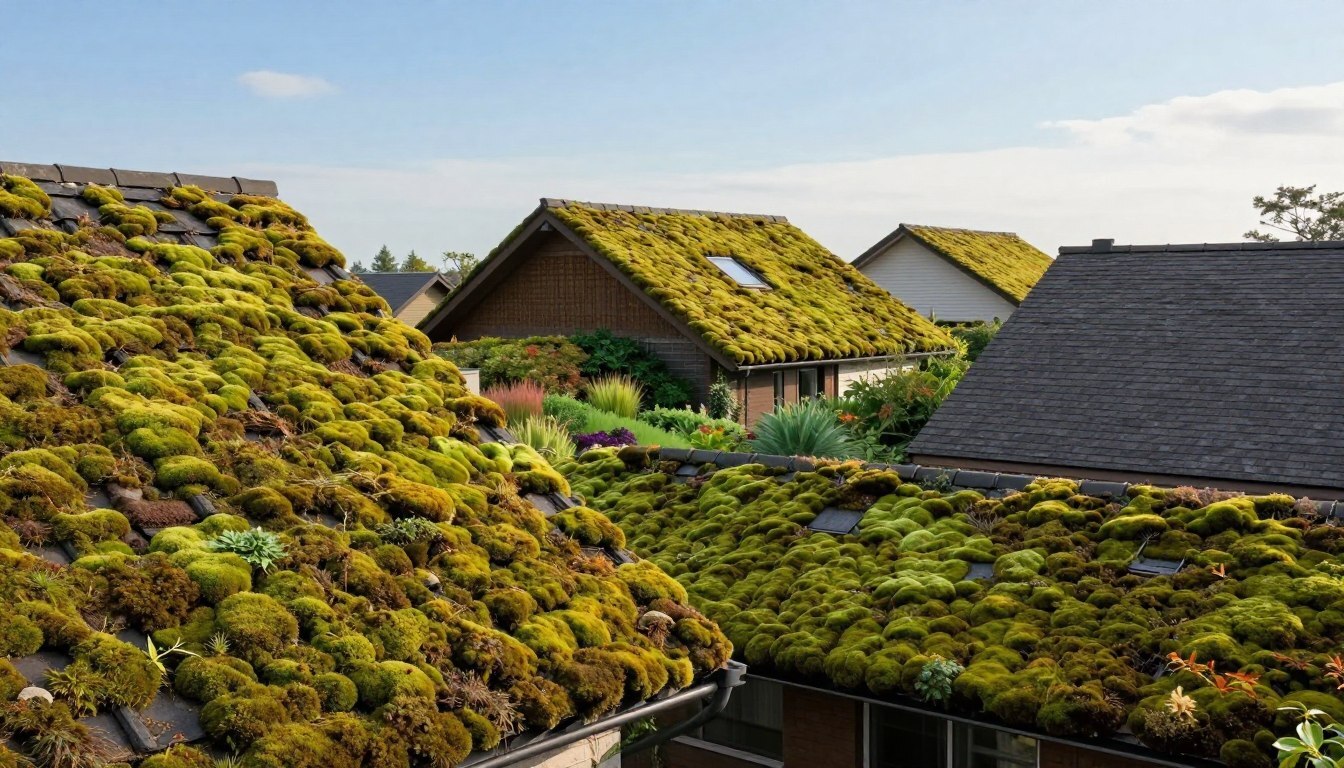
It is vital to distinguish these green mats from dark algae streaks. While algae merely discolor shingles, organic growth creates physical weight that damages structural integrity. Shaded areas with limited sunlight remain damp, requiring proactive maintenance to prevent long-term decay.
Key Takeaways
- Steep slopes promote faster water runoff, reducing moisture retention.
- Flat surfaces are more prone to organic growth due to slower drying times.
- Moss forms thick mats, while algae typically appear as dark streaks.
- Shaded environments require frequent inspections to mitigate damage.
- Professional maintenance extends the lifespan of your shingles significantly.
How Roof Pitch Influences Moss Accumulation
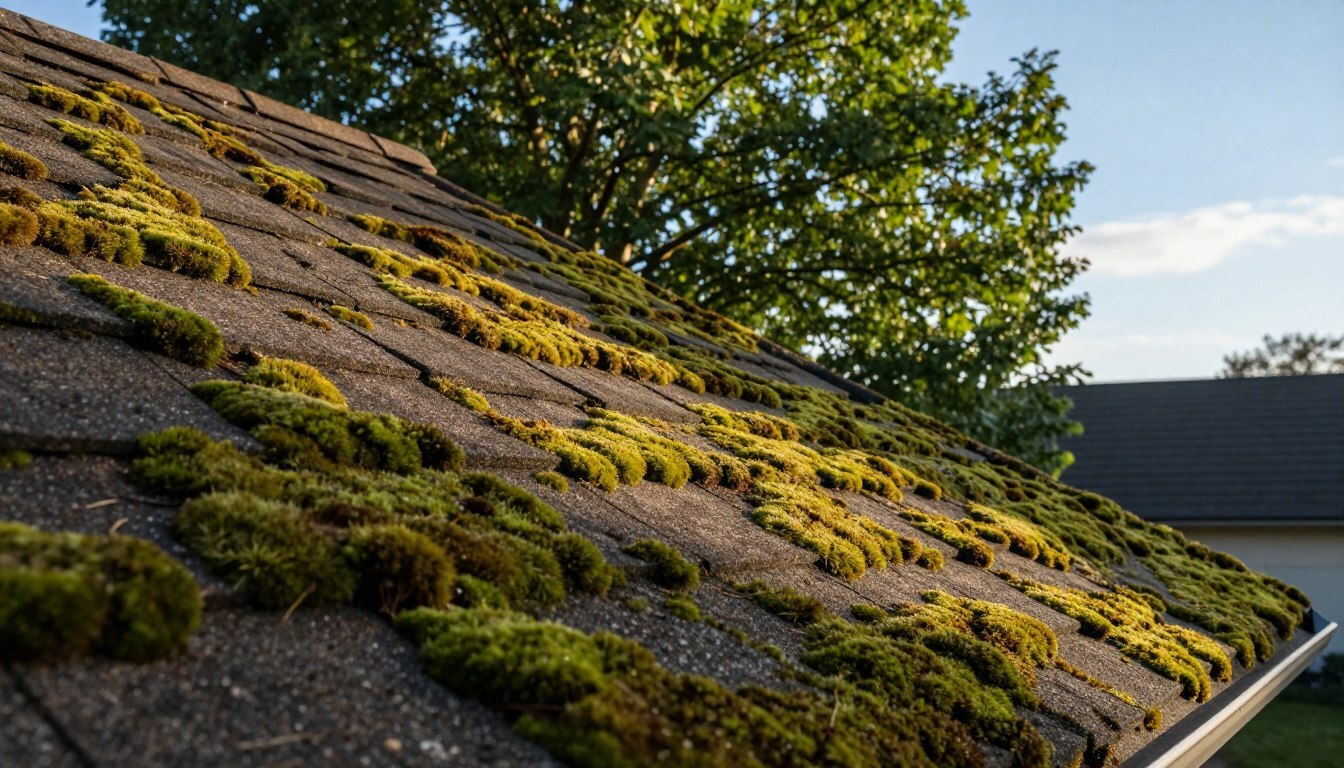
We often find that the specific angle of a roof serves as the primary driver for moisture retention and moss growth. Understanding the roof pitch and moss accumulation connection helps homeowners identify why certain areas of their property remain vulnerable to organic buildup. By analyzing how water moves across your shingles, we can better predict where moss is likely to thrive.
What Roof Pitch Means for Water Drainage
The geometry of your roof dictates how efficiently it sheds water and debris. Roofs with a low slope, typically below a 3:12 pitch, often struggle to move water quickly, which creates a perfect environment for roof slope and moss growth. These flatter surfaces tend to trap organic debris like leaves and pine needles, providing a nutrient-rich base for moss spores to settle.
In contrast, steeper roofs allow gravity to pull water and debris off the surface rapidly. This natural cleaning process limits the time moisture stays in contact with roofing materials. If you are concerned about your roof's specific drainage, please call us at (703) 261-8228 for a professional assessment.
Why Roof Angle Affects Moisture Retention
Moss is a master of water storage, capable of holding up to 20 times its dry weight in moisture. When a roof pitch is shallow, it retains standing water and damp debris for much longer periods than a steep profile. This constant dampness keeps the roof surface saturated, which is exactly what moss needs to expand its colony.
Persistent moisture prevents the roofing material from ever fully drying out. Even after the rain stops, a low-slope roof may remain wet for days. This cycle of saturation creates a permanent habitat for moss, eventually leading to potential damage to your shingles or underlayment.
How Slope Changes Sunlight and Airflow Across Roofing Materials
The impact of roof angle on moss is also tied to how much sunlight and air circulation a surface receives. Steeper slopes often benefit from better airflow, which helps evaporate surface moisture quickly. Conversely, flatter sections of a roof may be shielded from the wind, leading to slower drying times.
Sun exposure plays a critical role in this process as well. Shaded surfaces on lower-pitched roofs may require four to six hours to dry, while sun-exposed areas might dry in just one to two hours. By optimizing your roof's exposure to the elements, you can significantly reduce the conditions that favor moss development.
The Relationship Between Roof Pitch and Moss Accumulation
While roof design plays a significant role in home maintenance, the relationship between roof pitch and moss accumulation is often misunderstood. Many homeowners assume that a steep roof is immune to growth, but environmental variables frequently override the benefits of a sharp angle. We analyze these factors to help you protect your investment.
Why Low-Slope Roofs Commonly Develop Moss Buildup
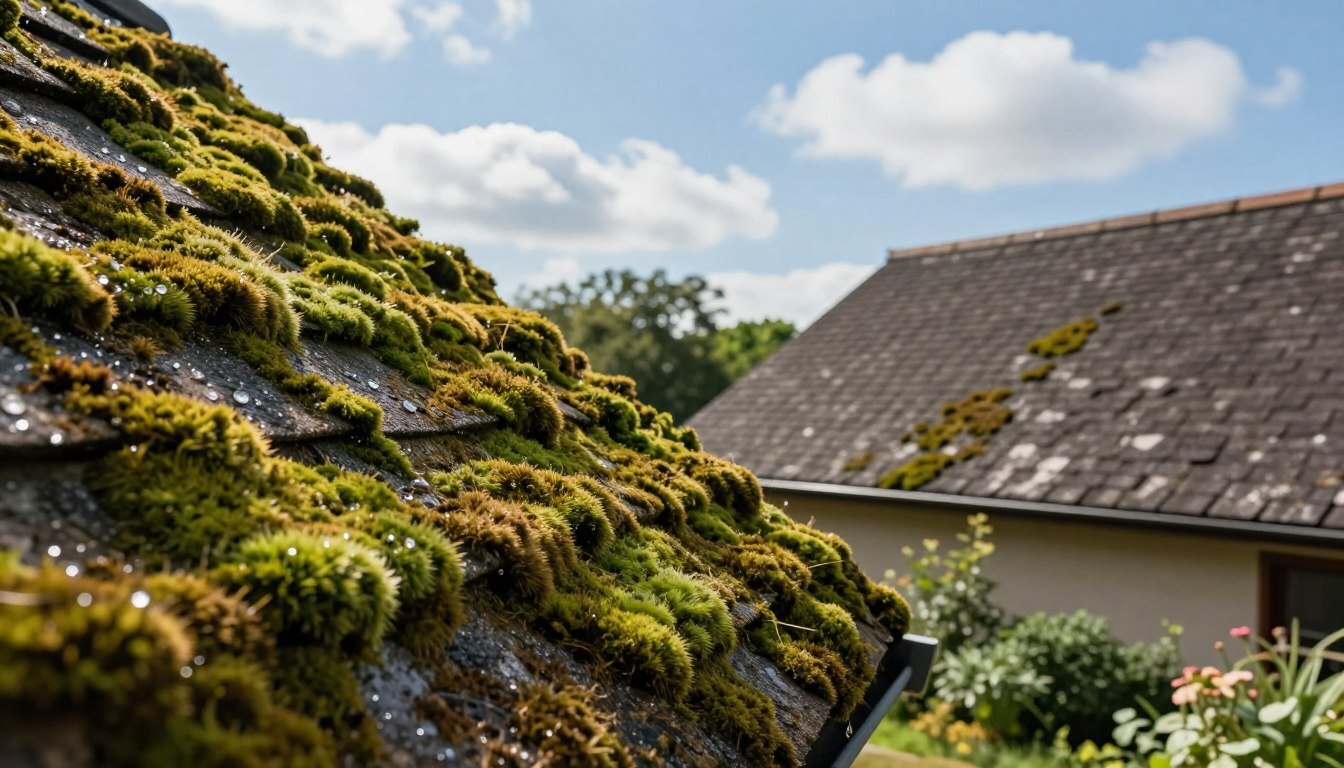
Low-slope roofs are particularly susceptible to organic growth because they lack the gravity-assisted drainage found in steeper designs. These surfaces tend to retain water and organic debris for much longer periods after a storm. When moisture lingers, it creates a perfect breeding ground for moss spores to settle and thrive.
How Steeper Roofs Can Still Support Moss Growth
The impact of roof angle on moss is not the only variable at play. Even on steep pitches, moss can colonize shingles if other environmental conditions are met. If your roof remains in constant shade or experiences high humidity, the steepness of the slope may not be enough to prevent colonization.
Roof Pitch as One Factor Among Several Environmental Conditions
We emphasize that roof pitch operates alongside a variety of external influences. To effectively manage your roof, you must look at the bigger picture of your home's microclimate.
Shade, humidity, rainfall, and nearby vegetation
Persistent shade from overhanging tree branches is a primary driver of moss growth. High humidity levels and frequent rainfall further exacerbate the issue, especially on north-facing slopes that receive limited direct sunlight. Nearby vegetation often drops debris that traps moisture against the roofing material, accelerating the process.
Roofing material, age, and surface texture
The composition of your roof significantly dictates how quickly moss takes hold. Cedar shakes are especially vulnerable because their organic, textured surfaces provide ideal attachment points for spores. In high-shade environments, moss can begin colonizing new shingles within just two to three years.
| Roof Pitch Type | Drainage Speed | Moss Risk Level | Primary Concern |
|---|---|---|---|
| Low-Slope | Slow | High | Water/Debris Retention |
| Moderate | Moderate | Medium | Shade/Humidity |
| Steep | Fast | Low to Medium | Surface Texture |
If you are concerned about the state of your roof or need professional advice on managing growth, please call us at (703) 261-8228. We are here to help you evaluate your specific roof conditions and provide tailored maintenance solutions.
Why Moss Grows on Some Roofs More Than Others
We often find that moss buildup on roofs is rarely the result of a single cause, but rather a combination of specific environmental and structural conditions. While some homes remain clear for decades, others seem to attract growth almost immediately. Understanding these variables helps us maintain the integrity of your roofing system.
Persistent Shade From Trees and Adjacent Structures
Sunlight is a natural enemy of moss. When trees or nearby buildings cast long shadows over your roof, the surface stays cool and damp for extended periods.
This lack of direct sunlight prevents the roof from drying out after a rainstorm. Persistent shade creates the perfect microclimate for spores to settle and thrive.
Moisture From Rain, Dew, and Poor Ventilation
Moisture is the primary fuel for moss. High humidity levels, frequent rainfall, and heavy morning dew keep roofing materials saturated.
If your attic lacks proper ventilation, heat and moisture from inside the home can also escape through the roof deck. This internal dampness keeps the exterior surface wet, even when the weather outside is dry.
Organic Debris Trapped on the Roof Surface
Leaves, pine needles, and twigs act as sponges on your roof. When this organic debris collects in valleys or behind chimneys, it traps moisture against the shingles.
As this material decomposes, it creates a nutrient-rich soil. This environment provides the ideal foundation for moss to take root and spread across your roof.
Roof Materials That Encourage Moss Attachment
The physical characteristics of your roofing material play a significant role in how easily moss can establish itself. Certain textures provide better grip for spores than others.
Asphalt shingles with weathered granules
As asphalt shingles age, they lose the protective mineral granules that cover their surface. This process exposes the underlying asphalt, which is porous and rough.
These weathered areas hold onto moisture and debris much longer than new, smooth shingles. This is a classic example of how roof design and moss accumulation are linked to material degradation.
Wood shakes and textured roofing surfaces
Wood shakes are naturally porous and have a rough, uneven texture. These gaps and crevices are excellent at trapping water and organic matter.
The inherent nature of wood makes it a favorite host for moss. Without regular treatment, these surfaces can become fully colonized by moss growth.
Regional Conditions That Affect Roof Slope and Moss Growth in the United States
Geography dictates much of the moss risk in the United States. In the Pacific Northwest, the constant dampness makes moss a common challenge for almost every homeowner.
In drier regions, moss is less common but still appears on north-facing slopes or heavily shaded areas. Regardless of your location, we can help you assess your specific risk factors.
Comparing Moss Risk on Low-Slope, Moderate, and Steep Roofs
The geometry of your roof plays a significant role in how moss settles and grows over time. While many homeowners focus on materials, the roof pitch and moss accumulation are deeply linked through the physics of water drainage. Understanding these dynamics helps us identify which areas of your home require the most attention.
Low-Slope Roofs and Extended Moisture Exposure
Low-slope roofs are particularly susceptible to moisture retention. Because these surfaces lack a sharp incline, water tends to pool rather than run off quickly. This standing water creates an ideal environment for moss spores to take root and thrive.
Moderate Roof Pitches and Balanced Drainage
Moderate slopes offer a middle ground for roof slope and moss growth. While they shed water more effectively than flat surfaces, they can still trap debris in valleys or around flashing. We recommend regular inspections for these roofs to ensure that water continues to flow freely toward the gutters.
Steep Roofs and Faster Water Runoff
Steep roofs are generally the most resistant to moss because gravity forces water off the surface rapidly. However, even these designs are not immune to biological growth. When the surface dries quickly, moss struggles to establish a foothold, but environmental factors can still override this natural advantage.
Why Roof Angle Alone Does Not Guarantee Moss Prevention
It is a common misconception that a steep pitch provides total immunity. Preventing moss on steep roofs requires more than just a sharp angle; it demands a holistic approach to maintenance. If you are concerned about your roof's condition, feel free to call us at (703) 261-8228 for professional guidance.
Shaded steep roofs
Even on a steep incline, a north-facing plane that remains in constant shade will stay damp for longer periods. Lack of direct sunlight prevents the evaporation necessary to keep the surface inhospitable to moss. In these cases, the roof angle is secondary to the lack of solar exposure.
Clogged gutters and blocked drainage paths
Clogged gutters act as a dam, forcing water to back up onto the lower sections of the roof. This creates a localized area of high moisture that can lead to moss growth regardless of the overall pitch. Keeping your drainage system clear is essential for maintaining a dry roof surface.
Persistent moisture beneath overhanging branches
Overhanging tree branches deposit organic debris and block sunlight, creating a microclimate of high humidity. This moisture remains trapped against the shingles, providing the perfect conditions for moss to flourish. Trimming these branches is a vital step in protecting your roofing materials.
| Roof Type | Drainage Speed | Moss Risk Level |
|---|---|---|
| Low-Slope | Slow | High |
| Moderate | Moderate | Medium |
| Steep | Fast | Low |
How Moss Affects Roofing Performance and Home Maintenance
We often see how small patches of moss evolve into significant threats to roofing performance. While many homeowners view these green growths as a minor cosmetic issue, moss buildup on roofs acts as a sponge that traps moisture against your home's most vital protective layer. Over time, this constant dampness compromises the structural integrity of your roofing system.
Damage to Shingles and Protective Granules
As moss takes root, its rhizoids—tiny root-like structures—dig deep into the surface of asphalt shingles. These organisms feed on the organic fillers within the shingles, effectively breaking down the material from the inside out. As the moss expands, it displaces the protective mineral granules that shield your roof from harsh ultraviolet rays.
Moisture Intrusion Beneath Lifted or Weakened Materials
The physical growth of moss creates a wedge that lifts the edges of shingles. Once these edges are raised, they become vulnerable to wind uplift and water infiltration. This allows moisture to seep directly into the underlayment and roof deck, which can lead to costly wood rot and interior water damage.
Ice, Wind, and Freeze-Thaw Risks in Moss-Affected Areas
During colder months, the moisture trapped by moss creates a dangerous cycle. When water freezes, it expands, causing the shingles to crack or lose their bond with the roof deck. This freeze-thaw process accelerates the deterioration of your roofing materials, making them more susceptible to wind damage during storms.
How Moss Can Shorten the Effective Life of a Roof
Persistent moss buildup on roofs significantly reduces the expected lifespan of your shingles. By keeping the surface constantly wet, moss prevents the roof from drying out properly after rain or morning dew. This premature aging often forces homeowners to replace their roofs years earlier than they would have otherwise needed to.
When Moss Growth Signals a Larger Drainage or Ventilation Problem
Sometimes, moss is merely a symptom of a deeper issue within your home's design. If you notice recurring growth, it may indicate that your roof has poor attic ventilation or that your gutters are failing to move water away from the surface efficiently. We recommend addressing these root causes to prevent future damage.
- Check for blocked gutters or downspouts.
- Inspect attic vents for proper airflow.
- Monitor shaded areas where moisture lingers.
Practical Ways to Minimize Moss on Pitched Roofs
We can significantly reduce moss growth by implementing a few strategic maintenance habits. By focusing on environmental factors and structural integrity, you can effectively manage the health of your roof. Minimizing moss on pitched roofs requires a consistent effort to keep the surface dry and free of organic matter.
Trim Branches That Create Persistent Roof Shade
Sunlight is a natural enemy of moss. We recommend trimming overhanging tree branches to allow more direct sunlight to reach your shingles. This simple step increases surface temperatures and helps moisture evaporate much faster.
Keep Gutters, Downspouts, and Roof Valleys Clear
Debris like leaves and pine needles acts as a sponge, holding moisture against your roof. You should clear your gutters and roof valleys regularly to ensure water flows away from the structure. Proper drainage is essential to prevent the damp conditions that moss loves.
Improve Attic Ventilation and Control Indoor Moisture
Roof drying happens from both the top and the bottom. By ensuring your attic has adequate ventilation, you prevent warm, moist air from escaping through the roof deck. This keeps the shingles cooler and drier, which is vital for preventing moss on steep roofs.
Install Copper or Zinc Moss-Resistant Strips Where Appropriate
Metal strips release ions when it rains, which naturally inhibit moss growth. We often suggest installing these strips near the ridge of the roof. As water runs down the slope, it carries these protective elements across the surface of your shingles.
Choose Roofing Materials and Designs That Promote Drying
When planning a roof replacement, consider how roof design and moss accumulation are linked. Materials that shed water quickly and resist organic buildup are always the best choice for long-term protection.
Benefits and limitations of smooth, algae-resistant shingles
Modern shingles often feature copper-infused granules that actively fight algae and moss. While these are highly effective, they do not replace the need for regular inspections. Always remember that even the best materials can fail if they are constantly covered in debris.
Importance of proper flashing and roof drainage design
Correct flashing prevents water from pooling in vulnerable areas like chimneys and skylights. A well-designed roof slope ensures that water moves rapidly toward the gutters. If you need professional advice on your specific roof configuration, please call us at (703) 261-8228 for expert guidance.
Safe Moss Removal and Roof Inspection Practices
When you notice moss buildup on roofs, your first instinct might be to grab a pressure washer, but that could be a costly mistake. We prioritize methods that protect your shingles while effectively managing organic growth. Proper care ensures your roof remains a durable shield against the elements.
Why Aggressive Pressure Washing Can Damage Roofing
Many homeowners mistakenly believe that high-pressure water is the best way to clean a roof. In reality, pressure washing asphalt shingles often strips away the protective mineral granules that shield the material from UV rays. This process can lead to premature shingle failure and significant long-term damage.
Beyond granule loss, high-pressure water can force moisture beneath the shingles. This trapped water creates a breeding ground for rot and mold within your roof deck. We strongly advise against using abrasive cleaning tools that compromise the structural integrity of your roofing system.
When Professional Moss Treatment Is Safer Than DIY Cleaning
Effective treatment often requires a precise chemical balance rather than raw force. A common, safe approach involves a mixture of laundry-strength liquid chlorine bleach and water. This solution must dwell on the surface for approximately 15 to 20 minutes to be effective.
"The secret to a long-lasting roof is not just cleaning, but doing so with the right tools and the right timing to prevent future damage."
It is vital that this solution does not dry completely before rinsing. Furthermore, you must protect your landscaping and surrounding vegetation from chemical runoff. Because of these complexities, professional intervention is often the safest choice for steep surfaces or extensive growth.
How We Evaluate Roof Pitch, Surface Damage, and Moss Coverage
Our team follows a rigorous inspection process to determine the best path forward. We analyze the specific roof pitch, the type of moss present, and the overall condition of the shingles. We also look for signs of lifted materials or poor drainage patterns that might be making minimizing moss on pitched roofs difficult to spot from the ground.
We assess the following factors during every evaluation:
- The density and age of the moss colonies.
- The current state of the protective granule layer.
- Potential moisture traps caused by debris or structural design.
- The proximity of overhanging trees or nearby structures.
Roof Access and Fall-Protection Precautions for Homeowners
We cannot stress enough that roof access is inherently dangerous. Climbing onto a roof without proper fall-protection equipment, such as harnesses and anchors, poses a severe risk of injury. We recommend that homeowners leave the physical inspection to trained professionals who have the necessary safety gear.
Preventive Maintenance Based on Roof Pitch and Local Conditions
Protecting your home from moss starts with a proactive maintenance schedule based on your roof's unique pitch. By understanding the relationship between roof slope and moss growth, you can implement targeted strategies that extend the life of your roofing materials. We recommend adjusting your care routine to account for local rainfall patterns and the specific orientation of your home.
Seasonal Inspection Priorities for Low-Slope Roofs
Low-slope roofs are particularly susceptible to water ponding, which creates an ideal environment for moss. We suggest inspecting these areas every spring and autumn to ensure that drainage systems remain clear of leaves and organic debris. Regularly clearing these blockages is essential for preventing moisture buildup that leads to premature material decay.
Maintenance Checks for Moderate and Steep Roofs
While gravity helps shed water, preventing moss on steep roofs still requires vigilance, especially in shaded valleys. We advise homeowners to check for wind-blown debris that can get trapped against chimneys or vents. Even on steeper pitches, small pockets of moisture can support moss colonies if left undisturbed for too long.
"A roof is the primary shield of your home; consistent, small maintenance tasks are far more cost-effective than major structural repairs caused by neglected moisture damage."
How Often Homeowners Should Monitor Shaded or Tree-Covered Roofs
If your home is surrounded by heavy tree cover, you should monitor your roof surface at least every three months. Shade prevents the sun from drying out the shingles, which significantly increases the risk of moss colonization. Consistent monitoring allows you to remove organic matter before it begins to break down and provide nutrients for moss spores.
| Roof Pitch | Inspection Frequency | Primary Concern |
|---|---|---|
| Low-Slope | Every 3 Months | Ponding and Drainage |
| Moderate | Every 6 Months | Debris Accumulation |
| Steep | Annually | Shaded Valleys |
When to Schedule a Professional Roof Assessment
Sometimes, DIY efforts are not enough for minimizing moss on pitched roofs, especially when structural integrity is at stake. We recommend calling a professional if you notice persistent issues that suggest deeper problems.
Signs of active moisture damage
Look for dark, damp spots on your attic ceiling or interior walls. If you notice shingles that appear curled, soft, or consistently wet, these are clear indicators that moisture is bypassing your protective layers.
Signs that roof replacement may be necessary
Extensive granule loss, widespread moss coverage that returns quickly after cleaning, or visible sagging are major red flags. If your roof is nearing the end of its expected lifespan, these signs often indicate that a full replacement is the most reliable solution.
Conclusion
Understanding the relationship between roof pitch and moss accumulation remains vital for every homeowner. Proper drainage, sunlight exposure, and airflow dictate how quickly your shingles dry after a storm.
We recognize that roof design and moss accumulation are deeply linked to your local climate and surrounding landscape. Low-slope surfaces often trap moisture, yet even steep designs require consistent care to remain clear of organic debris.
Preventing moss on steep roofs involves proactive shade management and regular gutter maintenance. These simple steps preserve the integrity of your roofing materials and prevent costly water damage over time.
Our team provides expert assessments to help you identify potential risks before they escalate. We offer tailored solutions to extend the service life of your home exterior.
Reach out to us at (703) 261-8228 for professional guidance on your specific roof needs. We look forward to helping you maintain a clean, durable, and moss-free roof for years to come.
Frequently Asked Questions
How does the relationship between roof pitch and moss accumulation affect my home’s longevity?
The relationship between roof pitch and moss accumulation is critical because steeper slopes facilitate faster water runoff and shorter drying times. We have found that roofs with a pitch below 3:12 often retain standing water and organic debris significantly longer than steeper profiles. When moisture lingers, it creates an ideal environment for moss to colonize, which can lead to lifted shingles, wood rot, and a shortened lifespan for your entire roofing system.
Why is moss buildup on roofs more common on north-facing slopes?
Moss buildup on roofs is heavily influenced by sunlight exposure. Shaded surfaces, such as north-facing slopes or areas beneath heavy tree canopies, may require four to six hours to dry, whereas sun-exposed surfaces dry in just one to two hours. Because moss thrives in damp, cool environments, these shaded sections are often the first to develop thick mats that can hold up to 20 times their dry weight in water, further prolonging damp conditions.
Does roof slope and moss growth vary depending on the roofing material used?
Yes, roof slope and moss growth are influenced by the texture of your materials. For instance, Cedar shakes are particularly vulnerable because their organic, textured surfaces provide excellent attachment points for spores. While metal panels or high-quality shingles from brands like GAF or CertainTeed are designed for better shedding, any surface can accumulate moss if the impact of roof angle on moss is negated by persistent shade or nearby overhanging branches.
What are the best strategies for preventing moss on steep roofs?
Preventing moss on steep roofs requires a combination of proactive maintenance and environmental management. We recommend trimming back tree branches to increase sunlight and airflow, and ensuring that gutters and valleys are clear of debris. Additionally, installing copper or zinc strips near the ridge can help, as these metals release ions that inhibit moss growth during rain cycles. Proper attic ventilation is also vital to ensure the roof dries efficiently from both sides.
How can we safely go about minimizing moss on pitched roofs without damaging the shingles?
When minimizing moss on pitched roofs, we strongly advise against aggressive pressure washing, which can strip away protective granules and accelerate shingle failure. Instead, a professional treatment involves a 50/50 mixture of laundry-strength liquid chlorine bleach and water. This solution should dwell for 15 to 20 minutes—without drying completely—before being gently rinsed off. Because of the risks associated with chemical dwell times and steep heights, professional evaluation is usually the safest route.
Can roof design and moss accumulation be managed during a roof replacement?
Absolutely. Roof design and moss accumulation are linked through drainage efficiency. During a redesign, we can prioritize steeper angles and specify algae-resistant shingles that incorporate copper granules. If your home is in a high-moisture region, we may also suggest specific flashing details to prevent debris from trapping water in roof valleys. If you are noticing recurring growth or active leaks, call us at (703) 261-8228 for a professional assessment and guidance on moisture management.