
How a Clean Roof Improves the Efficiency of Solar Panels
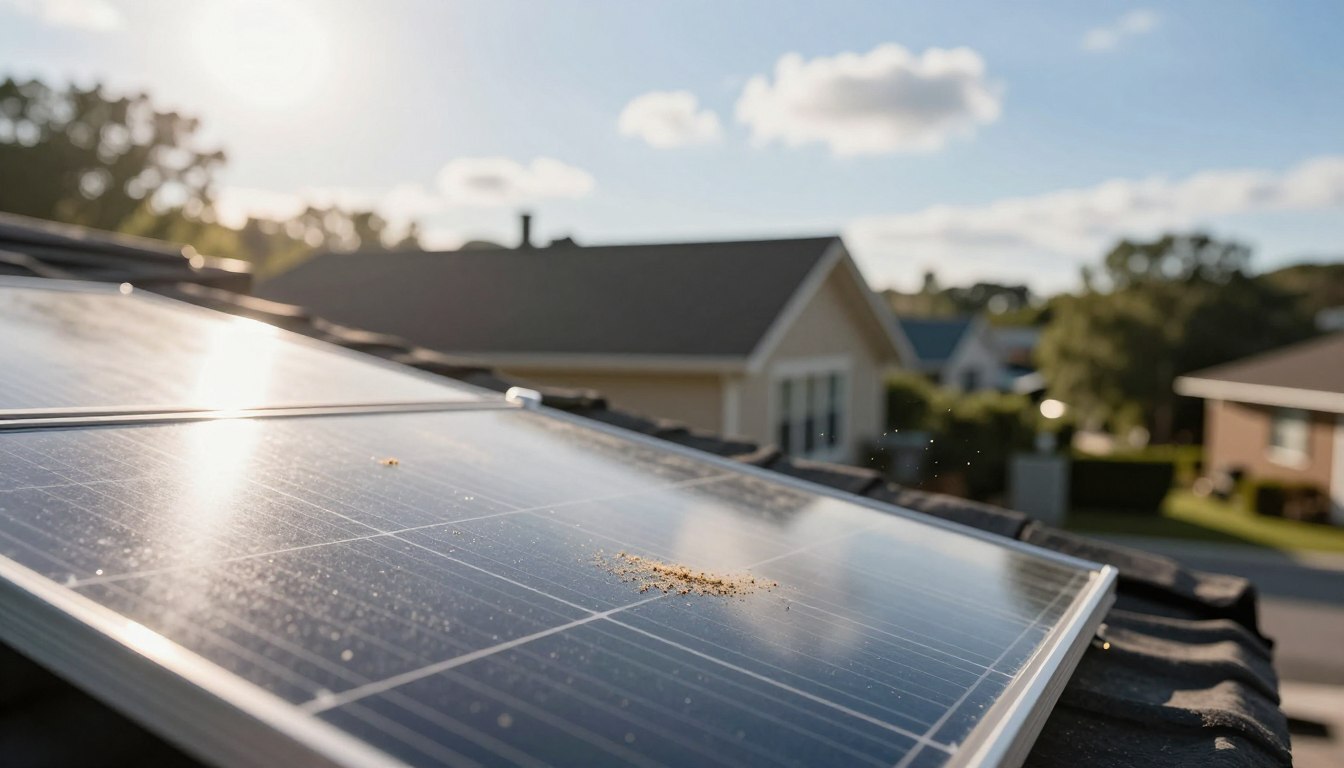
A roof wash by itself will not make solar panels produce more electricity, but removing heavy residue from the panel glass can help restore light exposure. Soiling means dust, pollen, dirt, bird droppings, or other residue that builds up on a solar panel’s surface. Most ordinary dust and debris are often washed or blown away naturally, so cleaning every patch is not always useful.
Key Takeaways
- Roof washing alone does not directly raise panel output.
- Soiling matters when residue blocks sunlight at the glass.
- Weather removes much ordinary dust and debris naturally.
- Persistent deposits can justify a closer look at production.
- Safe access matters more than following a rigid wash schedule.
For a homeowner protecting a solar investment, the distinction matters: the roof beneath the array is not the surface that converts sunlight. Solar panel glass is. A clean roof may support sound roof maintenance, but cleaning it alone does not directly improve panel output. We can use visible buildup and production patterns to decide whether residue is more than routine grime.
How a Clean Roof Improves the Efficiency of Solar Panels
Cleaning helps only when material on the panel glass is reducing the sunlight that reaches its cells. A wash can remove that physical barrier, but it cannot change the panel’s design or guarantee a set energy gain.
Module efficiency describes how well a panel converts sunlight into electricity. System energy production is broader: it also depends on shade, equipment condition, weather, and other conditions. Cleaning may restore access to sunlight, but it does not upgrade a panel or promise a specific output.
"Cleaning can help when residue blocks sunlight, but it cannot guarantee a specific increase in energy production."
That distinction helps us judge claims about solar performance. A panel with clear glass may still produce less energy during cloudy weather or when nearby trees cast shade. A dirty panel may produce less than it could, but the change depends on how much glass is covered and how long the residue stays.
The roof itself matters when debris from it shades a panel or lands on its glass. Moss, leaves, or roof grime can affect the array if they reach or cover its light-facing surface. Cleaning the roof without addressing material on the glass does not remove that barrier.
So the practical question is not whether a roof looks clean. It is whether something on the panel glass is blocking light for long enough to affect system output. The kind of residue, its location, and the panel angle all influence that answer.
Different deposits behave differently in sun, wind, and rain. Some disappear quickly, while sticky or sheltered residue can remain where it formed and deserve closer attention.
What Dirt and Debris Can Do to Solar Panels
A thin layer of ordinary dust is usually less persistent than a sticky deposit or a dropping that remains in one place. The key difference is how long residue stays on the glass and whether it covers a meaningful area.
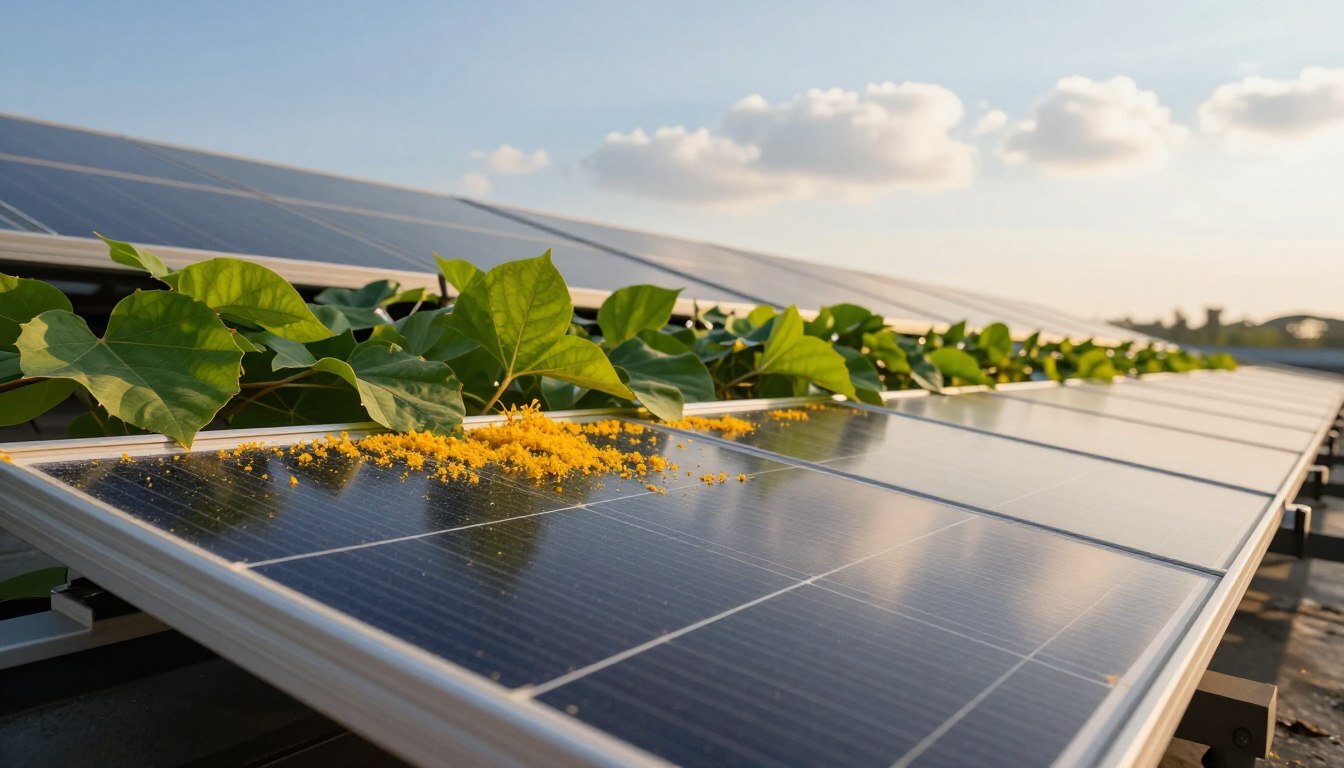
Sun, wind, and rain remove most ordinary pollutants from many rooftop arrays. Dust may settle across a panel, while leaves can blow away or wash off. Pollen can leave a film, and bird droppings may cling to a small spot until weather loosens them.
Everyday dust, pollen, and leaves
Loose dust is often carried off by wind or rain, especially on panels with enough tilt for water to run down. Pollen can stick more than dry dust, while leaves may lodge at a frame or collect near the lower edge. Nearby trees can supply both pollen and leaves, increasing the chance that debris returns.
| Residue | What weather typically does | When it may remain |
|---|---|---|
| Dust | Wind and rain often disperse it | Dry spells or low panel angles |
| Pollen and leaves | Rain can wash or move them | Near trees, frames, or panel edges |
| Bird droppings | Rain may loosen many deposits | Under perches or during dry weather |
Bird droppings and stubborn residue
Bird droppings can be more persistent than a broad dust film because they often sit in one place and may dry before rain reaches them. A roof edge, nearby tree, or other bird perch can lead to repeated deposits on the same panel. Panel angle also affects whether rain can carry residue off.
Smoke haze is different. Temporary haze affects sunlight in the air before it reaches the panels; it does not necessarily leave a layer on the glass. That means a short-term drop during smoky weather may not point to surface soiling.
When production falls, visible residue is only one clue. We also need to separate a lasting obstruction from normal weather changes or a problem elsewhere in the system.
How to Tell Whether Dirt Is Reducing Your Solar Output
A low-output reading on one cloudy afternoon is not enough to show that dirty panels are the problem. We get a clearer comparison by looking at production across similar seasons, times of day, and weather.
Compare like conditions before treating a production change as evidence of soiling. Solar output varies with cloud cover, time of day, season, and shading. Heavy smoke haze has also been associated with temporary output reductions of 15-45%, even when the panel surface is not dirty.
Compare production under similar conditions
Monitoring data can show whether a decline lasts beyond a cloudy day or a seasonal shift. We can compare similar sunny periods and note whether the drop is limited to certain hours. A sudden change or a long decline deserves attention, but neither pattern alone proves that residue is responsible.
Check for causes beyond the panel surface
Nearby shade can change as trees grow or the sun’s path shifts. Smoke haze may reduce incoming sunlight, and a system fault can also affect energy production. A visual check helps us see whether residue is present, but clean-looking glass does not confirm that all equipment works as expected.
| What we notice | Possible explanation | Practical next check |
|---|---|---|
| Output changes with clouds | Cloud cover or smoke haze | Compare similar clear-weather periods |
| A persistent drop with visible residue | Surface soiling may contribute | Compare trends and inspect panel glass |
| A persistent drop with clean-looking panels | Shade or a system fault | Look for new shade and contact the installer |
Why is my electric bill high if I have solar panels? Bills can remain high when household use rises or system production falls. Cloudy weather, seasonal sunlight, shade, system faults, and utility billing arrangements can all matter; a dirty panel is only one possible cause.
When monitoring and a visual check both point toward persistent soiling, the site itself can help us judge whether cleaning is likely to matter.
When Cleaning Can Make a Noticeable Difference
Cleaning is most likely to matter when residue stays on the glass instead of being rinsed or blown away. Flat panels and dry, dusty surroundings can make that persistence more likely.
Study results show that cleaning gains vary sharply with local conditions. In California, flat panels beside a sandy, dusty area produced twice as much energy after their first cleaning in 15 months. Nearby tilted panels showed little improvement.
Flat or low-tilt panels in dry, dusty places
Water runs off a tilted panel more readily than a nearly flat one, so rain may leave more residue behind on low-angle glass. Dust can also settle faster near sandy or dusty ground. A University of California study found a 7.4% efficiency loss after nearly five months without washing or rain during a summer drought.
Those findings do not set an expected result for every home. The California comparison involved unusually dusty conditions, and its tilted panels changed little after cleaning. An Arizona study found a 1% performance improvement after dust and dirt were cleaned from panels.
Persistent deposits beneath trees or bird perches
Panels below trees may collect pollen, leaves, and deposits from nearby bird activity. A perch above the array can lead to repeated droppings in one area. The combination of sheltered spots and little rain may leave residue longer than on an open, tilted roof.
| Situation | Why residue may persist | Cleaning outlook |
|---|---|---|
| Nearly flat panels | Rain drains less readily | Check for lingering deposits |
| Dry, dusty surroundings | Dust settles during long dry spells | Cleaning may help if buildup persists |
| Panels beneath trees or bird perches | Pollen, leaves, or droppings recur | Inspect for repeated residue |
For most sites, these examples are reasons to inspect, not promises of a particular gain. We can match the approach to local conditions: exposed, tilted panels may need little intervention, while a sheltered flat array may warrant closer checks.
How Often Should We Check and Clean Solar Panels?
For many homes, checking panels once or twice a year is a reasonable starting point, not a fixed obligation. A typical interval is about 6-12 months, adjusted for what we see on the glass and in production data.
Use the interval as a starting point, then check sooner when local conditions leave persistent debris. Prolonged dry weather, heavy pollen, nearby trees, and bird activity can all justify an earlier look.
We can review monitoring data and visible panel condition before scheduling a wash. A production pattern that remains steady, paired with clear glass, may give little reason to clean immediately. A new drop alongside visible deposits makes a closer assessment more useful.
- Prolonged dry weather can allow dust to build up.
- Heavy pollen can leave a film on the glass.
- Nearby trees can add pollen and leaves.
- Bird activity can leave deposits in repeated spots.
Rain can reduce the need for cleaning because it often carries ordinary dust away. It does not always remove stubborn deposits, especially when panels sit at a low angle or residue dries in place.
Local conditions matter more than a calendar reminder by itself. A home in a rainy, open area may need less attention than one beside dusty ground or overhanging trees. We should not wash panels simply because another season has passed.
How to Clean Solar Panels Safely from the Ground
Start with the safest question: can we reach the panels from the ground without stretching or losing control of the pole? Ground access is the safer choice for a cautious home cleaning.
Do not climb onto the roof or walk on the array. Panels should be cool before washing, so early morning or late evening is preferable. A soft brush on an extension pole and plain or deionized water are suitable gentle tools.
- Check the panel and system guidance before starting.
- Choose a cool time, such as early morning or late evening.
- Work from the ground with an extension pole where possible.
- Rinse gently with plain or deionized water.
- Use a soft brush only on residue that does not rinse away.
- Stop if the panels cannot be reached safely.
A gentle rinse is enough for loose material. If a spot remains, a soft brush can help without scraping the glass. Keep the pole under control and avoid pushing hard against a panel or its frame.
Pressure washers can damage panels or seals, so we should not use them. Harsh chemicals and abrasive scrubbers can also harm surfaces or seals. Do not use strong cleaners to chase a stubborn mark.
Never walk on the array, climb onto the roof, or handle electrical components as part of cleaning. If the pole cannot reach the panels without unsafe stretching, or the glass remains out of reach, stop rather than improvising a higher access method.
When to Hire a Professional Solar Panel Cleaner
If reaching the panels requires climbing onto a wet or steep roof, professional help is the safer choice. A trained service provider is also useful when stubborn residue cannot be reached or removed safely from the ground.
Choose help based on safe access and experience around rooftop solar equipment. Ask what access methods the crew uses, whether its brushes and water are suitable for panels, and how often it works around rooftop arrays.
Roof access or difficult-to-reach panels
A steep roof, a high array, or a narrow route can make a do-it-yourself wash unsafe. A service provider can assess the roof layout and reach the glass using suitable access equipment. Stubborn deposits may also call for tools or experience beyond what we can safely use from the ground.
Professional roof cleaning is a separate service from solar panel cleaning. If roof care is also needed, we can learn about professional roof-cleaning methods without treating them as a substitute for panel care.
Choosing a service that protects the system
Ask how the crew avoids stressing the panels, frames, and roof. The provider should be able to explain its access plan and the equipment it uses around the array. Price depends on access, roof layout, system size, and the work required, so the same fee does not fit every home.
For advice about a cleaning question, call (703) 261-8228. The number is a contact for guidance, not a promise of a particular price or service arrangement.
What Else Can Improve Solar Panel Performance?
If a careful cleaning does not restore expected production, the cause may lie outside the panel glass. Unobstructed sunlight, working equipment, and steady monitoring all help us understand solar performance.
Cleaning cannot fix shade, wiring faults, or inverter problems. Persistent shade can come from HVAC equipment, skylights, nearby buildings, or tree growth that has changed since the array was installed.
What increases solar panel efficiency? We can keep sunlight unobstructed, address persistent shading, monitor production, and maintain the system. Cleaning helps only when soiling is part of the problem; it cannot correct faults in wiring or an inverter.
Roof conditions can affect a home’s broader energy use as well as the array. For a wider look at roof maintenance and household efficiency, see how clean roofs can affect energy efficiency. That topic includes roof factors beyond panel cleaning.
We can use this short checklist to look beyond the glass:
- Review monitoring trends for a lasting change.
- Look for new shade from trees or nearby equipment.
- Check for visible system damage without touching electrical equipment.
- Contact the installer about unexplained declines.
Protecting the Roof, Solar Equipment, and Warranty
Before arranging roof or panel maintenance, check the system documents and identify who is qualified to work on each part. Most solar system warranties do not require regular panel cleaning, but our own terms may differ, so we should check them or ask the installer.
Do not treat a visible panel defect as a cleaning problem. Cracks, chips, glass discoloration, or corrosion are reasons to contact an installer for an inspection, not to attempt a repair.
"Check the system terms before maintenance, and leave visible panel damage to an installer."
Check warranty terms before maintenance
System documents explain which work is covered and who should handle it. We should ask the installer about uncertain maintenance terms before arranging work that may affect panels or other equipment. Regular cleaning is not a universal warranty requirement, and a cleaning visit cannot repair a system fault.
Visible roof damage also deserves attention from the right trade. Moss can hold moisture and affect roofing materials, so roof moss removal and roof care should be considered separately from washing panel glass.
Keep roof work separate from panel cleaning
Panel cleaning targets the glass; roof washing targets roofing materials. Roof work may use water, chemicals, or equipment that could affect the array if the crew does not account for it. Coordinate with a roofer and solar installer so the work plan protects both the roof and the system.
Conclusion
A clean panel surface can help when buildup is blocking sunlight, but washing is not a guaranteed fix for low production. Ordinary dirt is often handled by weather, while persistent residue on flat or exposed panels can justify cleaning.
Safety and monitoring matter more than chasing a fixed washing schedule. We can start by checking the panel glass and recent production data, then decide whether a safe ground-level wash, an installer, or no cleaning is the right next step. Check visible residue and recent system output before choosing the safest next step.
For expert guidance on exterior maintenance or roof upkeep in Northern Virginia, call (703) 261-8228.
Frequently Asked Questions
Does cleaning your solar panels improve efficiency?
Yes, cleaning can improve efficiency when persistent dirt blocks sunlight, but the gain depends on how dirty the panels are and local conditions. Loose dust often disappears with weather, so washing clear glass may make little difference. A production drop can also come from clouds, shade, or equipment, so we should consider those factors before linking a change to dirt.
What increases solar panel efficiency?
Unobstructed sunlight, less persistent shade, production monitoring, and system maintenance can support solar panel efficiency. Cleaning helps only when soiling blocks light from reaching the cells. HVAC equipment, skylights, buildings, and growing trees can cast shade on an array. If a production decline continues after visible residue is addressed, an installer can check for system issues.
Why is my electric bill high if I have solar panels?
Your bill can remain high when household use rises or solar production falls. Clouds, seasonal sunlight, new shade, system faults, and utility billing arrangements can all affect what you owe. Compare recent energy use with solar production rather than assuming dirty panels are the cause. A panel wash will not resolve a problem with wiring, an inverter, or billing terms.
How often should solar panels be cleaned?
Once or twice a year is a useful starting point, not a requirement for every home. Dry, dusty locations, high pollen, nearby trees, and visible buildup can call for closer checks. Rain and wind remove much ordinary debris, so we can review the panel condition and monitoring data before scheduling a wash. Local conditions matter more than a fixed calendar.
Does rain clean solar panels enough?
Rain and wind remove most ordinary dust and debris from many rooftop panels, so frequent washing is often unnecessary. Rain may not clear a stubborn deposit, especially on flat or low-tilt panels where water drains slowly. If residue remains and production data points to a lasting decline, we can consider a safe cleaning approach rather than relying on another storm.
Is it safe to clean solar panels yourself?
Ground-level cleaning with an extension pole is safer than climbing onto a roof. Use gentle water and a soft brush only when panel guidance allows it, and stop if the array is out of reach. Do not walk on panels, handle electrical parts, or use pressure washers and abrasive pads. A steep roof or difficult access calls for qualified help.