
The Best Time of Year for Roof Cleaning in Reston, VA Tips
Spring and early fall are usually the best times for Reston homeowners to plan roof cleaning. After a long winter or before colder weather, we may notice stains, moss, or debris and wonder whether to book now. Soft washing is a roof-cleaning method that applies cleaning solution at low pressure to treat organic buildup rather than relying on forceful water. We’ll explain how to weigh the season, the forecast, and your home’s condition before choosing a safe appointment.
Key Takeaways
- Spring and early fall are generally favorable scheduling windows.
- Forecast and roof conditions matter more than a fixed date.
- Summer may work when crews manage heat and drying.
- Winter service depends on a mild, above-freezing spell.
- Visible algae and moss deserve an assessment, not a rushed appointment.
The right appointment depends on both the season and the weather, so we’ll compare the seasonal options first.
The Best Time of Year for Roof Cleaning in Reston, VA
Spring and early fall are usually the strongest choices for roof cleaning in Reston. Moderate temperatures often make these seasons practical, but the time year homeowners choose should still fit the forecast and the roof’s condition.
No single month works best for every property. Summer can suit a carefully timed visit, and winter may work during a mild, above-freezing spell. We can use the comparison below to narrow the options without treating any season as a guarantee.
"Spring and early fall are generally favorable, but no month is right for every roof. The forecast and the property still guide the appointment."
| Season | Scheduling outlook | Most useful opportunity | Main limitation |
|---|---|---|---|
| Spring | Generally favorable | Address buildup noticed after winter | Changeable weather can require a flexible appointment |
| Summer | Possible with careful timing | Treat visible growth without waiting for fall | Heat and direct sun can affect the application |
| Fall | Generally favorable, especially early fall | Clean before colder weather | Leaf drop may affect gutter timing |
| Winter | Possible only during a suitable mild spell | Handle a time-sensitive need | Ice, frost, snow, or freezing runoff make conditions unsafe |
Spring can address buildup that became noticeable over colder months, while early fall gives us a chance to plan before colder weather arrives. Summer may prevent a homeowner from waiting months when growth is already visible. Winter has a narrower window, so a suitable forecast is essential.
These are scheduling outlooks, not promises that a crew can work on every clear-looking day. Roof surfaces and site conditions can differ from what we see from the ground. The forecast can make or break any seasonal window, so we should check the day’s weather before deciding whether to proceed.
What Weather Conditions Make Roof Cleaning Safe?
A rainy appointment day can leave a cleaning solution diluted before it has time to work. Heavy rain is a practical reason to reschedule, and the technician should assess the forecast and roof conditions before starting.
Weather affects both the application and safety around the home. A forecast that looks manageable from indoors may not reflect how wind, moisture, or surface temperatures affect the roof itself.
Rain and wind can disrupt the application
Heavy rain can dilute treatment before it has enough time to work on the roof. Waiting for a drier window helps preserve the intended treatment time. Light rain can also change how moisture moves across the shingles, so the technician should consider the actual conditions, not just the chance of rain.
Strong wind makes even application harder. It can carry cleaning solution away from the target area and make controlled work more difficult. When wind is too strong for a steady application, postponing is more sensible than rushing to finish.
Direct sun and heat affect drying
Direct afternoon sun can heat roof surfaces more than the surrounding air. On a hot surface, cleaning solutions may dry too quickly, making even drying harder to manage. A crew may consider a cooler part of the day when the day’s temperatures and roof exposure allow it.
Shaded slopes can behave differently from sunlit ones on the same roof. Moisture may remain longer in one area while another dries fast. The technician needs to account for those differences while applying treatment, rather than assume every surface will respond alike.
Frost and freezing conditions create hazards
Frost, ice, or freezing water can turn a roof into a slip hazard. Runoff can also freeze on nearby surfaces, including walkways and driveways. Cleaning should not proceed when water or runoff could freeze on the roof or ground.
| Forecast condition | Effect on the work | Scheduling response | Main concern |
|---|---|---|---|
| Heavy rain | Can dilute treatment | Wait for a drier window | Reduced treatment time |
| Strong wind | Makes even application harder | Postpone until calmer | Less controlled application |
| Direct sun and high surface heat | Treatment may dry too quickly | Consider a cooler part of the day | Uneven drying |
| Frost, ice, or freezing runoff | Water may freeze on the roof or ground | Do not proceed | Slip hazards |
A technician should assess the forecast and roof conditions before starting, including how moisture and temperature affect the work. Suitable weather is only one part of the decision; a roof’s shade and visible growth also help us decide whether it needs attention now.
What Makes Roof Growth Return Faster?
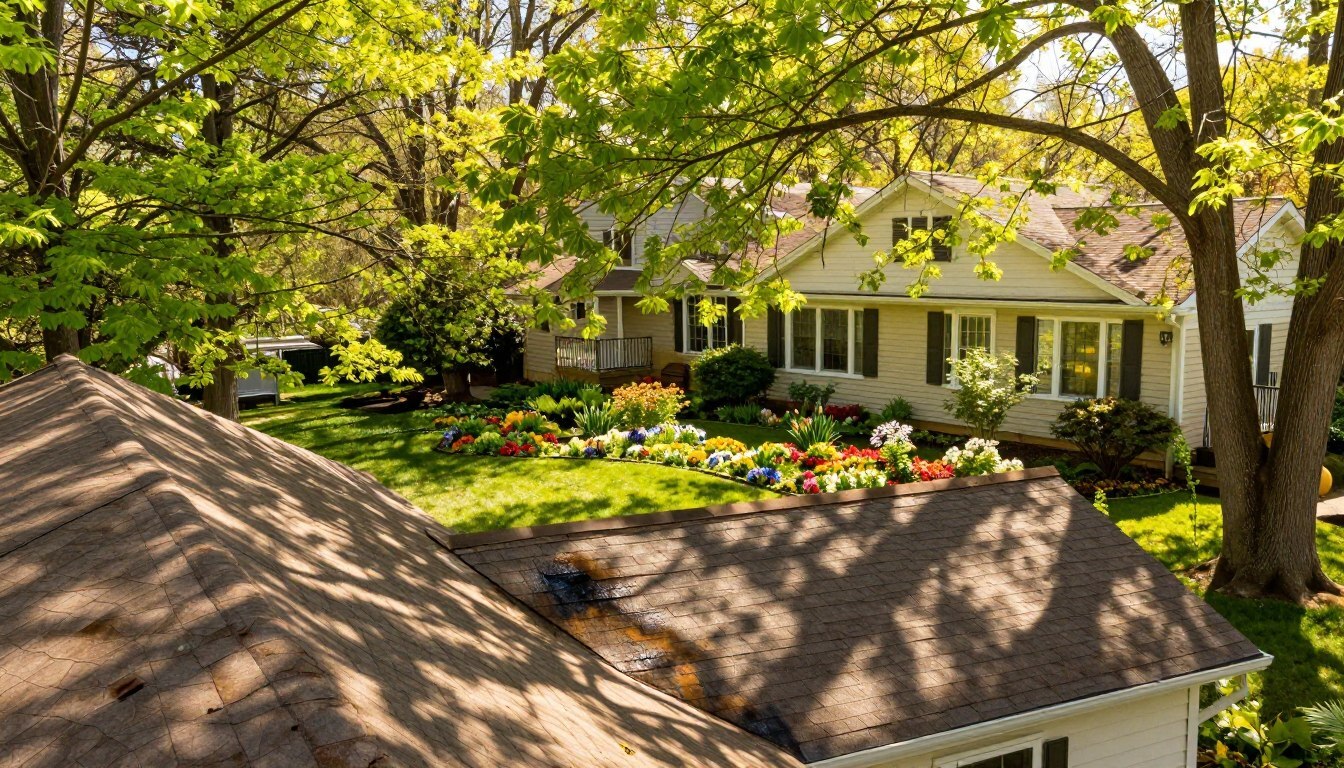
One roof slope may stay shaded and damp while another dries sooner in the same afternoon. That difference matters because algae and moss are more likely to take hold in shaded, moist areas. Exposure and roof layout can make growth return at different rates across one home.
Tree cover can block sunlight and leave branches, leaves, or other organic debris on the roof. Nearby trees may also shade the same section for much of the day. These property conditions can affect how often homeowners notice dark marks or green patches.
Shade and tree cover keep areas damp
Areas that receive less sun may hold moisture longer after rain or morning dew. Moss thrives in damp, shaded areas, while algae can show up as dark staining. A roof with mature trees close by may need closer monitoring than a more exposed roof, even when both use similar materials.
For a closer look at what shaded buildup can mean, homeowners can review information about roof moss removal and shaded growth. A stain alone does not identify its cause, though. Debris, algae, moss, and other marks can look different from the ground.
Roof layout and moisture affect buildup
Valleys, edges, and areas where roof sections meet can collect debris or stay damp. The amount of shade, the slope, and nearby landscaping all shape the roof’s exposure. A roof’s age and material may also affect how it responds to moisture and how carefully it should be assessed.
Moss holds moisture and can interfere with the way shingles overlap and shed water. When moss spreads along shingle edges, it deserves attention because it can affect how those edges sit. Gradual growth does not prove that a roof is damaged, but visible buildup is a reason to assess the area.
Visible streaks and moss signal a need to assess
Roof stains may start as faint streaks and develop into darker discoloration or patches of algae and moss. Growth can take hold gradually, so a periodic look from the ground can help us notice changes before they cover a large area.
- Faint or spreading dark streaks
- Green patches in shaded areas
- Moss along shingle edges
- Organic debris collected in roof valleys
These signs call for an assessment, not an assumption that every stain proves roof damage. Homeowners can compare the affected area over time and consider the roof’s exposure. Next, we can look at the practicalities of each season, starting with spring cleanup.
What Makes Spring a Practical Time to Schedule Roof Cleaning?
A homeowner assessing the property after winter may spot roof discoloration while checking the yard and exterior. Spring offers a useful opportunity to look for visible growth and debris left behind during colder months. We can coordinate roof cleaning with other exterior maintenance while keeping each task distinct.
Leaves, small branches, and other debris can collect in roof valleys and along gutter lines. A spring visit gives homeowners a chance to note what remains and decide which services the property needs. We should not assume that a roof cleaning automatically includes gutter work or other exterior cleaning.
Roof cleaning, gutter cleaning, house washing, and window cleaning are separate tasks. Homeowners may schedule them together to coordinate exterior maintenance, but each service has its own purpose. For example, roof treatment addresses visible buildup, while gutter cleaning clears material from the drainage channel.
Homes with noticeable moss or dark stains may benefit from an assessment before deciding on the work. Homeowners can also consider related roof and gutter cleaning services when planning exterior care. The right combination depends on what the home actually needs.
Plan a spring visit around the property
We can make the appointment more useful by noting what needs attention before contacting a service provider. This keeps the conversation focused on the roof and any other work the homeowner wants to coordinate.
- Note debris in valleys and along gutter lines.
- Identify other exterior work to coordinate.
- Keep the appointment flexible around suitable weather.
Spring is not the only workable window for roof cleaning. If stains become visible after spring has passed, summer may still offer a practical scheduling option when conditions allow.
Can We Clean a Roof During Summer?
A homeowner who notices dark streaks after spring may wonder whether to wait until fall. Waiting is not always necessary: summer roof cleaning can be practical when the weather, roof condition, and application plan support safe work.
Warm, humid weather can encourage organic growth on roofing and other exterior surfaces. Visible growth does not need to wait until fall if a safe appointment is possible. A crew can adapt the work to the day rather than treat every summer visit alike.
Direct afternoon sun can make roof surfaces very hot. A technician may schedule an earlier start, then monitor how quickly the treatment dries. The roof’s surface temperature and exposure matter, not just the air temperature reported in a forecast.
Cleaning solutions need time to work, so drying too quickly can complicate application. A crew should adapt its process to the conditions on that roof and avoid forcing the job through a poor window. Lower pressure alone does not address the timing or drying needs of a treatment.
Why Schedule Roof Cleaning in Early Fall?
A tree-lined home approaching fall may show roof staining as leaves begin to collect. Early fall can be timely for treating visible buildup before colder weather, while planning gutter work around leaf drop. Roof cleaning and gutter cleaning serve different functions.
Roof cleaning addresses visible organic buildup on the roof. Clear gutters carry rainwater away from the roofline, while blocked gutters can overflow against the fascia, siding, landscaping, or foundation area. Scheduling both tasks together may be convenient, but one does not replace the other.
Homes with mature trees may need a roof visit earlier in the season and gutter cleaning after most leaves have fallen. That timing helps homeowners avoid clearing gutters before more leaves arrive. The best sequence depends on how much tree coverage surrounds the property.
A home with few nearby trees may have less leaf drop to manage than a tree-lined property. We can plan the roof visit and gutter service separately if their best timing differs. The amount of tree cover is a more useful guide than assuming every home needs the same fall schedule.
Homeowners can assess visible staining and consider whether leaves are already collecting near the roofline. When roof and gutter work are both on the list, clear communication helps keep the service scope understandable. Roof and exterior cleaning in Northern Virginia can include separate services for these needs.
Can Roof Cleaning Be Done in Winter?
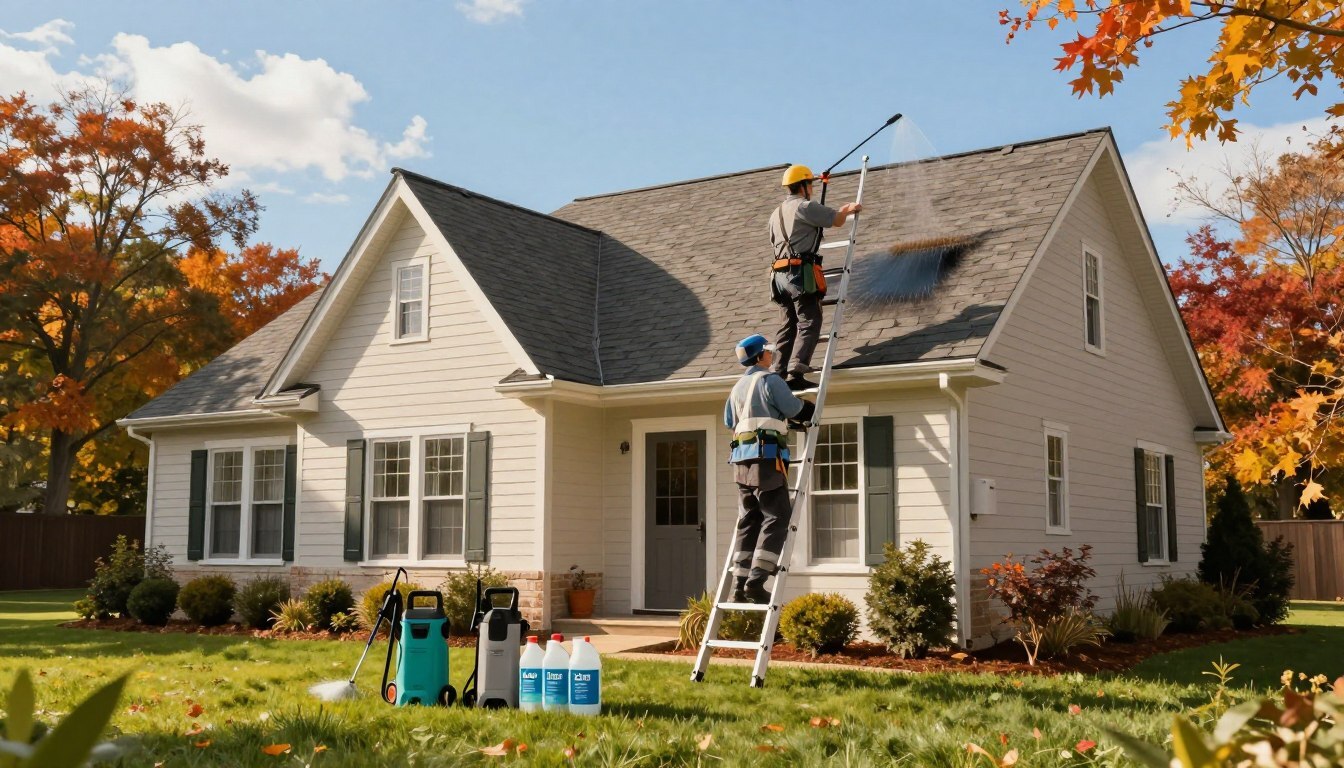
Winter roof cleaning is not automatically impossible, but it depends on the actual forecast. A mild stretch with above-freezing temperatures may allow service when the roof and surrounding areas are safe. Snow, ice, or frost that creates a hazard means the work should not proceed.
A winter appointment needs more than a mild afternoon forecast. Roof surfaces may remain icy or frosted, and water running off the roof can freeze after it reaches the ground. Driveways, walkways, decks, and other nearby areas all need consideration.
A property sale or severe visible staining may make a homeowner want prompt attention. Those time-sensitive concerns are reasons to ask for an assessment, not reasons to ignore safety. A technician can evaluate whether a suitable window exists and whether runoff can be managed safely.
Which Roof-Cleaning Method Is Safer for Shingles?
On the same roof, one appointment could rely on forceful water, while another uses a treatment solution. The difference is important because high-pressure washing can loosen shingle granules, disturb edges, or force water beneath roofing materials.
Soft washing uses low-pressure application and cleaning solutions to treat organic staining. It relies on treatment rather than forceful water to address algae and moss. A careful process still needs even application, time for the treatment to work, and management of runoff.
| Approach | Water force | Main task | Roof-specific concern |
|---|---|---|---|
| High-pressure washing | High | Relies on water force to clean | Can remove granules or disturb shingles |
| Soft washing | Low | Cleaning solution treats organic buildup | Application and runoff still need care |
| Dry debris clearing | No wash stream | Removes loose leaves and branches | Does not treat dark organic staining |
Shingles have a protective surface of granules, so forceful cleaning can affect more than the visible stain. Water pushed beneath roofing materials can also create a problem that ordinary surface cleaning does not solve. The method should match the roof material and the condition of the shingles.
Dry debris clearing can remove loose leaves and branches, but it does not treat dark organic staining. Homeowners comparing gentle roof moss removal options should ask how the crew handles shingles and nearby areas. Roof condition and provider practices are checks to make before booking.
What Should We Check Before Scheduling a Roof Cleaning?
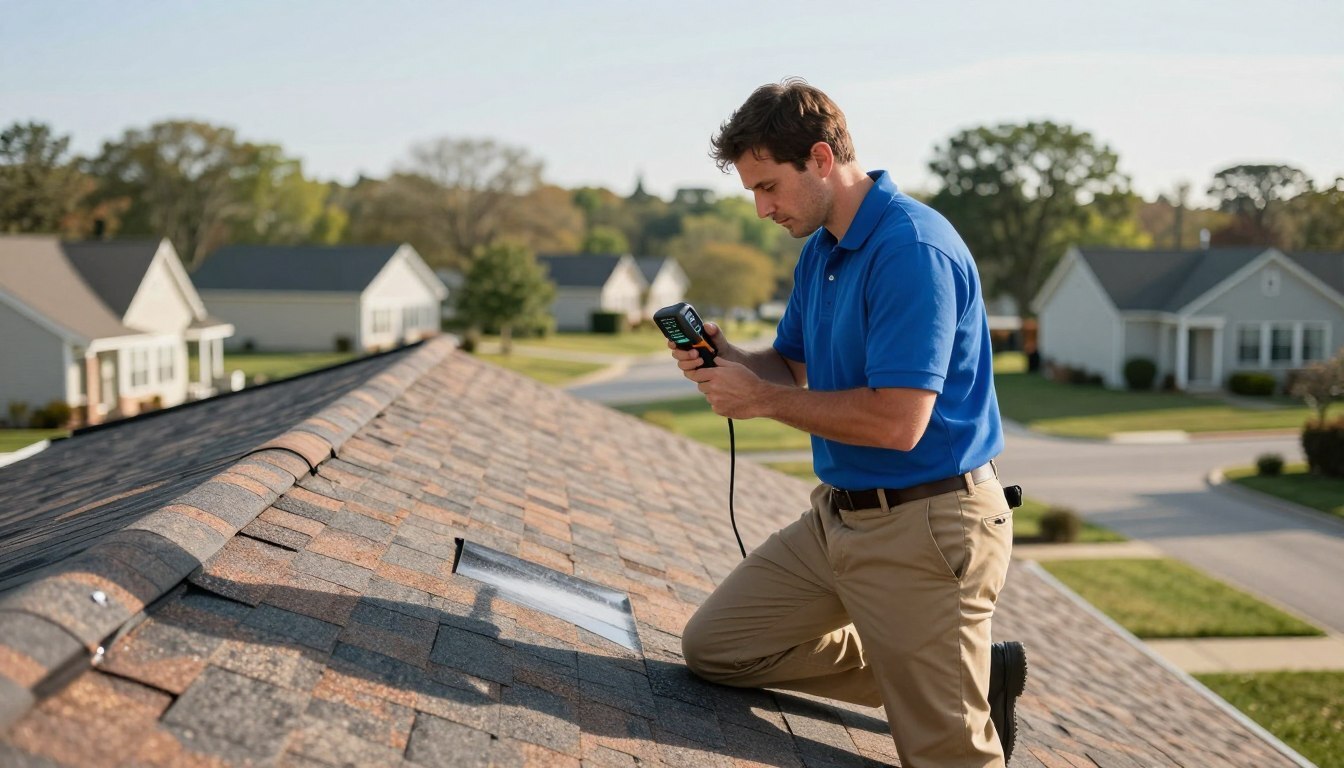
A homeowner preparing to request cleaning may first find a curled or missing shingle. That changes the priority: cleaning is not a substitute for roofing repairs, and a qualified roofing contractor should assess signs of serious damage first.
Missing shingles, severe curling, sagging, active leaks, soft areas, or advanced deterioration call for a roofing evaluation. Cleaning should not hide or delay attention to those problems. We can monitor visible changes rather than assume every roof needs cleaning on a fixed annual schedule.
Look for roof damage that needs a roofer first
Roof age alone does not set a universal cleaning interval. Shade, surrounding trees, roof material, age, and other property conditions affect how quickly growth returns. Homeowners can note visible changes over time and seek an assessment when the roof’s condition is unclear.
A roofing contractor can evaluate repair concerns that a cleaning service should not treat as routine maintenance. We should resolve signs of active damage before planning work that involves roof access or water. That order helps prevent a cleaning visit from being mistaken for a repair.
Confirm the method, forecast, and property protections
Before booking, homeowners can ask what cleaning method the crew plans to use and how it will protect nearby landscaping. The provider should also explain how roof access and runoff will be handled. For advice about a Reston-area property, we can call (703) 261-8228.
- Inspect for signs that call for a roofer.
- Ask which method will be used.
- Confirm the forecast and runoff protections.
- Discuss how roof access and nearby landscaping will be handled.
"Resolve roof-condition concerns first, then confirm a weather-safe plan before choosing an appointment date."
Once roof-condition concerns are resolved, we can confirm a weather-safe plan and select an appointment that fits the property.
Conclusion
The best appointment matches the roof’s condition with a suitable weather window. Spring and early fall are usually favorable, but visible growth and a safe forecast should guide the decision for each home.
We can start by noting what has changed on the roof and asking whether the conditions suit the work. A fixed date matters less than choosing a safe time and a careful approach for the roofing materials.
For advice about your property’s roof and the right timing, call (703) 261-8228.
Frequently Asked Questions
How much should I pay to have my roof cleaned?
Roof-cleaning estimates vary with roof size, pitch, material, access, buildup, and cleaning method. A steep roof or difficult access can require more care and time than a low, simple roof. The type and extent of staining also affect the work. We should compare estimates that describe the same service and explain how the property will be protected.
What time of year should you get your roof cleaned?
Spring and early fall are generally favorable times for roof cleaning. Summer may work when the crew can manage heat and drying, while winter service depends on a mild, above-freezing spell. The roof’s condition and the forecast still matter. A suitable appointment should fit both the visible buildup and safe working conditions at the property.
Is it a good idea to pressure wash your roof?
Pressure washing is generally not a good choice for shingle roofs because forceful water can loosen granules, disturb shingle edges, or push water beneath roofing materials. Soft washing uses low-pressure application and cleaning solutions to treat organic staining. Even that gentler method needs careful application, time for treatment, runoff management, and protection for nearby property.
What is the average cost to pressure wash a roof?
Roof-cleaning estimates depend on roof size, pitch, material, access, buildup, and method, so a single average does not describe every job. For shingles, high-pressure washing can cause damage and should not be treated as the default approach. When comparing estimates, ask what method is proposed and what the service includes, including runoff and property protection.
How often should a roof be soft washed?
There is no universal interval for soft washing a roof. We should monitor visible growth and consider shade, nearby trees, roof material, and the roof’s condition. A shaded roof under mature trees may show buildup sooner than a more exposed one. An assessment of the actual roof is more useful than booking automatically on a fixed annual cycle.
How long does it take to clean a roof?
The time needed depends on roof size, pitch, access, buildup, weather, and the steps required to protect the property. A complex roof or one with difficult access can take longer to prepare and treat. The crew also needs to manage application and runoff, so the work should not be rushed just to meet a fixed time estimate.
What damages the roof the most?
No single cause damages every roof the most. Unresolved leaks or deterioration can harm roofing materials, while severe weather can affect shingles and other components. Moisture-retaining organic growth, including moss, can also interfere with shingle edges and water shedding. We should assess the specific roof rather than rank these risks without considering its condition and exposure.