CALL NOW TO GET A FREE ESTIMATE->

The Difference Between Cleaning and Stripping a Wood Deck
Maintaining your outdoor living space represents a significant investment that requires both expertise and careful attention to detail. Protecting your home’s structural integrity is a top priority, yet many homeowners struggle to identify the difference between cleaning and stripping a wood deck. Choosing the incorrect method often leads to premature degradation or unnecessary damage to your boards.
Key Takeaways
- Regular maintenance prevents long-term environmental damage to outdoor structures.
- Cleaning removes surface debris, while stripping eliminates old, failing finishes.
- Selecting the right process depends entirely on the current condition of your lumber.
- Professional assessment ensures you avoid harsh chemicals that harm wood fibers.
- Protecting your investment requires a tailored approach based on material type.
Defining the Two Methods
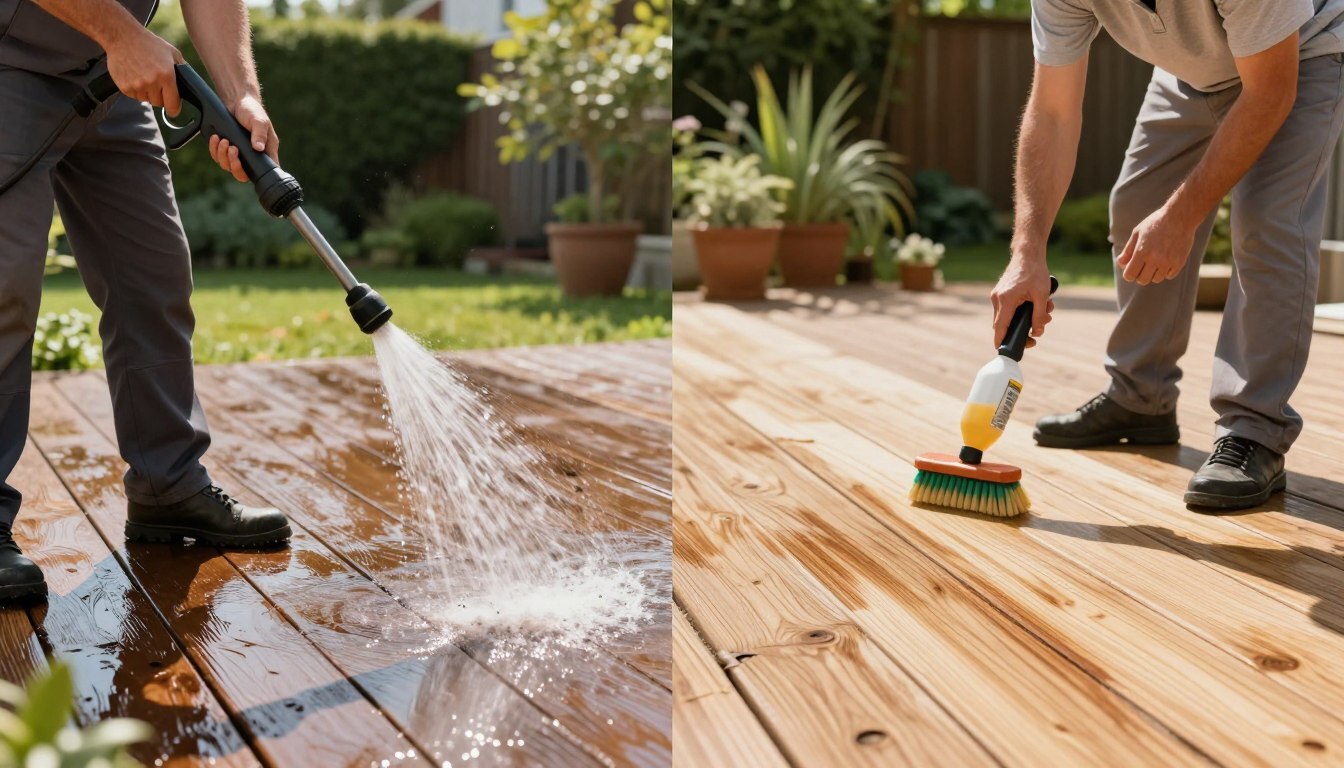
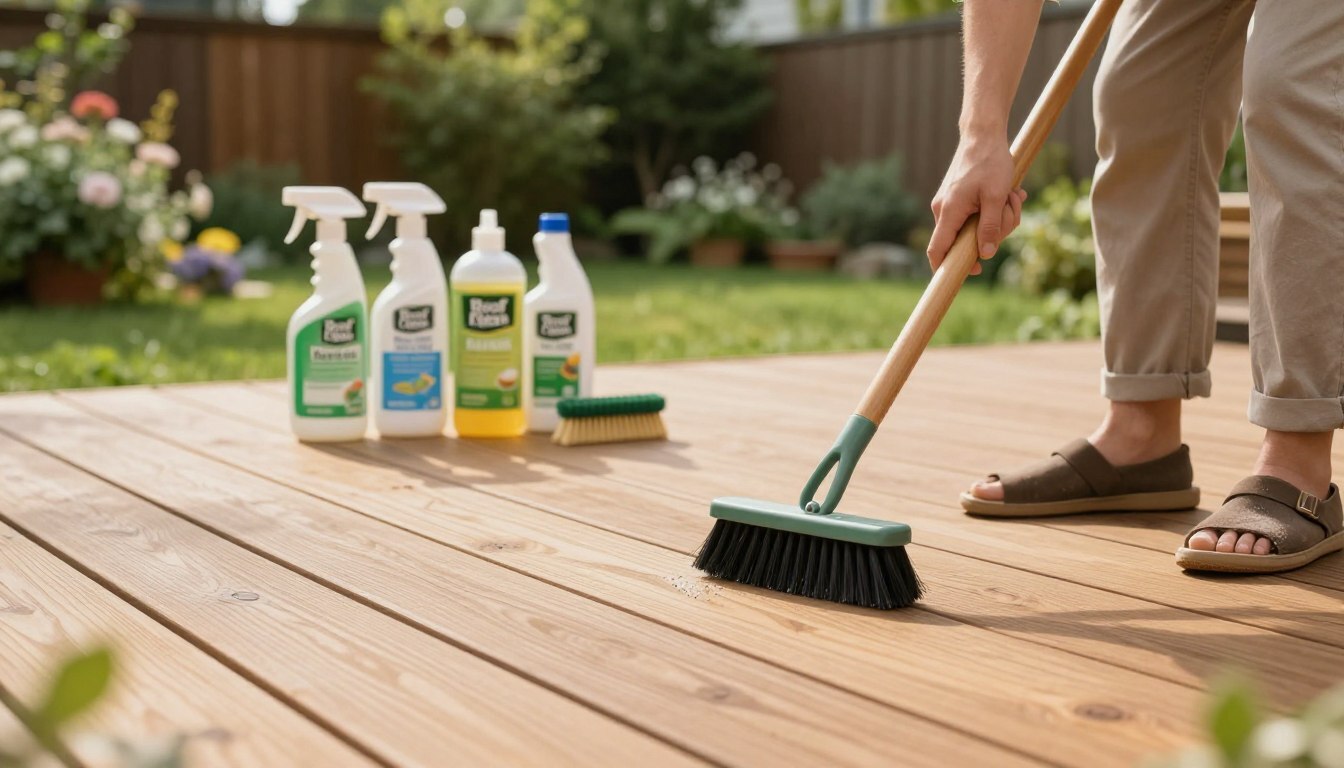
Deck Cleaning acts as a gentle maintenance treatment designed to refresh the appearance of your wood. It focuses on removing surface contaminants like dirt, pollen, and mildew while preserving your existing finish. In contrast, Deck Stripping is an intensive procedure used when a finish has failed. We utilize specialized chemical agents to break down old stains or peeling sealers, effectively resetting the wood surface for a fresh application.
| Feature | Deck Cleaning | Deck Stripping |
|---|---|---|
| Primary Goal | Surface hygiene | Finish removal |
| Chemical Intensity | Mild / Low | High / Aggressive |
| Frequency | Annual / Bi-annual | Every 3-5 years |
| Impact on Finish | Preserves existing | Removes completely |
The Danger of Incorrect Techniques
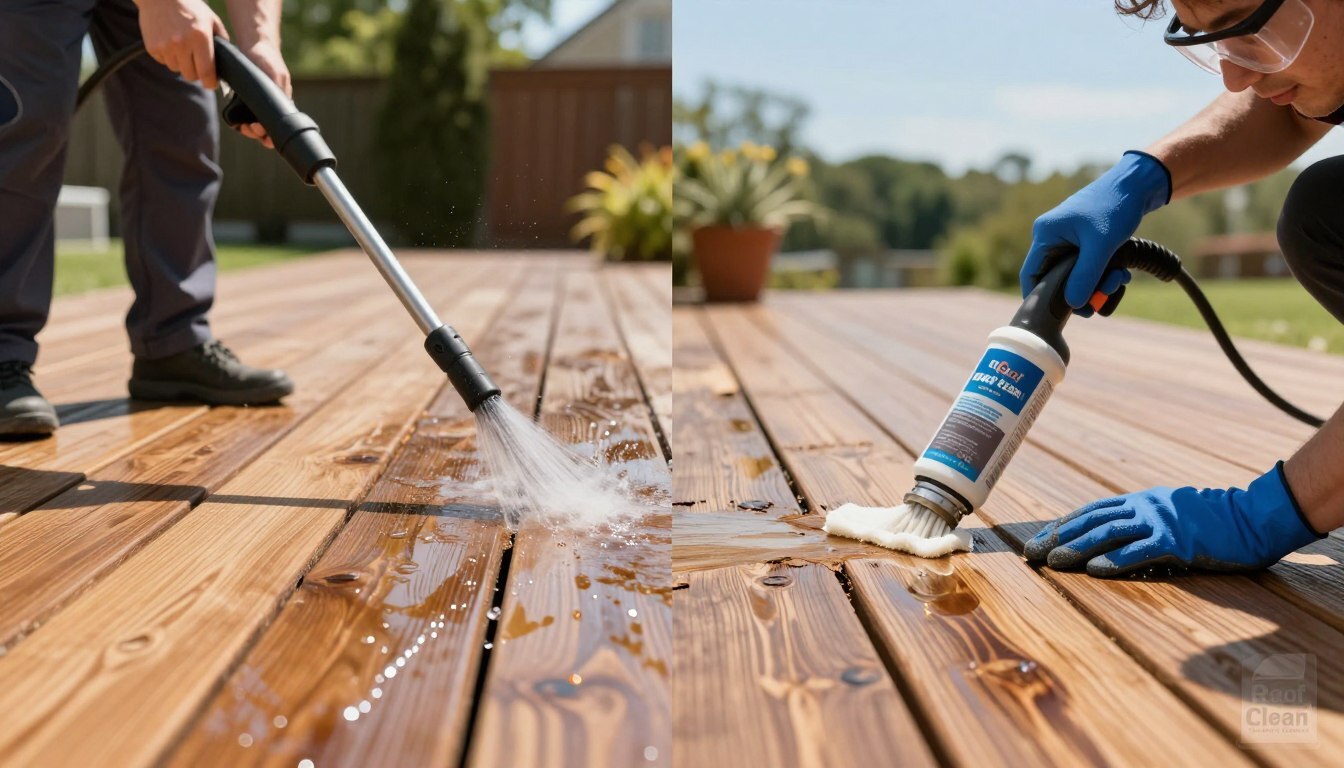
A common misconception is that higher pressure equals a cleaner surface. Using a pressure washer at excessive settings can shred delicate wood fibers, leaving a "fuzzy" texture that prevents stains from absorbing uniformly. We prioritize water volume over pressure—typically utilizing at least 4 GPM at less than 1000 PSI—to lift dirt without mechanical damage.
The Importance of pH Balance
When stripping a deck, the wood is left in a highly alkaline state. If you fail to neutralize this residue with an acidic solution (like Oxalic Acid), new stains will fail to adhere, leading to blotchy colors and premature peeling. Neutralization is a critical restorative step that brightens the wood and ensures long-lasting protection.
FAQ
How can I tell if my deck needs stripping or just a wash?
Perform a "water test." If water beads on the surface, a routine cleaning is sufficient. If the wood absorbs water immediately, or if you see peeling and graying fibers, the sealant has failed and full restoration—including stripping—is necessary.
Why is Sodium Percarbonate preferred over bleach?
Sodium Percarbonate is gentle on wood fibers and effective at lifting organic debris. Bleach (Sodium Hypochlorite) can disintegrate the lignin that holds wood fibers together, leading to permanent structural degradation.
How long should I wait for the deck to dry before staining?
Patience is essential. Wood must reach a moisture content of 15% or lower before applying oil-based stains. This typically takes 24 to 48 hours of dry weather to ensure the product penetrates correctly.
Investing in professional wood deck restoration ensures your outdoor space remains a safe and beautiful asset. Reach out to our experts at (703) 261-8228 to discuss a science-based maintenance plan tailored to your home.
© 2026 All Rights Reserved