CALL NOW TO GET A FREE ESTIMATE->

The Impact of Overhanging Trees on Roof Cleanliness You Should Know
Many homeowners cherish lush greenery surrounding their property. While these plants add beauty, they often create hidden dangers for your shingles. We understand that your house represents a significant investment, and protecting it remains our top priority.
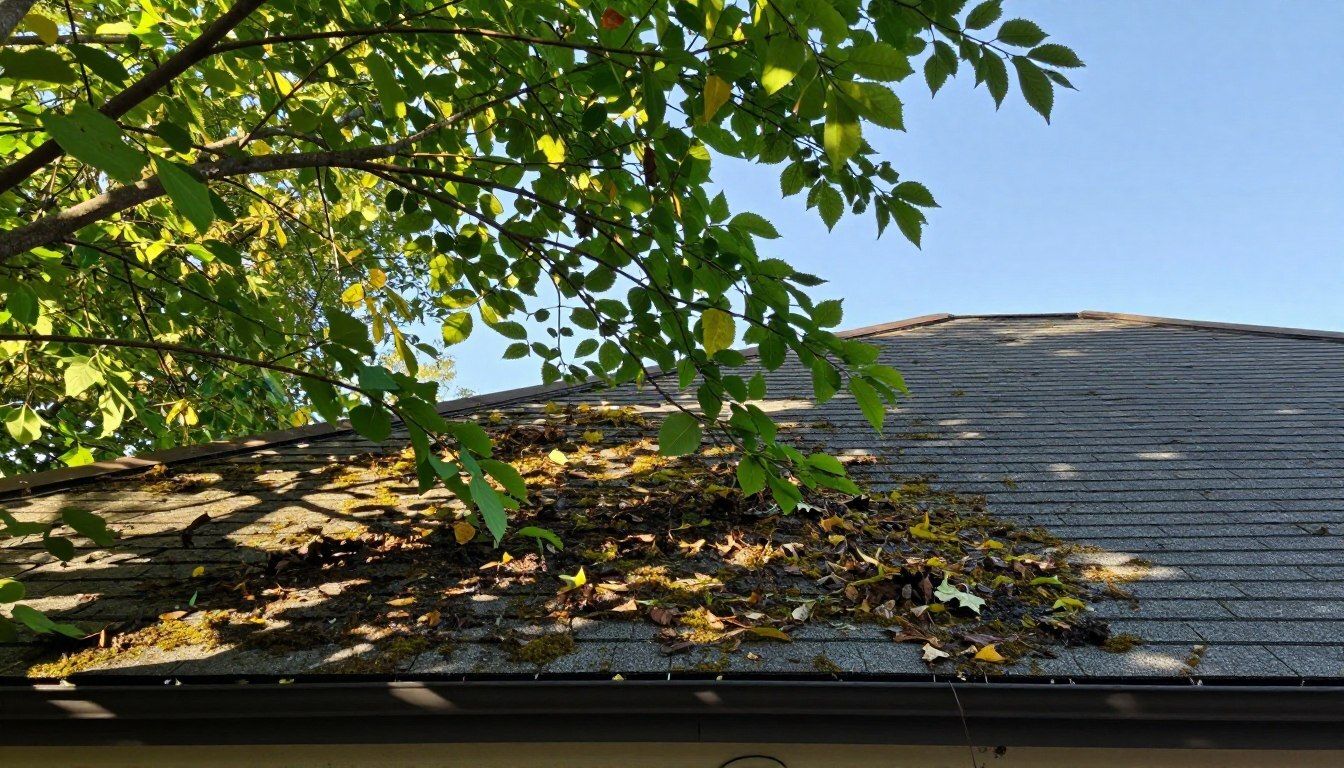
Falling debris and moisture retention foster harmful growth like algae or moss. These biological agents compromise structural integrity over time. By partnering with us, you gain access to science-based solutions that mitigate these environmental risks. We help you maintain a healthy home through expert, proactive care.
Key Takeaways
- Vegetation poses hidden risks to shingles.
- Moisture promotes algae and moss growth.
- Proactive maintenance preserves property value.
- Professional oversight ensures long-term integrity.
- Science-based methods prevent structural damage.
Understanding The Impact of Overhanging Trees on Roof Cleanliness
When we consider the health of our homes, the proximity of large trees often presents a hidden, ongoing struggle for roof integrity. Many homeowners admire the shade provided by a lush canopy, yet they may not realize that the impact of overhanging trees on roof cleanliness is far more significant than simple aesthetics. This complex environment requires a proactive approach to roof maintenance to ensure your home remains protected against the elements.
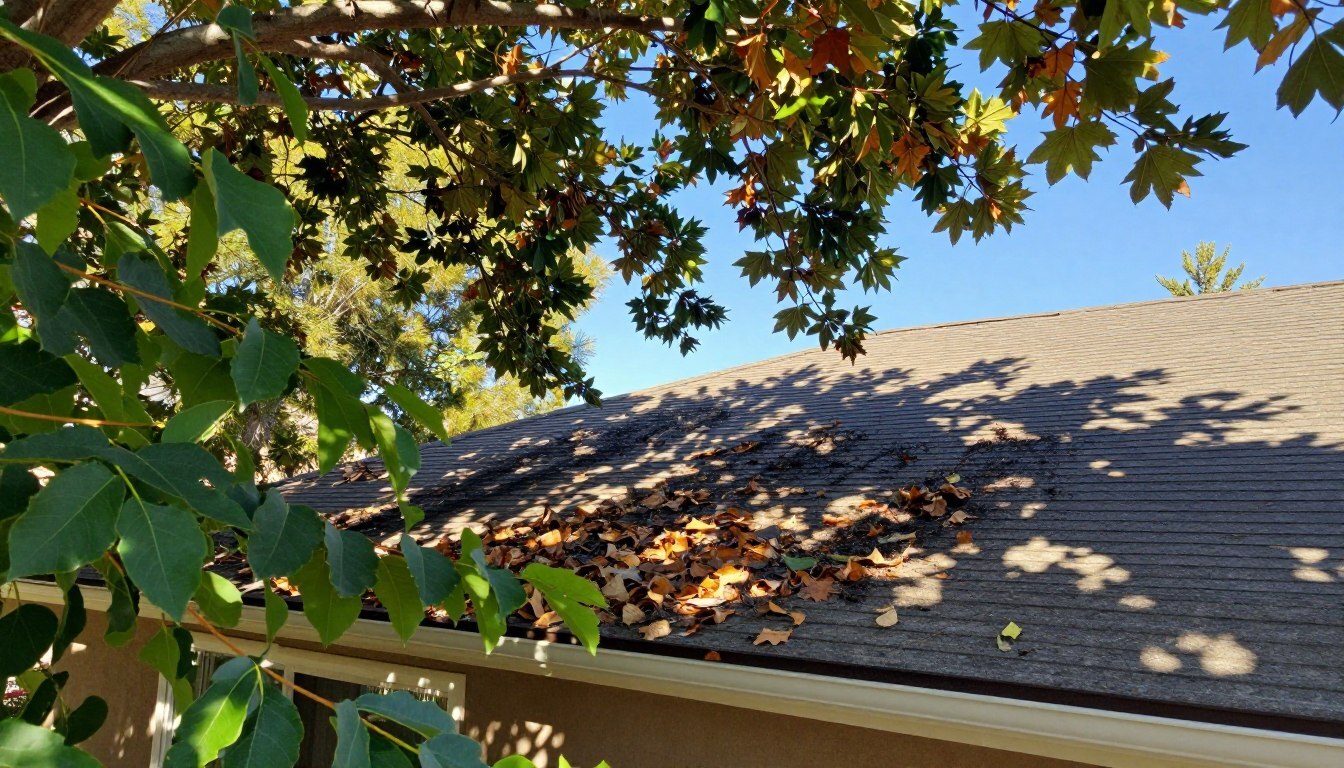
Trees act as a dynamic force that changes with every passing season. During the autumn months, the accumulation of falling leaves creates a blanket that traps moisture against your shingles. As winter approaches, the added weight of ice on overhanging branches can lead to physical stress, while the constant shade prevents the sun from drying out the roof surface after a storm.
This persistent moisture creates an ideal breeding ground for moss, algae, and lichen. These biological organisms thrive in the damp, shaded conditions provided by tree limbs, eventually compromising the structural integrity of your roofing materials. We believe that recognizing these seasonal vulnerabilities is the first step toward preserving the longevity of your investment.
By viewing your roof as a living, breathing system, you can better implement strategies that mitigate these risks. Consistent roof maintenance is not just about cleaning; it is about understanding how your landscape interacts with your home. With expert-led attention, we can help you manage these natural stressors and keep your roof in peak condition throughout the year.
The Biological Threat: Moss, Algae, and Lichen Growth
When sunlight fails to reach your shingles, a complex biological process begins that threatens your home's structural integrity. We observe that persistent dampness prevents roofing materials from drying, which creates an ideal habitat for unwanted organisms to colonize your property. Implementing proactive roof damage prevention is essential to stop these biological threats before they penetrate your roof's deeper layers.
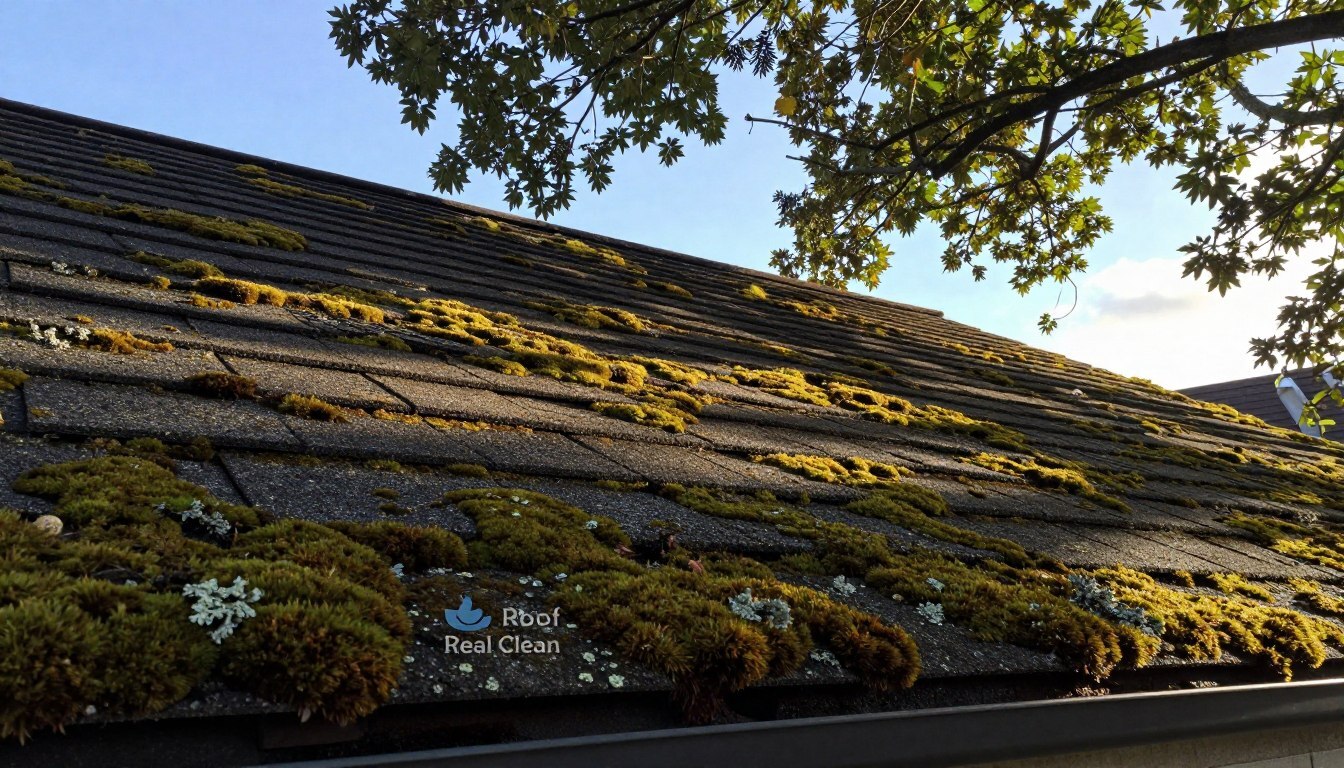
How Shade Creates a Breeding Ground for Moisture
Overhanging branches act as a canopy that blocks essential UV rays, which are necessary to evaporate morning dew and rainwater. Without this natural drying process, your roof remains in a state of constant saturation. This environment is perfect for moss and algae, which thrive in cool, damp conditions.
By keeping your roof shaded, you inadvertently encourage the growth of spores that settle into the crevices of your shingles. We emphasize that consistent moisture is the primary catalyst for premature material degradation. Addressing these shaded areas is a critical step in effective roof damage prevention strategies.
The Role of Organic Debris in Nutrient Supply
Beyond moisture, your roof often collects leaves, twigs, and pine needles that decompose over time. This organic matter provides a steady supply of nutrients that fuel the rapid expansion of fungal colonies. Specifically, Gloeocapsa magma is a common type of algae that feeds on the limestone fillers found in many asphalt shingles.
As these organisms consume the minerals in your shingles, they weaken the structural composition of the roof. Our professional approach focuses on neutralizing these threats without causing further harm to your home. Consider the following breakdown of common biological invaders:
| Biological Threat | Primary Food Source | Growth Environment |
|---|---|---|
| Gloeocapsa Magma | Limestone Fillers | High Humidity/Shade |
| Moss | Trapped Moisture/Debris | Cool/Damp Surfaces |
| Lichen | Mineral Deposits | Exposed/Shaded Areas |
By removing organic debris and managing shade, you significantly improve your roof damage prevention efforts. We are committed to helping you maintain a clean, healthy roof that stands the test of time.
Physical Damage Caused by Overhanging Branches
When trees grow too close to your home, they transform from aesthetic assets into physical hazards for your roofing system. While we appreciate the shade and beauty that trees provide, the mechanical interaction between tree branches and your roof surface can lead to significant, long-term degradation.
Abrasion and Shingle Granule Loss
The most common form of mechanical damage occurs through constant, repetitive friction. Even on relatively calm days, the movement of tree branches against your shingles acts like sandpaper, slowly wearing away the protective mineral granules.
These granules are vital for your roof's health. They serve as a primary shield against the following threats:
- UV Radiation: Granules reflect harsh sunlight, preventing the asphalt base from drying out and cracking.
- Weathering: They provide a durable layer that resists impact from hail and heavy rain.
- Fire Resistance: The mineral coating helps maintain the fire-rated integrity of your roofing materials.
Once these granules are scraped away, the underlying asphalt is exposed to the elements. This accelerates the aging process of your roof, often leading to premature failure and costly repairs.
Structural Risks During High Wind Events
During severe weather, the danger posed by tree branches escalates from simple abrasion to potential structural impact. High winds can cause large limbs to whip violently against your roof, creating force that your shingles were never designed to withstand.
This physical trauma can result in several critical issues:
- Punctures and Tears: Heavy branches can easily pierce through shingles and underlayment, creating direct pathways for water intrusion.
- Structural Stress: Repeated heavy impacts can weaken the roof decking, potentially compromising the structural stability of the entire roof assembly.
- Dislodged Shingles: The force of a striking branch can lift or completely remove shingles, leaving your home vulnerable to leaks.
We strongly advise homeowners to maintain a safe clearance zone between their roof and any nearby tree branches. Proactive trimming is an essential investment that protects your property from these avoidable and often expensive structural risks.
The Hidden Dangers of Clogged Gutter Systems
Many homeowners overlook the critical link between tree debris and the health of their gutter systems. While we often focus on the roof surface itself, the channels that carry water away are equally vital to your exterior home maintenance strategy. When these systems become obstructed by leaves and twigs, they cease to function as intended, turning a simple drainage feature into a significant liability.
Water Overflow and Fascia Board Rot
When debris accumulates, water has nowhere to go but over the sides of the gutter. This constant overflow saturates the fascia boards, which are the wooden trim pieces supporting your roofline. Over time, this moisture leads to severe rot, compromising the structural integrity of your roof’s edge and inviting further decay into your home’s siding.
Consistent gutter cleaning is the only way to prevent this silent destruction. By ensuring that water flows freely through the downspouts, you protect your investment from the costly repairs associated with water-damaged wood. Understanding how gutter cleaning saves money in the long run is essential for every proactive homeowner.
Foundation Issues Resulting from Improper Drainage
Beyond the roofline, improper drainage poses a serious threat to your home's foundation. When water spills over the gutters, it pools directly at the base of your walls instead of being directed away from the structure. This excess moisture can erode the soil around your foundation, leading to cracks and potential basement flooding.
Effective exterior home maintenance requires that we manage water from the top down. By keeping your drainage clear, you ensure that water is safely channeled away from the building envelope. This simple step is a cornerstone of responsible property care that prevents long-term structural instability.
| Maintenance State | Risk Level | Primary Consequence |
|---|---|---|
| Clean Gutters | Low | Optimal water diversion |
| Partially Clogged | Moderate | Fascia board saturation |
| Fully Obstructed | High | Foundation erosion and rot |
Pest Infestations and Roof Integrity
Your roof is meant to be a fortress, but nearby branches often act as an open invitation for local wildlife. When tree limbs extend over your home, they function as natural bridges that allow animals to bypass the ground and reach your roofline with ease.
This proximity creates a significant risk to your property's structural health. We frequently observe how these pathways lead to unwanted guests settling into spaces where they do not belong.
Rodents and Wildlife Access Points
Squirrels, raccoons, and even opossums utilize overhanging branches to gain direct access to your attic and ventilation systems. Once these animals reach the roof, they often seek entry by chewing through fascia boards, soffits, or roofing materials.
This behavior compromises the integrity of your roof, creating gaps that invite moisture and further decay. Beyond the initial damage, these pests can destroy insulation and chew through electrical wiring, which poses a serious fire hazard to your home.
Insect Colonies and Wood-Boring Pests
Wildlife is not the only concern when trees touch your roofline. Branches that remain in constant contact with your home provide a steady highway for ants, termites, and other wood-boring insects to migrate from the tree to your structure.
These pests are often attracted to the moisture trapped by organic debris and shade. Once they establish a colony, they can cause extensive structural damage that remains hidden until it becomes a costly repair. We advocate for strategic tree management as a primary defense, ensuring that your roof remains a barrier rather than a gateway for these biological intruders.
The Importance of Regular Roof Inspection and Maintenance
Establishing a routine for your home's exterior is essential for catching damage before it becomes a costly repair. We view roof maintenance as a vital investment in your property's longevity rather than a simple chore. By staying ahead of environmental stressors, you ensure that your home remains a safe and secure sanctuary for your family.
Identifying Early Signs of Tree-Related Damage
Many homeowners assume that if they do not see a hole in their roof, everything is fine. However, tree-related damage often begins with subtle indicators that are invisible to the untrained eye. You might notice slight sagging in the roof deck or early-stage moisture staining in your attic space.
Granule loss is another common red flag that suggests branches have been scraping against your shingles. If you notice an accumulation of dark, sand-like material in your gutters, it is time to schedule a professional roof inspection. Catching these issues early prevents the need for extensive structural repairs later.
Why Professional Assessment is Necessary
We recommend that professional evaluations be conducted at least twice a year to maintain your home's protective envelope. While you can perform a visual check from the ground, our experts possess the specialized equipment and training to identify hidden vulnerabilities. We look for signs of rot, compromised flashing, and areas where debris has trapped moisture against the roofing material.
Partnering with our team provides you with the peace of mind that comes from knowing your home is in good hands. We believe that proactive roof maintenance is the most cost-effective strategy for preserving your investment over time. By addressing small concerns today, you avoid the significant financial burden of premature roof replacement tomorrow.
Safe and Effective Tree Debris Removal Strategies
Maintaining a clear buffer zone between your trees and your home is a fundamental aspect of property care. We recommend keeping a clearance of at least six to ten feet between tree branches and your roof surface. This gap prevents physical abrasion and limits the accumulation of organic matter that leads to moisture retention.
Consistent exterior home maintenance helps you identify potential hazards before they escalate into expensive repairs. By keeping the roofline clear, you allow for better airflow and sunlight exposure, which naturally inhibits the growth of moss and algae.
When to Trim Branches vs. Professional Tree Removal
Deciding between routine trimming and full removal depends on the health and proximity of the tree. Regular pruning is often sufficient for healthy trees that simply need a bit of shaping to stay away from your shingles.
- Routine Trimming: Best for managing healthy, smaller limbs that encroach on the roofline.
- Professional Removal: Necessary when a tree shows signs of decay, structural instability, or leans dangerously toward the home.
If you notice deep cracks in the trunk or significant fungal growth at the base, it is time to consult an arborist. We emphasize that a professional roof inspection can help determine if a tree poses a genuine structural threat to your investment.
Safety Precautions for Exterior Home Maintenance
Safety must always be your top priority when working on or near your roof. We advise homeowners to avoid climbing onto the roof themselves, as this can cause damage to shingles and poses a significant fall risk.
Instead, focus on ground-level tasks and leave the high-altitude work to trained professionals. When performing gutter cleaning or general tree debris removal, keep these safety tips in mind:
- Always use a sturdy, level ladder secured with a stabilizer.
- Wear appropriate personal protective equipment, including gloves and eye protection.
- Never attempt to cut large limbs near power lines; contact your local utility provider immediately.
By following these best practices, you protect both your physical well-being and the integrity of your home. Proper exterior home maintenance is not just about aesthetics; it is a vital strategy for long-term property preservation.
Manufacturer-Approved Cleaning Solutions for Roofs
Understanding the science behind safe roof maintenance is the first step toward protecting your home. We prioritize methods that align with industry standards to ensure your investment remains secure for years to come. Proper roof cleaning is not just about aesthetics; it is about preserving the structural integrity of your shingles.
Why Harsh Chemicals Can Damage Roofing Materials
Many homeowners are tempted by quick fixes, but harsh chemicals often do more harm than good. Strong cleaning agents can strip away the protective granules that shield your shingles from UV rays. Once these granules are lost, the underlying substrate becomes vulnerable to rapid deterioration.
Furthermore, high-pressure washing can force water underneath the shingles, leading to trapped moisture and potential rot. We strongly advise against using aggressive chemical solutions that may degrade the material composition of your roof. Protecting your home requires a gentle, scientific approach rather than brute force.
The Benefits of Soft Washing Techniques
Soft washing is a manufacturer-approved technique that cleans roofs without the damaging pressure of power washing. This method utilizes specialized, biodegradable solutions to safely eliminate algae, moss, and lichen at the root. By choosing this approach, you ensure that your roof cleaning service effectively sanitizes the surface without causing physical abrasion.
The primary advantage of soft washing is its ability to restore the appearance of your roof while maintaining its warranty status. We rely on these low-pressure systems to deliver a deep clean that respects the delicate nature of modern roofing materials. Investing in professional soft washing is the most reliable way to enhance your property value while avoiding unnecessary repair costs.
Protecting Your Property Value Through Proactive Care
Your roof is more than just a shelter; it is a significant financial asset that requires dedicated attention. By prioritizing roof damage prevention, you ensure that your home remains a safe and valuable sanctuary for years to come. We view our role as partners in your property’s health, helping you avoid the stress of sudden structural failures.
Long-Term Financial Benefits of Roof Preservation
Proactive roof preservation can prevent thousands of dollars in emergency repair costs. When you address minor issues early, you avoid the compounding damage that leads to expensive full-roof replacements. Consistent care is the most reliable way to protect your investment and maintain your home's market appeal.
Choosing to work with specialists is often the smartest financial decision a homeowner can make. You can learn more about the top reasons to choose a professional over DIY for roof maintenance to understand why expert intervention is superior to temporary fixes. Our goal is to provide long-term stability for your roofing system through science-based methods.
Contacting Experts at (703) 261-8228 for Professional Help
We invite you to contact our experts at (703) 261-8228 to discuss a customized maintenance plan that addresses your specific property needs. Our team is dedicated to providing the professional guidance necessary to keep your roof in peak condition. We are ready to help you implement a strategy that prioritizes roof damage prevention and peace of mind.
| Maintenance Strategy | Financial Impact | Property Value |
|---|---|---|
| Proactive Care | Low (Predictable) | High (Maintained) |
| Reactive Repairs | High (Emergency) | Decreased (Risk) |
| Neglect | Extreme (Replacement) | Significant Loss |
Conclusion
Managing the impact of trees on your property remains a vital component of responsible homeownership. By implementing the preventive measures and professional maintenance strategies we have explored, you can enjoy the beauty of your landscape without compromising your home's structural integrity.
We remain committed to helping you protect your investment through science-based roof cleaning and expert care. A clean surface does more than look good; it actively improves your home's thermal performance by reflecting solar energy and supporting proper attic ventilation.
Consistent roof maintenance serves as a primary defense against the long-term degradation caused by organic growth and debris. These efforts lower your monthly cooling demands while extending the lifespan of your roofing materials.
Our team stands ready to assist you in preserving the health of your property. Please reach out to us to ensure your roof continues to provide the safety, efficiency, and value your family deserves for years to come.
Frequently Asked Questions (FAQ)
We understand that your home is a significant investment, and the impact of overhanging trees on roof cleanliness extends far beyond simple aesthetics; constant shade and organic debris create a damp microclimate that accelerates the decay of roofing materials. By failing to address these environmental stressors, homeowners risk premature shingle failure and a decrease in property value due to visible biological growth and structural compromise.
We prioritize tree debris removal as a cornerstone of roof damage prevention because accumulated leaves and twigs trap moisture against the shingles, preventing them from drying after rain. This persistent dampness creates an ideal habitat for organisms like Gloeocapsa magma and moss, which can penetrate the protective layers of your roof and cause underlying rot if not managed through regular exterior home maintenance.
Absolutely; we frequently observe that tree branches overhanging a residence act as mechanical abrasives during wind events, physically scraping away the protective mineral granules from the shingle surface. This shingle granule loss exposes the asphalt substrate to harmful UV rays and harsh weather, significantly shortening the lifespan of your roof and necessitating more frequent roof maintenance.
While many view gutter cleaning as a minor chore, we consider it a technical necessity for foundation protection; when tree debris blocks your drainage system, water overflows and saturates the ground directly adjacent to your home. This localized saturation can lead to fascia board rot and, more severely, the erosion of your structural foundation, proving that comprehensive exterior home maintenance is vital for the integrity of the entire property.
We strongly advocate for a regular roof inspection because many tree-related issues, such as early-stage fungal colonization or subtle branch abrasions, are nearly invisible to the untrained eye from the ground. Our expert evaluation catches these vulnerabilities before they manifest as costly leaks, allowing us to implement proactive roof maintenance strategies that save you significant financial stress over time.
We strictly follow manufacturer-approved standards that warn against high-pressure washing, as the force can strip away essential granules and damage the delicate shingle bond; instead, we utilize soft washing techniques. This professional roof cleaning method uses specialized, eco-friendly solutions to neutralize biological growth at the root without compromising the structural integrity or the warranty of your roofing materials.
We often find that overhanging limbs serve as "wildlife bridges," providing easy access for rodents and raccoons to reach your roofline and seek entry into your attic; once there, these pests can destroy insulation and chew through wiring. Strategic tree branches management is a primary defense, ensuring that your home remains a secure environment and protecting your property from the biological hazards introduced by unwanted intruders.
We believe in a balanced approach to landscape management; while routine trimming is often sufficient to maintain safe clearance, professional tree removal may be necessary if a tree’s health is declining or if its proximity poses a constant structural threat to the home. If you are uncertain about the safety of your current landscape, we invite you to contact our experts at (703) 261-8228 to discuss a customized plan that prioritizes both your greenery and your roof’s longevity.
© 2026 All Rights Reserved