CALL NOW TO GET A FREE ESTIMATE->

Why You Should Never Use a Pressure Washer on Your Roof Today
Maintaining a home’s exterior is a source of pride for many property owners, yet the question of why you should never use a pressure washer on your roof remains a critical topic for structural longevity. We understand the temptation to blast away unsightly black streaks or moss using high-velocity water, but this aggressive approach often results in irreparable harm. Protecting your investment requires a shift toward science-based maintenance that respects the delicate nature of roofing materials.
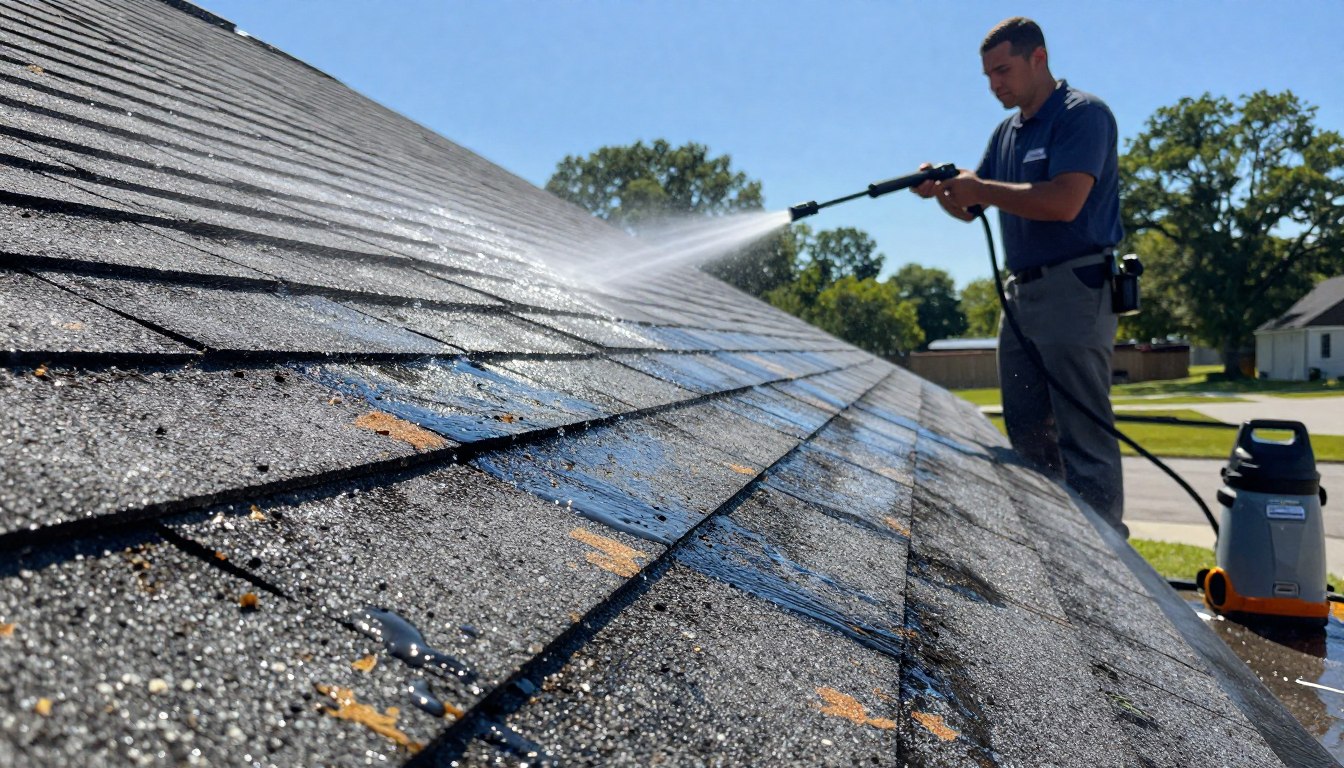
As dedicated property care experts, we have seen firsthand how standard pressure washing can cut years off a roof's lifespan in just a few hours. The industry-standard soft-wash method is designed to provide a deep clean without the mechanical force that strips away protective layers. If you are concerned about the health of your home, we invite you to call us at (703) 261-8228 for a professional assessment.
Key Takeaways
- High-pressure water causes permanent granule loss on asphalt shingles.
- Aggressive washing techniques frequently void manufacturer-backed warranties.
- Forceful water intrusion can lead to localized rot in the roof decking.
- Soft washing kills biological growth at the root without structural damage.
- Professional expertise ensures safety for both the homeowner and the property.
The Destructive Power of High-Pressure Water on Shingles
When we discuss roof cleaning risks, the primary concern is the physical integrity of the shingle’s surface. Asphalt shingles are engineered with a specialized layer of mineral granules that act as a shield against ultraviolet (UV) radiation. A pressure washer, even at moderate settings, can act like a liquid abrasive, scouring these granules away and leaving the underlying bitumen exposed to the sun’s harsh rays.
Accelerated Granule Loss and UV Degradation
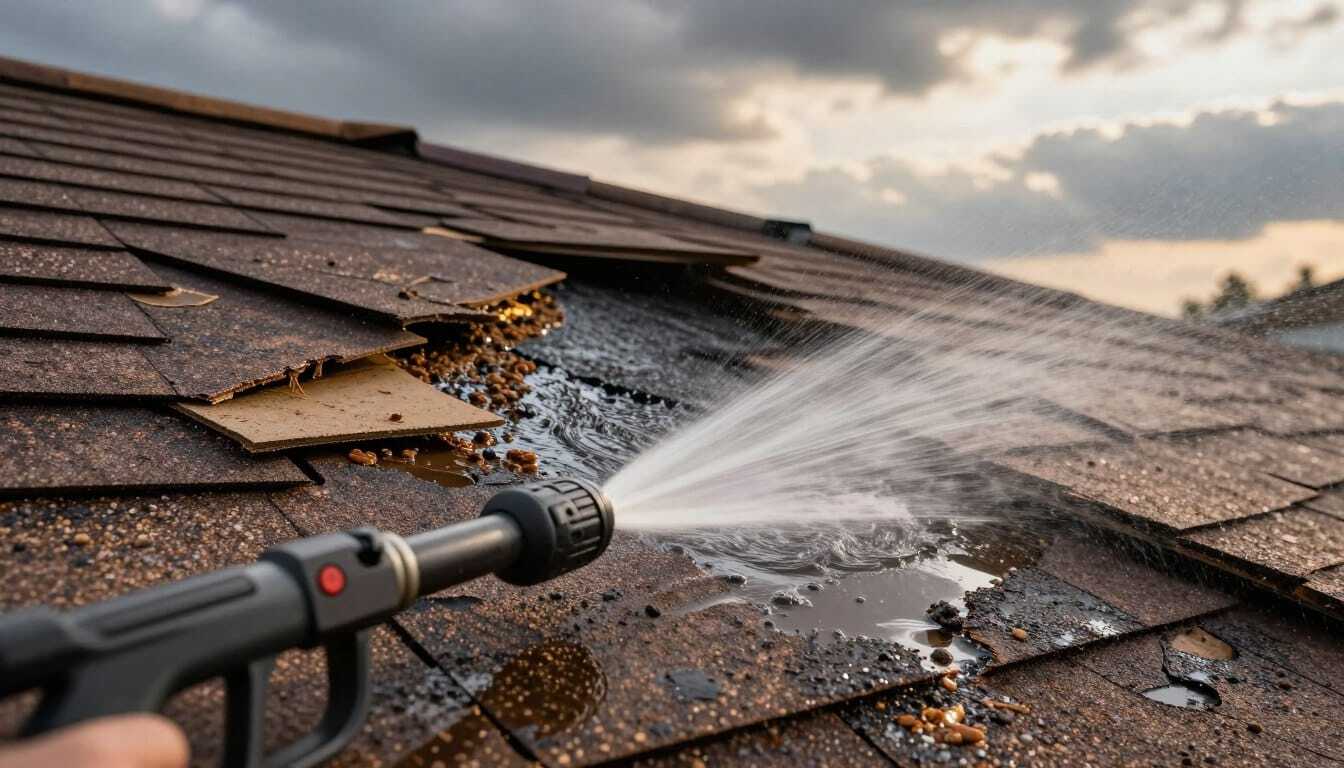
Granule loss is the most immediate consequence of using high pressure. Once these protective minerals are removed, the asphalt beneath becomes brittle and begins to crack under thermal expansion. We emphasize that protecting your investment involves preserving this granule layer at all costs. Without it, your roof's ability to shed water and reflect heat is significantly compromised, leading to higher energy bills and premature failure.
Compromising the Adhesive Seal Between Layers
Beyond surface damage, the sheer force of a pressure washer can lift the edges of shingles and break the adhesive "thermal seal" that keeps them flat during high winds. Once this seal is broken, your roof becomes highly vulnerable to wind uplift and rain infiltration. We have observed many cases where shingle damage from pressure washing led to extensive leaks during the very next storm, transforming a cosmetic cleaning into a structural emergency.
Water Intrusion and the Risk of Roof Decking Rot
High-pressure water is often forced into areas where rain naturally cannot reach—such as under flashing, into soffits, and through ridge vents. This "forced entry" of moisture can saturate the wooden roof decking and insulation in your attic. Over time, this trapped moisture promotes the growth of mold and wood rot, which is far more expensive to repair than a simple roof cleaning. Understanding how often should you clean your roof safely is key to avoiding these pitfalls.
Why Manufacturers and Experts Prohibit Pressure Washing
We often find that homeowners are unaware that the leading authorities in the roofing industry explicitly condemn the use of pressure washers. Organizations like the Asphalt Roofing Manufacturers Association (ARMA) and major brands like GAF or Owens Corning provide clear guidelines on maintenance, and high pressure is never on the approved list.
Voiding Your Roof Warranty: A Costly Mistake
One of the most overlooked roof cleaning risks is the legal impact on your warranty. Most manufacturers include clauses that void all coverage if the shingles are subjected to high-pressure washing. This means if your roof fails due to a manufacturing defect years down the line, you could be left with no recourse simply because of a single afternoon of improper maintenance. We always recommend following manufacturer-approved methods to ensure your legal and financial protections remain intact.
The Technical Standards of the ARMA
The ARMA technical bulletins serve as the gold standard for roof care. They specifically endorse low-pressure chemical cleaning (soft washing) as the only safe way to treat biological infestations like Gloeocapsa magma (the black streaks). By adhering to these professional standards, we ensure that your roof is cleaned effectively without the risks of physical abrasion or water intrusion.
Soft Washing: The Only Safe Alternative for Roof Maintenance
When you ask why you should never use a pressure washer on your roof, the answer always leads back to the superiority of soft washing. This method utilizes specialized, biodegradable cleaning agents that are applied at a pressure no stronger than a standard garden hose. It is a process that relies on chemistry rather than mechanical force.
| Cleaning Feature | Pressure Washing | Professional Soft Washing |
|---|---|---|
| Pressure Level | High (1000+ PSI) | Low (Under 100 PSI) |
| Cleaning Agent | Water Only (Often) | Eco-Friendly Surfactants |
| Biological Kill | Surface Only | Kills Roots/Spores |
| Warranty Safety | Often Voided | Manufacturer Approved |
| Surface Impact | Abrasive/Damaging | Gentle/Preserving |
Eliminating Algae and Moss at the Source
Pressure washing typically only removes the "caps" of moss or the surface of algae, leaving the root systems intact inside the shingles. Soft washing, however, penetrates these organisms and kills them at the molecular level. This ensures that the biological growth doesn't return just a few months later, providing a much longer-lasting result for your exterior home maintenance.
The Safety of Biodegradable Cleaning Solutions
We prioritize the use of EPA-approved, biodegradable solutions that are safe for your family, pets, and landscaping. Unlike the high-pressure method which can blast chemicals and debris all over your yard, our soft-wash protocol includes thorough pre-rinsing and post-rinsing of all vegetation to ensure your garden remains healthy and vibrant. For more details on our process, you can explore the importance of regular exterior cleaning services.
Safety Risks for Homeowners and Property
Beyond the damage to the shingles themselves, roof cleaning safety is a major concern. Roofs are inherently dangerous environments, especially when they are wet or covered in slippery biological growth. Attempting a DIY pressure wash without professional-grade safety equipment is a risk that is simply not worth taking.
Avoiding Life-Threatening Falls and Injuries
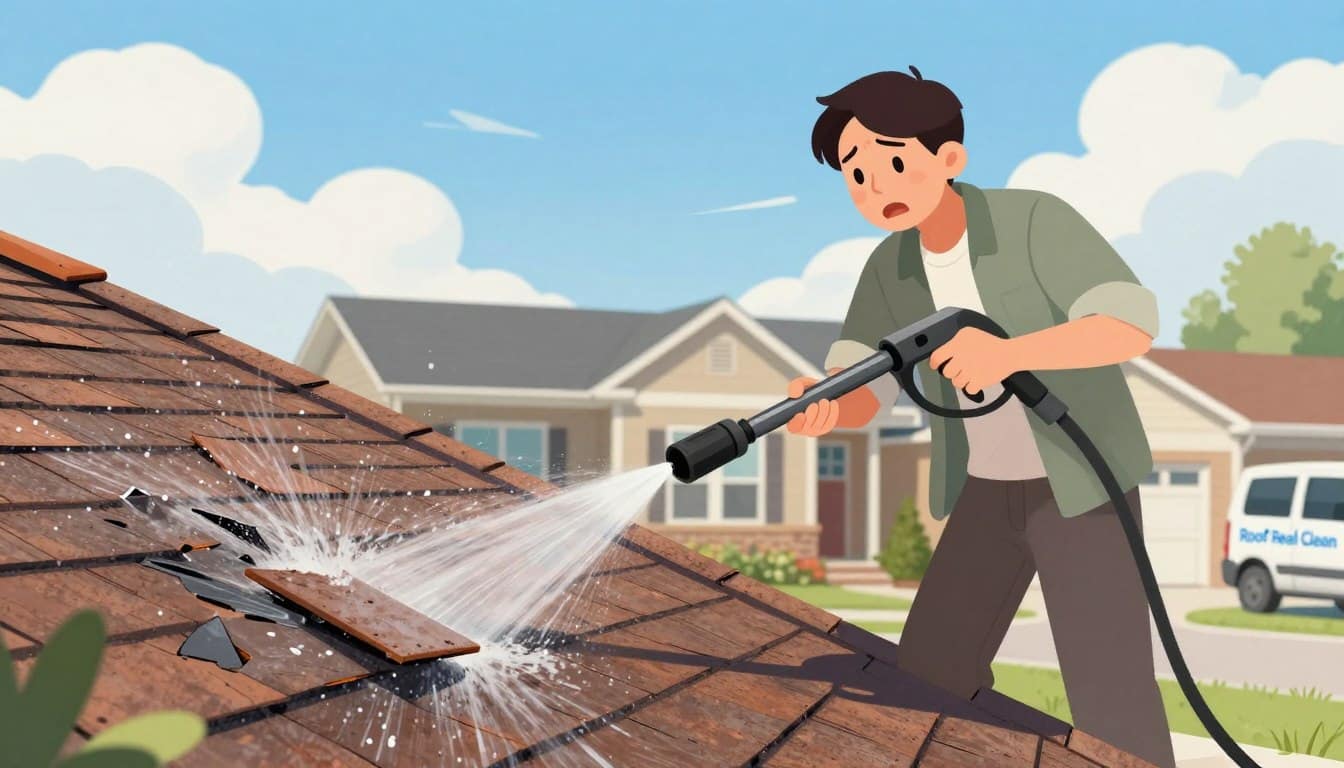
The "kickback" force from a standard pressure washer can easily knock an amateur off a ladder or a steep roof pitch. We use specialized equipment that allows us to apply cleaning solutions from the safety of a ladder or even the ground in many cases. Our teams are fully trained in OSHA-compliant fall protection to ensure every job is completed without incident.
Preventing Damage to Landscaping and Siding
High-pressure water is indiscriminate; it can easily shatter windows, strip paint from siding, and shred delicate garden plants. Professional soft washing is a controlled application that targets only the roof surface. We take extensive roof cleaning precautions to protect every aspect of your property, from your gutters to your foundation plantings.
Conclusion
Understanding why you should never use a pressure washer on your roof is the first step toward responsible homeownership. By choosing a science-based, low-pressure approach, you protect the structural integrity of your shingles, preserve your manufacturer warranty, and ensure the safety of your property. Reach out to our experts at (703) 261-8228 to schedule a professional evaluation and give your home the care it deserves.
Frequently Asked Questions (FAQ)
Even at low settings, a pressure washer's narrow stream can cause uneven wear and shingle damage. We recommend avoiding pressure washers entirely on roofs. A professional soft washing system is designed specifically to operate at low pressure with high volume, which is the only manufacturer-approved method for cleaning.
The primary roof cleaning risks include personal injury from falls, granule loss due to high pressure, and water intrusion into the attic. Additionally, using the wrong chemicals can kill your lawn or damage your home's siding. Professional services eliminate these risks through specialized training and equipment.
Manufacturers consider high-pressure washing to be "abusive maintenance." It physically alters the structure of the shingle by removing the protective granules and breaking the thermal seal. Because this damage is preventable, manufacturers will not honor warranties on roofs that have been pressure washed.
Soft washing is superior because it targets the biological cause of stains—algae and moss—rather than just the surface dirt. It provides a deeper, longer-lasting clean while protecting your investment from the mechanical wear and tear associated with high-pressure systems.
© 2026 All Rights Reserved